
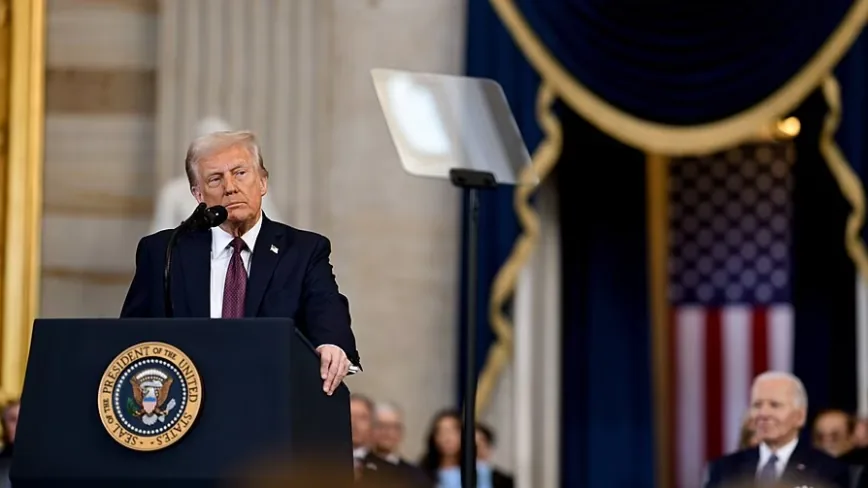
US President Donald Trump and House Speaker Mike Johnson plan to meet chief executives of technology companies to discuss artificial intelligence on Tuesday, 29 September. The plan was reported by Axios on Thursday, citing a source familiar with the arrangements, with the date also confirmed to Reuters and described to ABC News. No participants or agenda have been disclosed. The discussion matters for business because federal safety expectations are now on the agenda at the highest political level.
What is known about the 29 September meeting
The reports remain thin on specifics. No outlet has named the companies taking part or published an agenda, and the account has not been independently verified. The White House did not immediately respond when ABC News asked about the meeting. Axios was first to report the plan, Reuters received separate confirmation of the date from a source, and ABC News said multiple people familiar with the arrangements had described it. Further details, including the list of attendees, were not immediately available.
The initiative comes from Johnson, who has sought such a gathering for weeks. In mid-September he said he would recall the House only if there was a solution ready for a vote. Before any recall, he wanted a summit bringing together the president, leaders of Congress and the heads of the major labs. Speaking to reporters last week, as reported by ABC News, Johnson said there would be a deliberate discussion about the responsibility of companies to maintain safety. That formulation puts corporate safety duties at the center.
The meeting follows public calls earlier in September from leaders of several AI companies, including OpenAI and Anthropic, to slow the pace of development. Trump rejected those warnings in a social media post, describing them as a hoax. He maintained that position when addressing the UN General Assembly on Tuesday, telling world leaders he opposed any global scheme to control the technology, according to Reuters. Last week he also said he would establish what he called an AI Force and appoint a new AI czar.
What the meeting means for companies using AI
For companies that buy or deploy AI, the near-term signal is about timing rather than new rules. The House has left Washington until after the midterm elections in November, and Johnson has tied any recall to a solution ready for a vote. House Democrats have urged him to cancel the recess and hold votes on AI safeguards, but no vote is scheduled. That leaves small firms and large enterprises operating under existing vendor terms and internal policies, while safety language is negotiated in Washington rather than codified.
The second implication is uncertainty around what safety will require in practice. With no attendee list and no published agenda, it is not clear which labs or platforms will shape the discussion or what commitments might follow. Johnson's reference to company responsibility does not define standards, testing or disclosure. This news alone does not change procurement or compliance duties. Buyers should ask vendors how models are tested, what safeguards apply in deployment, and how incident reporting works, and track whether any White House statement after the meeting adds specifics.
The marker to watch is what appears after 29 September: confirmed attendees, any joint statement on safety duties, and steps toward an AI Force or an AI czar appointment. If those details remain absent and the House stays out until after the November midterms, the episode will read as positioning rather than policy. Concrete names and written commitments would show the trend moving toward enforceable expectations.