
Google has expanded its eighth-generation accelerator lineup with TPU 8tx for confidential computing and TPU 8i Max for memory-intensive workloads. The company says it has shipped four TPU systems within a single year for the first time. Both variants reuse existing silicon with different packaging, networking and memory configurations. The move matters because Google now positions its in-house chips as a broad platform for external customers.
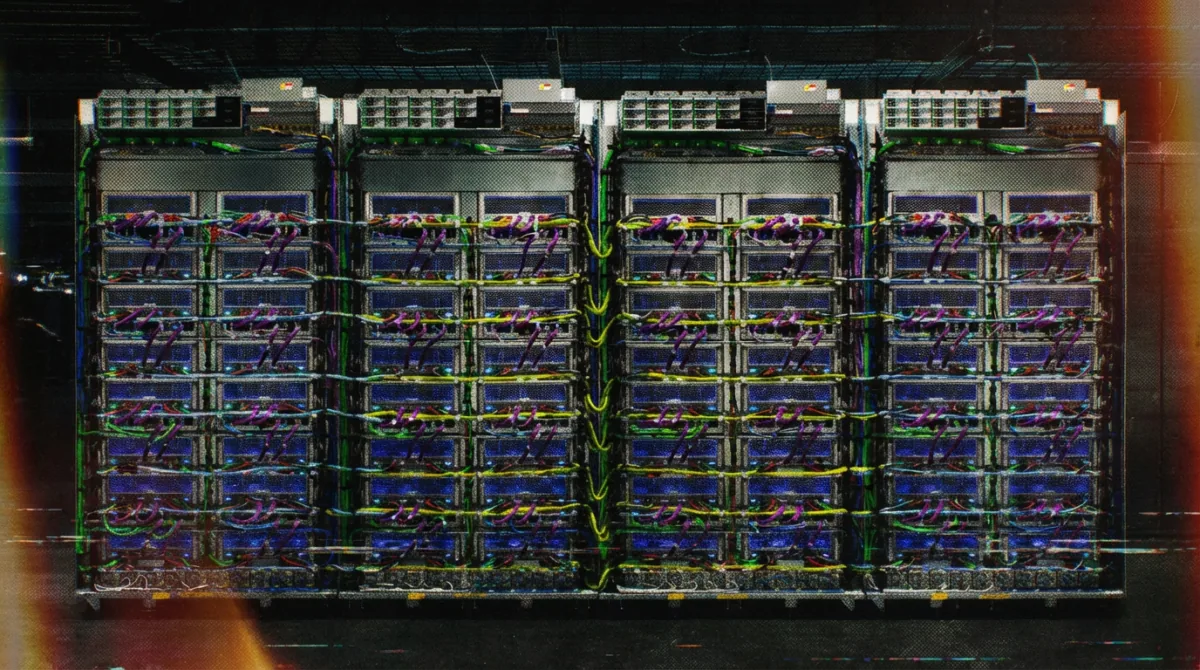
Two new configurations on existing silicon
TPU 8tx and TPU 8i Max do not introduce a new chip generation. Google describes them as system configurations built around the same processor, with changes in packaging, networking and memory setup. The company presents this modular method as a deliberate choice that shortens delivery of hardware variants to months rather than years. That pace explains how four systems could appear in twelve months. Nearly 100 external customers now use TPUs, which marks the shift from an internal tool to a marketed platform.
TPU 8tx is built for enterprises and government agencies that process sensitive data. Data is usually encrypted in storage and transit but decrypted in memory during processing, and Google says this variant closes that gap. Data and model weights stay protected and isolated even during active use. The system uses the low-latency Boardfly network developed for real-time inference. Google claims up to twice the latency reduction compared with TPU 8t, while Nvidia already offers a comparable confidential computing architecture for GPUs.
TPU 8i Max addresses memory bandwidth for agents working across large codebases or hours of video. Google placed two TPU 8i chips on a single package to remove that chokepoint. The result is double the compute power, double the memory and double the memory bandwidth in the same rack format. That combination raises performance per square meter of data center space. On the software side, Google released TorchTPU as open source so PyTorch code runs with minimal changes, and added support for vLLM and SGLang.
What this means for enterprise AI buyers
For companies running inference, the expansion widens the choice beyond GPU-based clouds. TPU 8tx allows fine-tuning, distillation of large models into smaller ones, and reinforcement learning for AI agents on a single system without moving sensitive data between clusters. TPU 8i Max suits long-context work where memory limits throughput, such as code assistants and video analysis. Smaller firms gain access to specialized capacity without building clusters, while large firms can match rack density to floor-space constraints.
Buyers should still verify fit before committing workloads. Confidential computing needs checks on key management, isolation guarantees and compliance acceptance for regulated data. Memory-heavy performance depends on bandwidth in real code, not only on doubled specifications in the same rack. Software compatibility also requires testing, even with TorchTPU, vLLM and SGLang support. This launch alone does not prove lower cost or faster deployment than alternatives from Nvidia, Amazon, Microsoft or OpenAI.
The marker to watch is external adoption through 2026. If the count of outside TPU customers moves well beyond nearly 100 and inference frameworks show stable production use, the modular strategy will have proven itself. Nvidia countered with its Groq acqui-hire and licensing deal, so rival inference performance will set the benchmark. Business impact will show in available capacity and deployment speed.