
Tesla started rolling out Full Self-Driving v15 on November 21, 2026, with a new driving network, live Reality View visualization and a company-reported 25-fold improvement in the critical-intervention rate. Tesla AI lead Ashok Elluswamy said the build was going to the first wave of customers, while Elon Musk said wide release would follow in December 2026. For companies watching autonomy, the release matters because Tesla ties the interface change to lower compute and a shared vision upgrade.
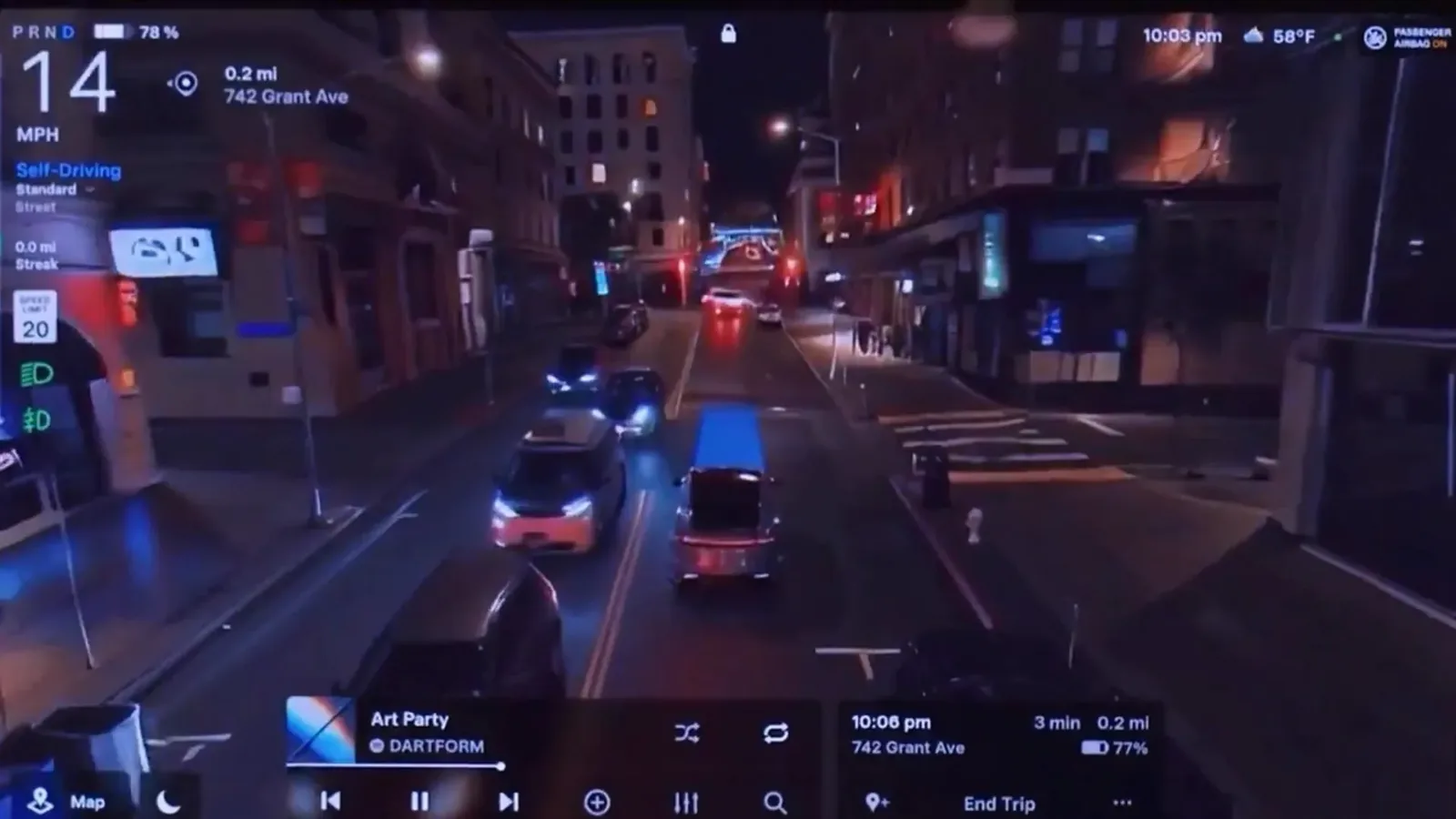
Reality View, vision encoder and first rollout wave
The centerpiece is Reality View, a live visualization of the drive that also shows what FSD plans to do. Tesla describes it in release notes as a single end-to-end visualization that replaces all explicit model signals while using less total compute. That framing presents the display not as a cosmetic layer, but as an output of a changed representation of driving information. The first rollout covers an initial customer group ahead of the December expansion.
Musk added control and efficiency details missing from the formal notes. The visualization uses real-time AI video generation without a gaming engine and consumes half of one AI4 TRIP accelerator. Turn chevrons appear in the sky to signal planned turns, and occupants can tap the display to send the car to a selected point. In effect, the screen becomes both a status view and an input channel for destination commands.
The second pillar is an upgraded vision encoder shared across FSD, Robotaxi and Optimus. Tesla says it was trained on millions of internet videos for better generalization and data efficiency, and links it to the reported intervention improvement. Sharing one encoder across driving and humanoid programs means progress in one domain can carry over to the others. Trip endpoints change as well: navigation uses an end-to-end learned model based on fleet route-preference data, with full-route coverage planned for later v15 releases.
What FSD v15 means for fleet and business use
For operators, the practical effect starts with trip setup and parking. Parking selection can use personalized parking history, while maps can show multiple parking options at the destination. Detection now covers road signs, small animals, road debris and chains, plus potholes, road details and avoidance of deep standing water. Speed logic spans driver profiles, school zones, speed limits, bad weather and slowing for speed cameras, which reduces manual adjustments in routine driving.
Driver supervision and vehicle setup also shift. Vision-based attention monitoring works more often when drivers wear hats or sunglasses, with reduced strictness in higher-speed profiles. Autoshift now uses FSD-based gear predictions, and Bike Rack Mode permits FSD operation with bike racks or similar hitch accessories. Small firms gain easier use of one vehicle for varied trips, while larger fleets get more consistent monitoring behavior across drivers and conditions.
The marker to watch is whether the 25-fold critical-intervention improvement holds after the December 2026 wide release. A sustained rate across more drivers, routes and weather would confirm that the new encoder, driving network and learned navigation generalize beyond the first wave. If reports diverge by region or use case, buyers will need to test parking, speed handling and monitoring in their own operating profile.
