
London startup Sequent has raised $2.2M in pre-seed funding to automate mathematical proofs that software follows its safety rules. The round was co-led by Frachtis and Metaplanet, the investment firm of Skype co-founder Jaan Tallinn. Its product, Alan, is already used by Curve as a paying customer to prove limits on withdrawals from depositors. The approach matters for business because testing checks only selected cases, while a proof covers every possible case.
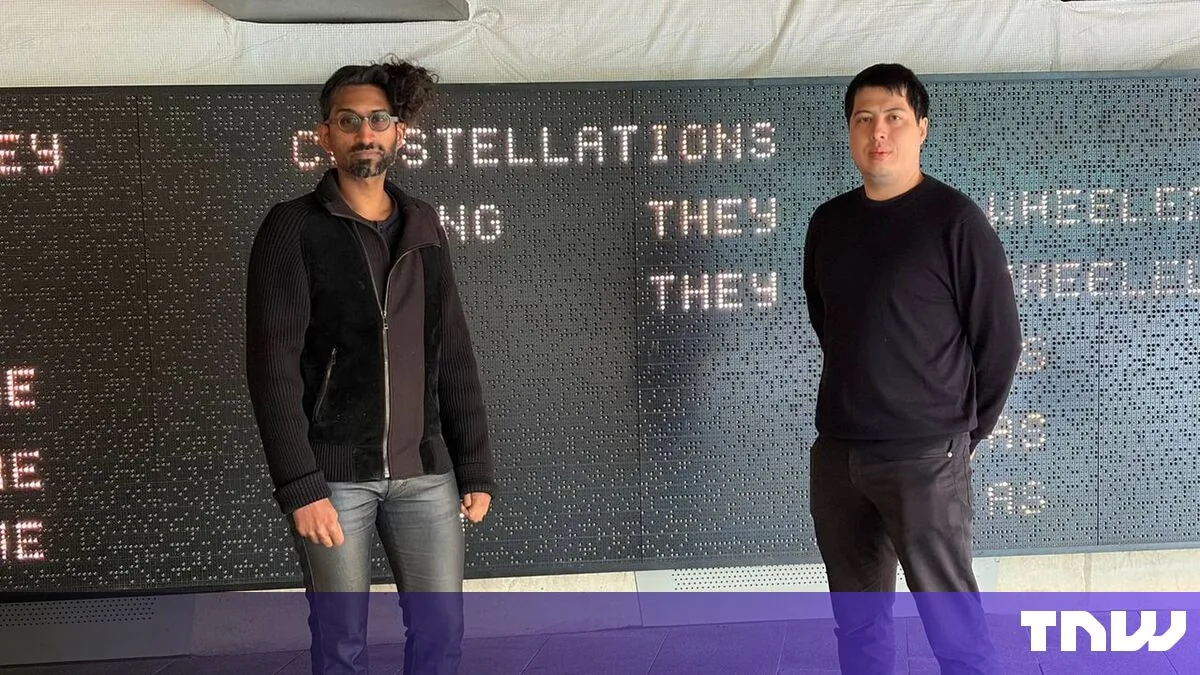
How Alan automates formal proofs
Alan starts when engineers describe safety rules in plain language, for example that no user can withdraw more than their balance. The AI system then searches for a formal proof that the code satisfies those rules in all situations. A separate checker called HOL4, which uses no AI, verifies every step and rejects proofs that fail. The company is named after Alan Turing, and its founders presented the product at his memorial. Early access to Alan is priced from $99 a month.
Today Alan works on Vyper smart contracts, one of the two main programming languages on Ethereum. Support for Solidity and Solana is in development, with Rust, C, TypeScript, and Python placed on the roadmap. The founders plan to apply the method to the Vyper compiler itself, where the original flaw behind the company originated. That sequence shows a narrow entry point with a wider programming-language expansion ahead. Pricing and availability point to a tool aimed at working engineering teams rather than research labs.
The company grew out of a compiler flaw introduced into Vyper by CEO Charles Cooper in 2021. In July 2023, attackers used that bug to drain more than $60mn from older pools at the exchange Curve and other projects. After the attack, former Google DeepMind safety researcher Ramana Kumar offered to help prove the compiler correct. Kumar had co-created CakeML, a compiler proved correct down to machine instructions, and that work developed into Sequent, where he serves as CTO. Curve CEO Michael Egorov said depositors remain protected by the same limit when pool code changes.
What automated proofs mean for companies
For companies that handle money or customer assets, Alan changes how safety claims are produced and checked. Instead of relying on tests and private code, a team can state a limit, such as a cap on withdrawals, and obtain a machine-checked proof. Small teams gain access to a method that previously required specialists and months of manual work. Large organizations can apply the same proof again after each code change, which fits release cycles for pools, contracts, and financial logic.
The method has clear boundaries that buyers should examine before committing. Engineers must approve every rule themselves, because AI systems can satisfy the letter of a rule while missing its intent, a problem Kumar studied at DeepMind. The final decision rests with HOL4, whose core is small enough for experts to inspect line by line. Buyers should ask which language versions are covered, how rules are written and reviewed, and what happens when code falls outside the supported scope.
The marker to watch is whether Sequent completes a proof for the Vyper compiler itself and adds Solidity and Solana support. Delivery on those items would show that AI-generated proofs move beyond single contract types. Failure to ship would keep the product confined to a narrow segment. Corporate security teams should track customer renewals and language coverage through 2026.
