
Turbulence remains the hardest problem in classical physics, yet new data-driven tools promise smoother flights. More than 200 people were seriously injured in turbulence incidents on US airplanes between 2009 and 2023, according to FAA data. Climate change is making clear-air turbulence around jet streams stronger and harder to see. Machine learning systems that combine flight broadcasts, iPad sensors and weather forecasts now give warnings 10 to 15 minutes ahead, which matters for safety and operations.
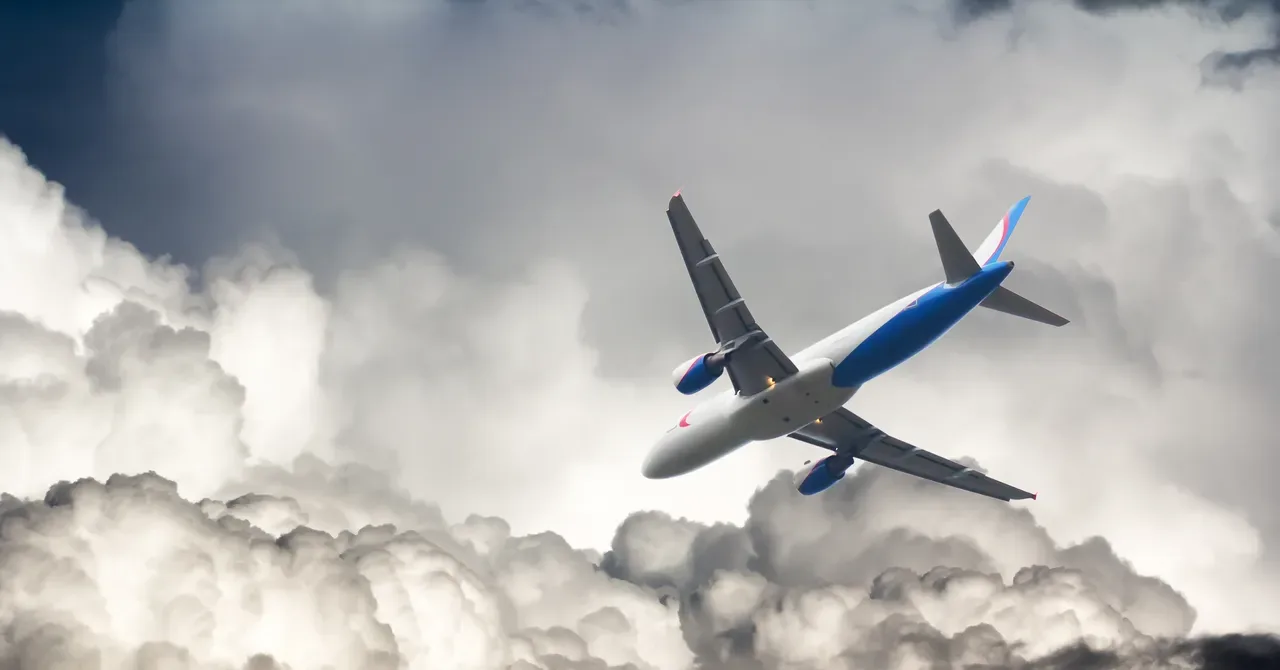
How prediction projects use flight data
In September, the National Science Foundation awarded $30 million to nine universities to create Tempest, a center for predicting turbulence in air, fusion plasma and space gas clouds. The center is headed by Michigan State University professor Michael Murillo and carries the full name Transformative Explorations in Multi-Physics and Engineering of Scientific Turbulence. Turbulence lets heat leak from superhot plasma in reactors, blocking the temperatures needed for nuclei to fuse. The federal government backs the work to move closer to fusion energy and better atmospheric forecasts.
Cornman, a physicist at the National Center for Atmospheric Research, spent decades studying turbulence before his work reached operations in the past two years. He and an FAA controller found that federally required broadcasts of position, altitude and speed can reveal unexpected turbulence. Those signals need no new onboard hardware or software, so researchers can use public crowdsourced data for prediction. An airplane engine creates 20 terabytes of data per hour of flight, according to the International Air Transport Association, while satellites and connected electronic flight bags add navigation and transmission capacity.
Perfect prediction stays impossible because turbulence happens at many small scales at once. Air around an airplane breaks into eddies, then smaller eddies, each interacting too fast to account for mathematically. Small shifts in wind speed or temperature can sharply change air movement, so a complete forecast would require a complete picture of the atmosphere at all times. Murillo argues that more sophisticated machine learning and AI agents can still narrow the gap. OpenAI's announcement this fall on the Navier-Stokes equations, the basis of turbulence models, suggests large language models could assist human researchers.
What better forecasts mean for business
Tel Aviv company SkyPath shows how the approach works in daily operations without solving the physics. Its software runs on more than 40,000 electronic flight bags, using their accelerometers to collect motion data across airplanes from different airlines. The data is anonymized before sharing, combined with weather forecasts, and processed with machine intelligence to forecast air conditions. Pilots at several major carriers, including American, receive alerts about choppiness ahead, allowing timely seat-belt warnings and route adjustments.
The limit is coverage, not only algorithms, and buyers should test it on their own routes. One pilot using SkyPath said the tool helps set passenger expectations, but compared it to other crowdsourced software that only works with broad adoption. It performs best in areas with dense traffic where several large operators contribute data. Physicist Larry Cornman cautions against expecting 80, 90 or 100 percent accuracy soon because the problem is too complex. Airlines should therefore treat forecasts as risk reduction for crew injury and diversions, not as a guarantee of smooth air.
The marker to watch is expansion of shared data and validation of warning lead times across regions. If more carriers join anonymized exchange and independent results confirm stable 10 to 15 minute alerts, dispatch and cabin procedures will change. If coverage stays patchy, benefits will remain concentrated on busy corridors. The next NSF-backed findings from Tempest will show whether models transfer from aviation to fusion and space applications.
