
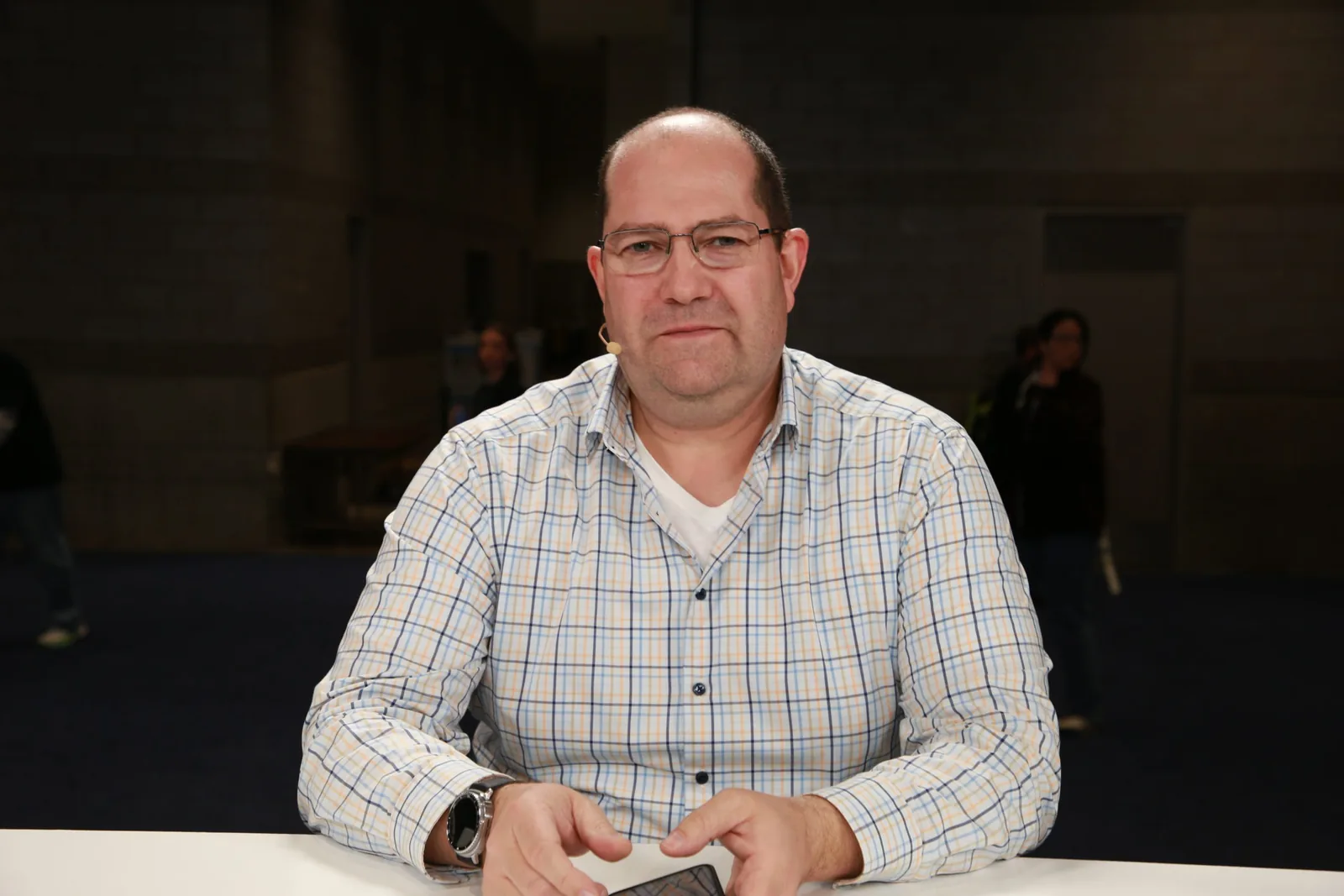
HammerHAI, the sovereign AI factory in Stuttgart, defines sovereignty through control of data rather than origin of processors. The project combines a Hewlett Packard Enterprise system on Nvidia Grace Blackwell chips with ISO-certified operations and TISAX Level 3 certification for automotive work. Managing director Bastian Koller presented the approach at SC26 in a conversation with theCUBE Research. For companies, the signal is practical: access and data handling matter more than where the silicon was made.
HammerHAI design and no lock-in principle
The factory is being built around the High-Performance Computing Center Stuttgart, led by managing director Bastian Koller. The core is a system from Hewlett Packard Enterprise using Nvidia Grace Blackwell chips, aimed at startups and small and midsize manufacturers. The center has already served customers on existing systems while waiting for the new hardware, with several cases described as success stories. The target audience includes teams that know exactly what they want and teams that only want to experiment and need support.
The operating principle is portability of workloads between the factory and commercial clouds. Koller said the system and services are developed so customers can move from HammerHAI to a hyperscaler or back without friction. The logic is framed as a boost: the factory pushes companies forward instead of holding their workloads. Industrial users no longer accept shell programming and expect hyperscaler-like interfaces, which raises requirements for security and access management. That expectation shapes both software tooling and customer onboarding.
The context is a wider European push to give startups access to supercomputer-class GPUs through publicly funded AI factories. Many such projects promise capacity, but the bottleneck is whether smaller firms can actually use it without losing control of data. Stuttgart answers with certified processes, including an ISO-certified environment and TISAX Level 3 for automotive projects. Full independence down to European processors and GPUs is not presented as realistic in the near term. Koller put it directly: customers cannot wait ten years for a sovereign chip, so work must start from data.
What this means for companies using AI
For operating companies, the model lowers the entry barrier to high-performance training and inference. A small supplier or startup gets supercomputer resources plus a consistent contact under a concierge model, which helps formulate tasks and select tools. Larger industrial firms gain an environment cleared for sensitive automotive data and a path to scale workloads elsewhere later. The difference is in the starting point: smaller teams buy guidance and speed, while larger ones buy certified handling and reversible infrastructure.
The choice still requires checks around compatibility, security scope, and exit mechanics. Managers should ask which interfaces mirror hyperscalers, how access rights are issued and revoked, and what data stays inside the ISO-certified perimeter. Energy and operating parameters also matter: the new system is rated at about 700 kilowatts against 3.2 megawatts for its predecessor at doubled performance, with waste heat reuse. The news by itself does not guarantee availability dates, pricing, or capacity for a specific workload. Portability should be tested in advance, not assumed from a statement of intent.
The marker to watch is whether HammerHAI publishes customer migrations in both directions and names certified production workloads. A first set of documented cases, with timelines and interface requirements, would confirm that portability works outside pilots. The next hardware milestone and utilization by SMEs and startups will show if concierge onboarding scales. If those facts appear, data-first sovereignty becomes a procurement option rather than a slogan.
