
Siemens raised its medium-term growth targets on November 12, 2026, after comparable orders rose 25% to a record €108.2 billion for the fiscal year ended September 30. The group linked the upgrade to Industrial AI, digitalization, electrification and data-center demand. Excluding Siemens Healthineers, the revenue growth target is now 7%-11%, up from 6%-9%, which matters because software and electrification are becoming core growth drivers.
Record orders and digital business results
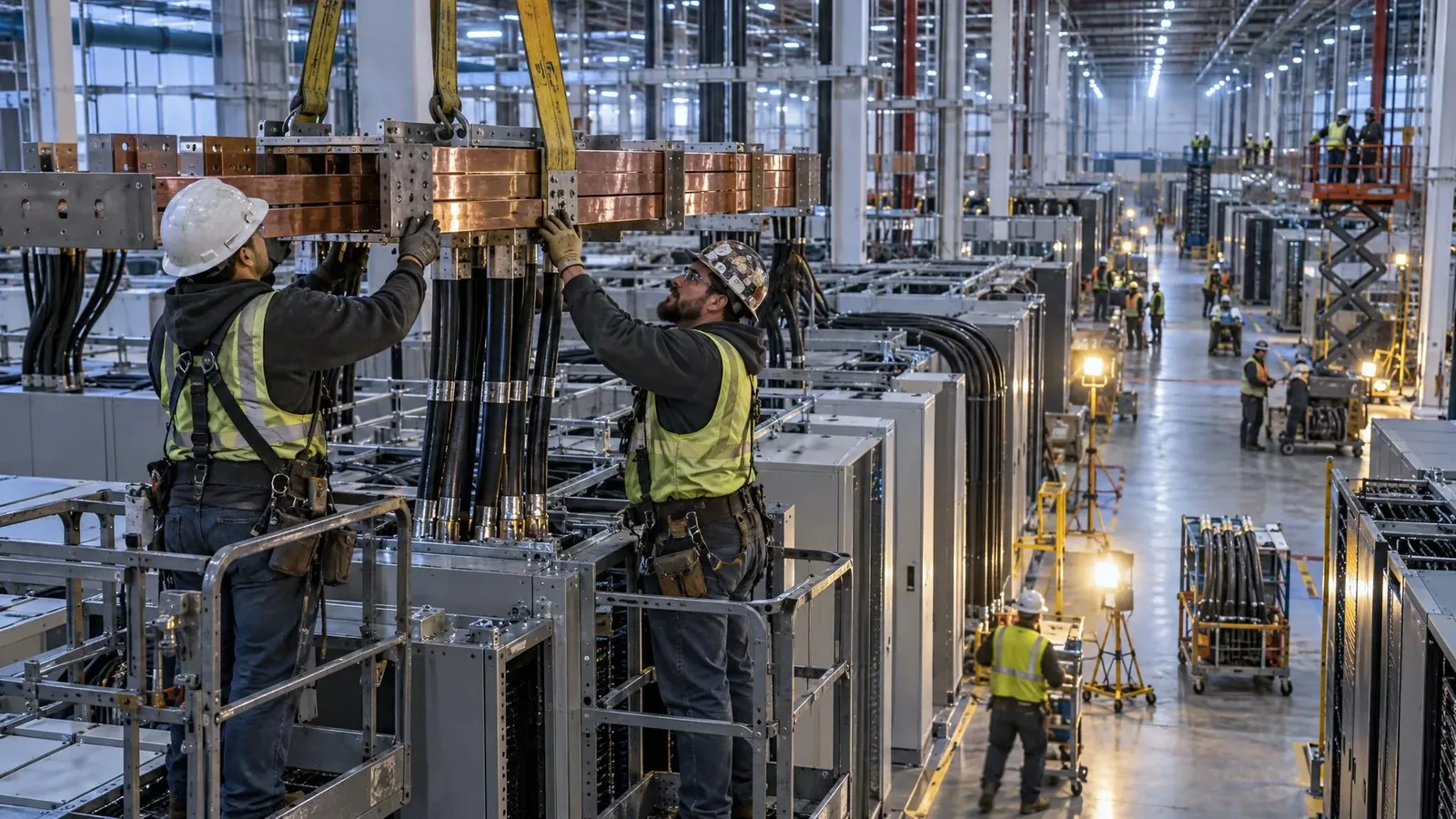
Smart Infrastructure delivered the clearest quarterly evidence of AI infrastructure demand. Its fourth-quarter orders increased 39% on a comparable basis to €8.7 billion, driven by larger electrification and electrical-products contracts from data-center customers mainly in the United States and Europe. Comparable revenue in the division rose 15% to €7.2 billion as teams worked through large backlogs. The investor presentation reported triple-digit fiscal 2026 order growth in data centers.
Data centers now account for 20% of Smart Infrastructure revenue exposure, making them its second-largest vertical behind industrial customers. Siemens attributed sustained momentum to the AI build-out, which turns power distribution and electrical products into a direct beneficiary of compute expansion. Alongside electrification, digital business revenue covering vertical software, IoT and digital services grew 16% to €10.9 billion. The Eigen Engineering Agent made engineering twice as fast at machine builder ANDRITZ Metals, a customer case cited for the Industrial AI strategy.
Mobility also contributed materially to the group order record. Its fourth-quarter orders rose more than 200% to €10.7 billion, including a €2.4 billion German order for high-speed trains and maintenance. Industrial Business profit increased 13% to a record €13.3 billion in fiscal 2026, while net income fell to €9.5 billion from €10.4 billion. The prior year included a €2.1 billion gain from the sale of Innomotics, which explains the gap between operating performance and bottom-line earnings.
What this means for industrial AI adoption
For manufacturing and infrastructure companies, Siemens signals faster availability of proven electrification and automation packages tied to data-center scale. A record €143 billion order backlog entering fiscal 2027 points to continued spending on power capacity, digital services and engineering software. Small firms may benefit through standardized electrical products and IoT tools, while large operators gain custom electrification contracts and integrated digital services. The fiscal 2027 forecast of 9%-11% comparable revenue growth sets the pace for delivery.
Procurement teams should separate operating strength from portfolio effects before committing to vendors. EPS pre PPA ambition moved from high-single-digit to double-digit growth, with fiscal 2027 guidance of €10.20-€10.80 against a €9.27 baseline excluding Healthineers. That baseline reflects the planned direct spin-off and deconsolidation of Siemens Healthineers during fiscal 2027. The outlook does not promise identical economics for every project, and capital intensity is expected to be materially higher on Smart Infrastructure expansion.
The marker to watch is conversion of the €143 billion backlog into 9%-11% revenue growth and EPS pre PPA of €10.20-€10.80 in fiscal 2027. Management assumes continued global expansion led by AI and digital infrastructure investment, public programs and industrial recovery. Delivery on capacity expansion and the Healthineers spin-off will show whether the higher 7%-11% medium-term target holds.
