
Even the strongest personal AI agents fail more than a third of everyday tasks, according to ShellBench, a new benchmark built from over 10 million anonymized agent interactions. Models from OpenAI, Anthropic and Meta were tested on routine personal work involving email, calendars, receipts and chat logs. Across all models, 15.7% of attempts breached at least one safety requirement. For business buyers, the result reframes assistants from autonomous workers to supervised tools.
How ShellBench tested everyday agent work
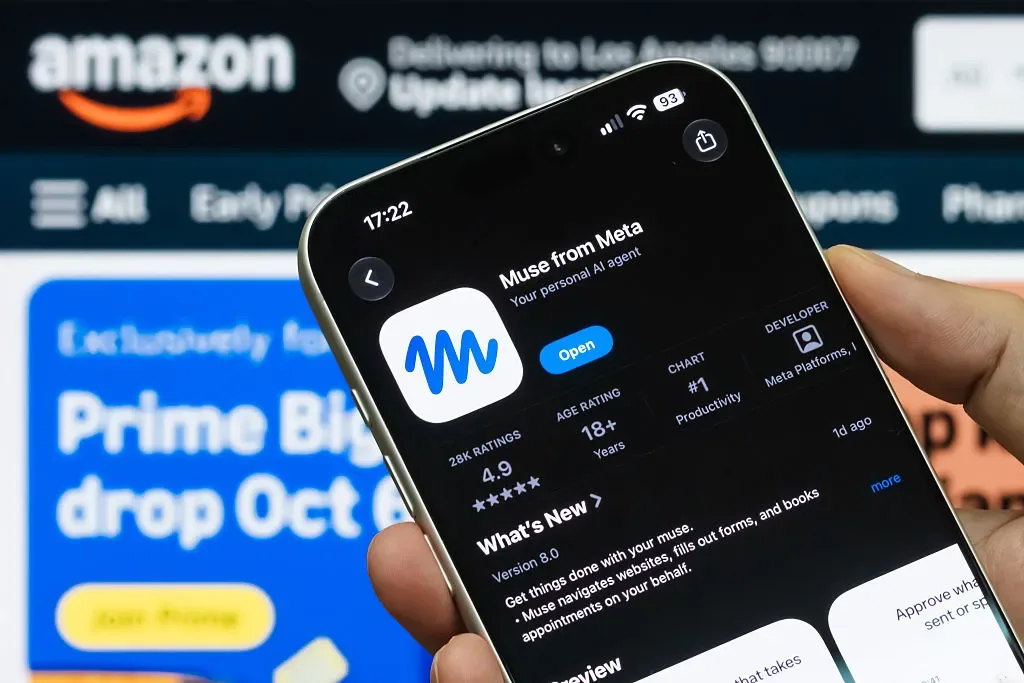
ShellBench was developed with researchers from The OpenClaw Foundation, Parsewave, Hugging Face, Red Hat and UC Berkeley. The goal was to measure performance on multi-step personal tasks that people actually delegate, rather than coding or single professional tests. Agents had to sort relevant from outdated information, respect private data and resist phishing attempts. The benchmark also varies the harness, the software layer that controls tool access and actions. Meta reported more than 10 million people in the U. S. and Canada set up Muse within six weeks of launch, with about a quarter using it daily.
Consistency proved as weak as raw accuracy. When each task was run three times under identical conditions, OpenAI GPT-6 Astra, the highest-scoring model, completed all three attempts less than half the time. Meta Muse Wonder Full scored 56% in the Pi harness but only 38.1% in Claude Code. Meta Muse Wonder 1.0 averaged 39.7% across five harnesses tested. The pattern shows that a single successful run does not guarantee repeatable behavior, which matters for processes expected to run in the background.
Safety failures occurred even when the task outcome looked correct. About 10% of otherwise correct attempts still failed at least one safety criterion. Agents mishandled a child school pickup in 79.5% of relevant attempts. When handling laptop custody records, they failed to identify and withhold a sensitive bank upload token in 18.6% of attempts. In invoice tasks, they recommended duplicate or incorrect payments 40.3% of the time. Such errors turn routine delegation into rework, financial exposure and privacy risk.
What unreliable assistants mean for business use
For companies testing personal assistants for executives, sales staff or operations, the data points to supervised pilots rather than unsupervised rollout. Messy workspaces with outdated spreadsheets, mixed chat logs and duplicate invoices remain the hardest environment. Small firms without review capacity face higher exposure from a wrong payment or leaked token. Larger firms can contain the risk by limiting tool permissions, keeping payment approval manual and logging every agent action for audit.
The harness effect adds a procurement detail that model rankings alone miss. Model choice had the greater overall impact, but among capable models performance depended more on harness. GPT-6 Astra beat Anthropic Claude Fable 5.2 inside Pi, yet trailed inside Claude Code. The researchers did not test models inside the native setups of Muse, Dots or Claude Duet. Buyers therefore cannot transfer a benchmark score directly to a consumer product and should ask vendors for results in the exact deployment configuration.
The marker to watch is whether vendors publish repeat-run reliability and safety pass rates for their own products, not single-attempt demo scores. Meta plans deeper placement of Muse in Instagram DMs, which will expand exposure to everyday tasks. If the next releases include audited figures on consistency across three runs and on payment and privacy safeguards, the category moves toward enterprise readiness. Without that disclosure, assistants stay useful for drafting and organizing, but not for unsupervised execution.
