
Remedy Robotics raised $62 million in Series B funding on November 16, 2026 to advance clinical development and planned deployment of N1, its AI-enabled robotic platform for cardiovascular procedures. The round was led by DCVC and will fund a planned pivotal clinical trial with the University of California and work toward FDA approval for neurovascular intervention. The matter for business is that remote and autonomous intervention is moving from demonstration procedures toward regulated clinical validation.
Funding terms and clinical plan for N1
New investors in the round include UC Investments, the University of California investment office, Skip Capital and Australian pension fund Hostplus. Existing investors Build Collective by Tony Fadell, Blackbird, Divergent Capital and KdT Ventures increased their backing. Remedy says it has worked with UC clinical experts since 2021 and plans to hold pivotal trials across the university network. The capital will also support prototype N1 deployments across the clinical-partner network and further development of AI and autonomous functions.
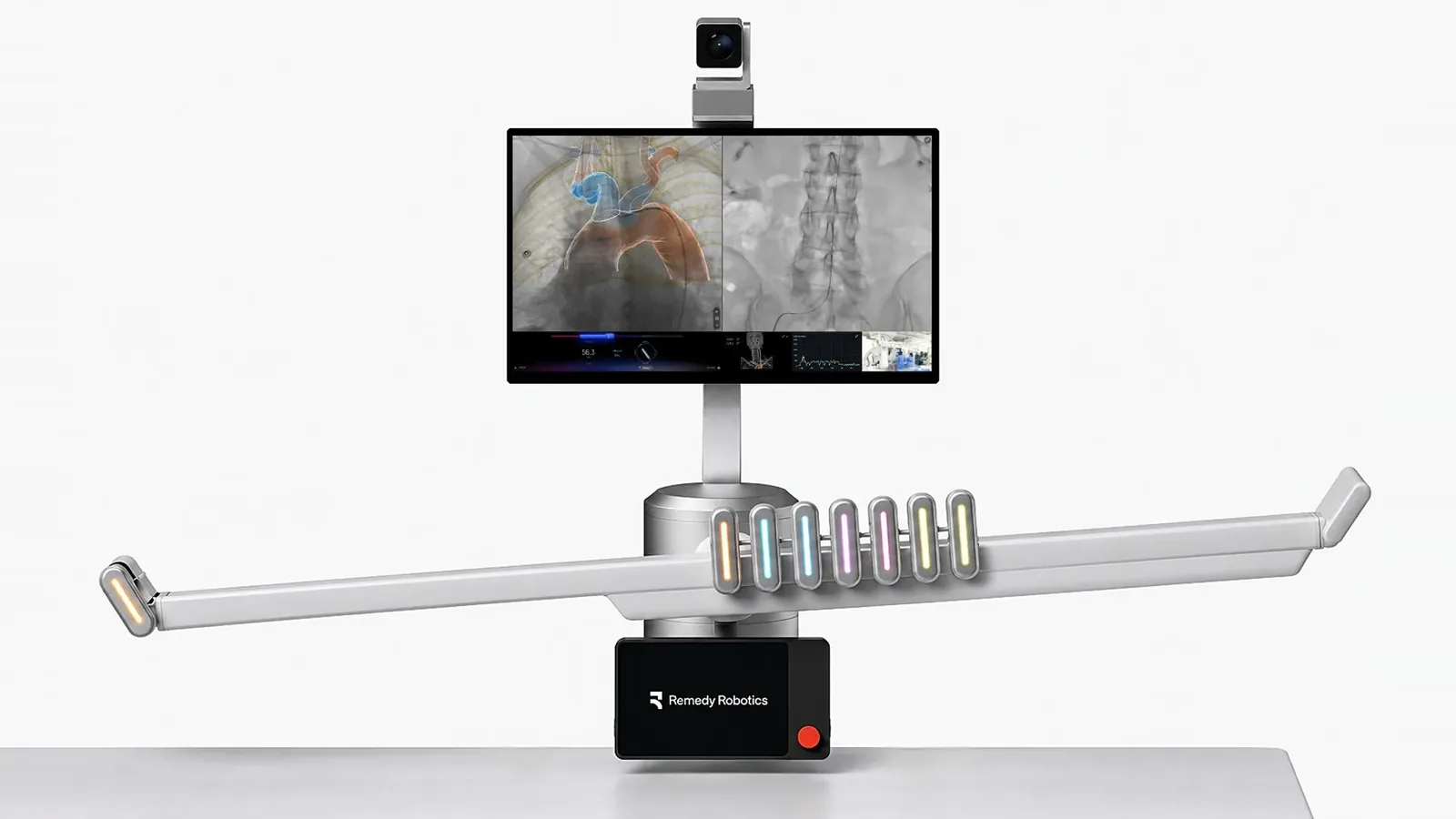
N1 is designed to complete entire endovascular procedures robotically and to operate on site, remotely or autonomously across neurovascular, coronary and peripheral vascular care. Its machine-learning software analyzes preoperative imaging, simulates procedures in advance and provides real-time registration of three-dimensional images with two-dimensional procedural images. That registration aligns the two views during an intervention. The system is designed for more than 30 cardiovascular conditions, while N1 remains under development and is not available for sale or clinical use in any jurisdiction.
The technical description covers AI-assisted control for off-the-shelf devices and proprietary 360-degree steerable catheters, alongside automated imaging segmentation. Supervised autonomy is built on real-time understanding of tool and anatomy positioning. The remote package includes connectivity management, audio and video without third-party integrations. In October 2025, Dr. Vitor Mendes Pereira and his team performed procedures described as the world's first fully remote neurointerventional procedures, operating from St. Joseph's Health Centre while patients were at St. Michael's Hospital across Toronto, with no bedside interventionist required.
What hospitals and suppliers should expect next
The access problem behind the strategy was described by CEO and co-founder Dr. David Bell, who said endovascular intervention is the gold standard treatment for stroke and many cardiovascular emergencies, yet access remains limited to a small number of hospitals. Remedy reports working with more than 100 hospitals worldwide. Prototype deployments will run through partners including SVIN Mission Thrombectomy, which selected Remedy as its exclusive robotics partner for N1 testing, development and global rollout. The Australian Stroke Alliance, representing 40 health bodies, covers clinical trials, regulatory approval and a planned nationwide rollout.
For hospitals and health systems, the near-term change is not procurement but preparation for evaluation. Large networks with stroke and cardiology centers could gain a route to extend specialist coverage to sites without on-site interventionists if remote operation proves safe and approved. Smaller hospitals could eventually access complex endovascular care without recruiting full specialist teams. That outcome depends on pivotal-trial evidence, regulatory clearance and reliable connectivity, staffing models and service arrangements that are not yet defined.
The scale of the clinical need frames the investment without defining the market for robotics. The World Health Organization estimates cardiovascular diseases caused 19.8 million deaths in 2022, about 32% of all deaths worldwide, with 85% due to heart attack and stroke. A World Stroke Organization-Lancet Neurology Commission estimated annual direct and indirect global stroke costs at more than $891 billion, including healthcare expenses as high as $315 billion and lost income at $576 billion in its 2017 assessment. Those figures describe treatment, rehabilitation and lost income, not demand for robotic intervention, and reported remote cases must still be followed by trial data and FDA progress.
