
Machines called intelligent now perform tasks once reserved for people, while human lives are judged by efficiency, Pope Leo XIV said Friday at UNESCO headquarters in Paris. The address anchored a day devoted to artificial intelligence, information integrity, education and artistic creation. He insisted new technologies must remain at the service of people rather than become instruments of domination and injustice. The statement matters for business because it reframes AI evaluation from raw capability to responsibility for human outcomes.
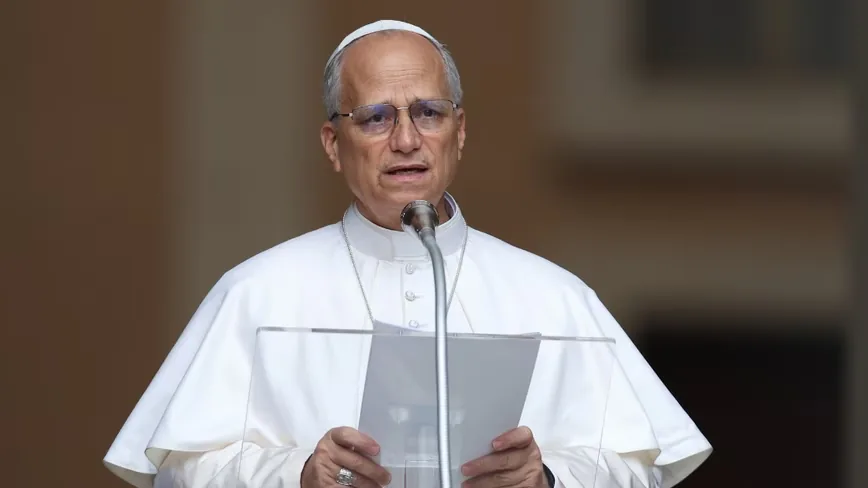
Intelligence for machines, efficiency test for people
Hours earlier at the Elysee Palace, Leo warned President Emmanuel Macron against a "paradise of machines" spreading through daily life. At UNESCO he expanded that warning into a principle for development and deployment. He said machines have taken over many human tasks over the years, and some computational systems are now described with a word tied to human thought. While intelligence is attributed to such systems, he added, societies struggle to recognise the inalienable dignity of persons, and those no longer seen as productive are rejected and discarded.
The Pope linked that judgment to how information now moves. People communicate faster than ever but not more truthfully, and a larger stock of facts does not make decisions wiser, he said. Artificial intelligence amplifies the gap because systems can correlate data yet cannot answer questions about the meaning of human life rooted in lived experience. He summed up the point in the phrase "Meaning is the oxygen of the mind" and described the search for truth as a matter of justice. He also praised a UNESCO programme that teaches careful use of media and digital tools.
Leo placed the critique in a wider institutional sequence. France 24 reported ahead of the speech that he was expected to call for AI regulation, and a day earlier he told the Pontifical Academy of Sciences that AI had brought new dangers to security and international peace. AI has been a central theme since he became pope, including his first encyclical in May titled Magnifica Humanitas. UNESCO said the Paris visit would include a framework agreement with the Holy See on AI cooperation, and earlier in the week the Vatican backed a new AI4Peace International Association.
What this means for companies using AI
For companies that deploy agents and automation, the message points to design around human benefit rather than output per hour. A support copilot, a sales assistant or a document workflow can correlate records and draft answers, but accountability for fairness, accuracy and final decisions stays with managers and domain staff. Small firms feel this in vendor choice and prompt controls, while large firms feel it in governance, audit trails and training that teaches teams to check machine output against lived context and client interests.
The speech also flags risks that buyers often underweight. Protection of children and young people was a direct request, with vulnerability never to become an opportunity for exploitation and tools expected to support learning, friendship and independent thought. Related warnings covered unity imposed through domination, new forms of colonialism, life treated as a thing to buy and sell, and science reduced to a technique of power. This does not mean a ban on automation, but it calls for questions on data use, age safeguards, media literacy and where efficiency scoring could exclude people.
The marker to watch is the framework agreement between UNESCO and the Holy See on AI cooperation announced around the Paris visit. Its text and first joint projects will show whether principles about dignity, education and information integrity turn into procurement criteria, school programmes or audit practice. The trip continues until Sunday with a speech due in Metz, which will indicate how consistently the same line is carried into other public settings.