
Oracle said on November 20, 2026 that all funding required for its OpenAI infrastructure contract is secured, calling itself the first hyperscaler fully funded for this investment cycle. The statement followed what the company described as its final capital raise earlier in November. The message matters because it separates the question of available capital from the still unfinished construction and spending transition.
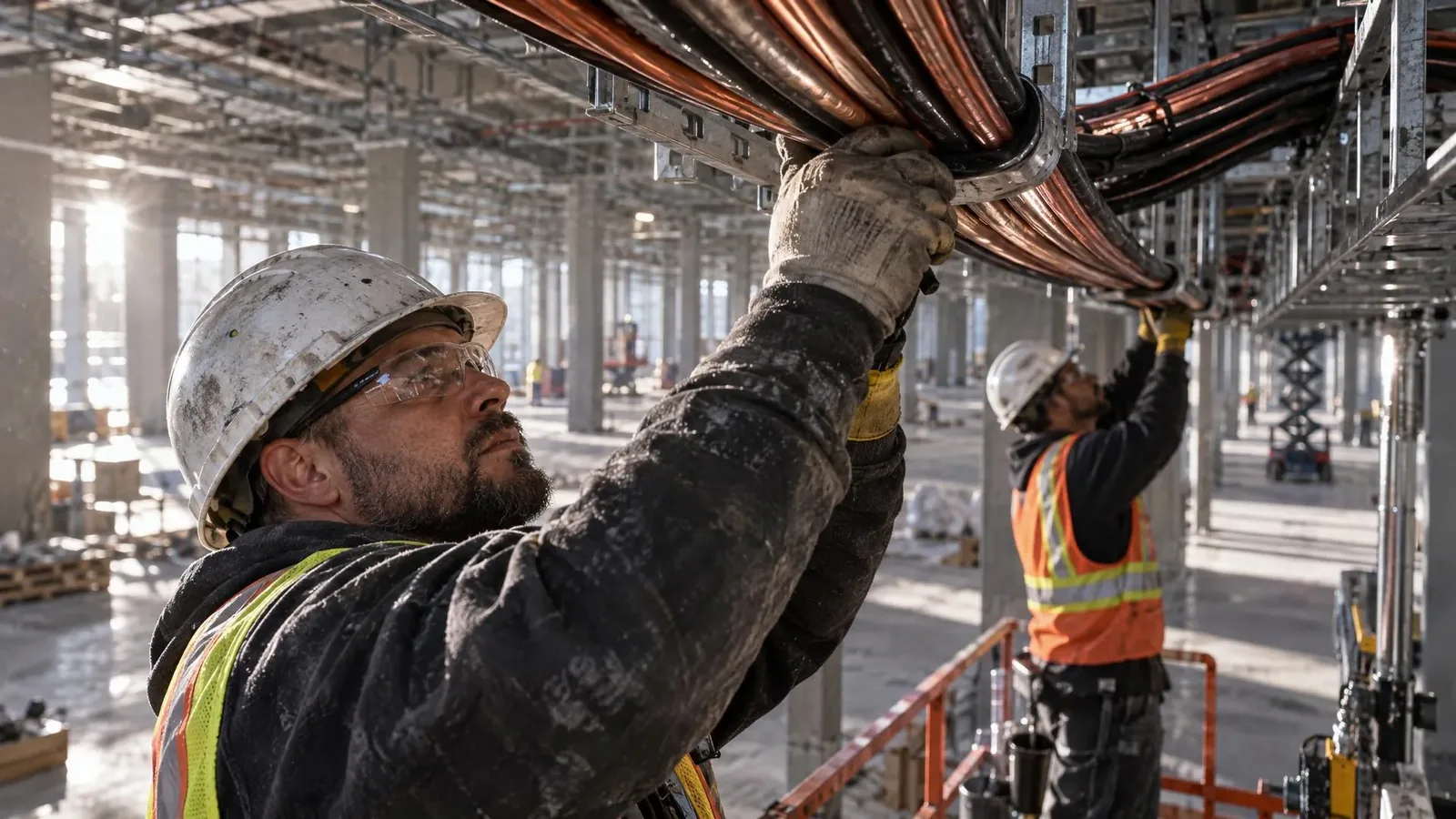
Funding structure and construction status
At its October 28, 2026 Investor Day, Oracle committed to limit additional capital-market funding for fiscal 2027 through fiscal 2030 to $20 billion, excluding refinancing of existing debt. The planned split was $10 billion in equity and $10 billion in gross debt. That ceiling came on top of a $20 billion equity raise completed in the first quarter of fiscal 2027 through an at-the-market program allowing share sales over time at market prices.
Oracle said the financing outlined at Investor Day, including vendor financing, is now in place. Further private discussions with vendors were described only as additional options, with delivery of the OpenAI contract not dependent on them. The company also preemptively characterized contrary media reports as incorrect, framing the November announcement as closure of the funding question rather than a new fundraising round.
The framework traces back to a February 1, 2026 financing plan targeting $45 billion to $50 billion in gross cash proceeds during calendar 2026. The stated purpose was additional Oracle Cloud Infrastructure capacity for contracted demand from large customers, including OpenAI. About half was to come from equity-linked and common equity issuance, including mandatory convertible preferred securities and the at-the-market program, and half from a single one-time investment-grade senior unsecured bond issue early in 2026, with no further bonds expected that year.
What secured funding means for AI buyers
For companies buying AI capacity, secured funding reduces the risk that contracted Oracle Cloud Infrastructure expansion stalls for lack of capital. Vendor financing, customer-provided hardware and customer prepayments are also expected to lower upfront cash needs during the move toward positive free cash flow. Small buyers gain more predictable access to capacity built for large contracts, while large customers can plan OpenAI-related workloads against stated campuses rather than uncertain financing.
The funding assurance does not remove execution and financial risk. The Abilene campus where Astra-6 was trained is nearly complete, Shackelford is fully permitted as the next gigawatt-scale campus, and NVIDIA Vera Rubin racks are on track for handover in the coming weeks, but none of that is delivered revenue yet. Peak capital expenditure is still expected in fiscal 2027 and fiscal 2028, with a step-down only in fiscal 2029, so buyers should verify delivery dates, capacity allocation terms and remedies for delay.
The marker to watch is positive free cash flow in the second half of fiscal 2028 and more than $30 billion in fiscal 2029, when growth is expected to become self-funded. If capital expenditure peaks on schedule, campuses hand over equipment as stated and prepayments convert into operating capacity, the funding statement will have translated into supply. A slip in those dates would show that capital availability alone did not resolve the build.
