
MIT researchers have built TangiMap, an agentic system that repurposes everyday physical controllers for creative software. The project comes from Yunyi Zhu, a doctoral student in electrical engineering and computer science and a CSAIL researcher, with Chang Xiao of Boston University. Presented at the ACM Symposium on User Interface Software and Technology earlier this month, it uses an AI agent to map digital functions onto knobs, faders and pads. For business users, it points to a way to make complex tools faster and more tactile.
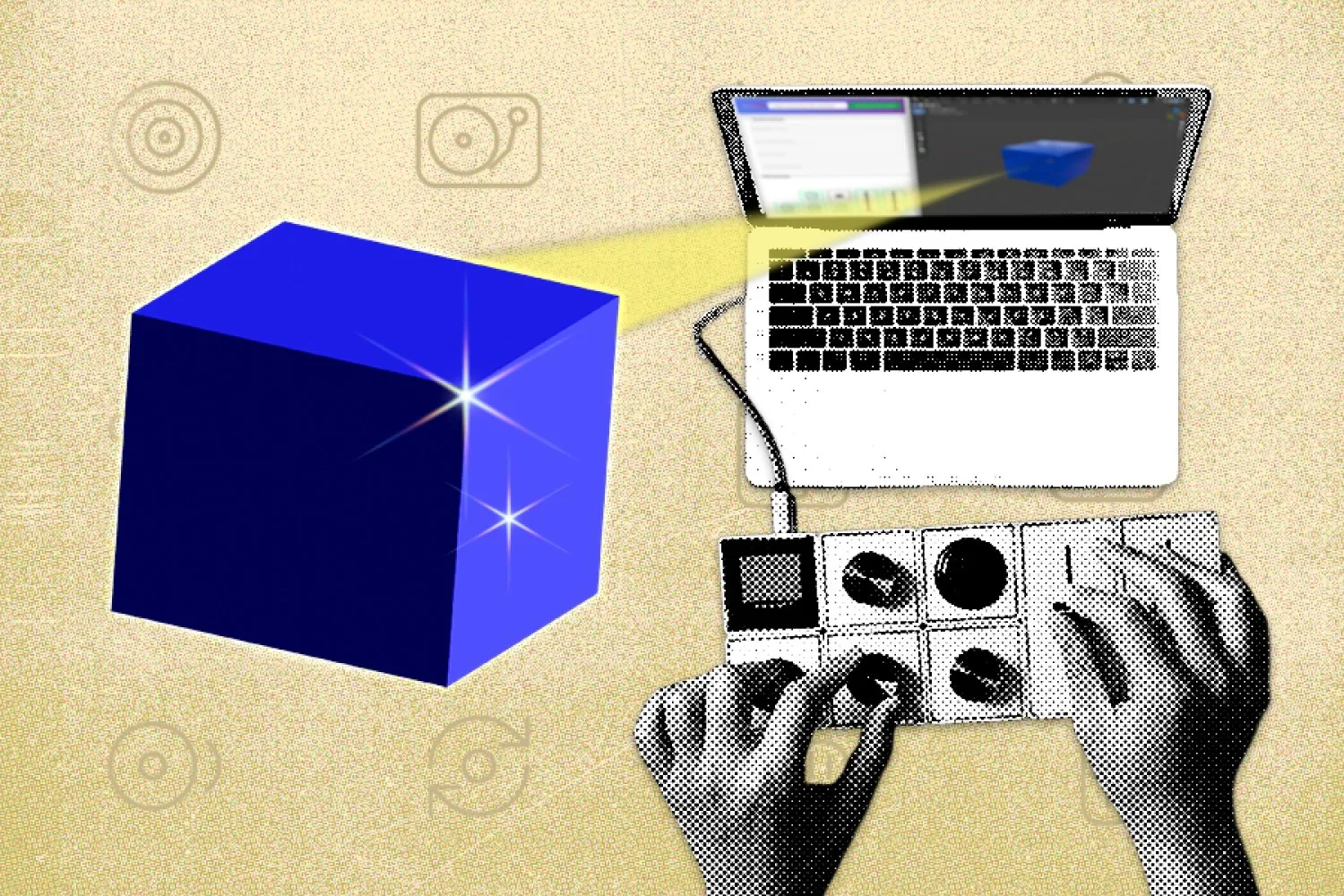
How TangiMap reassigns physical controls
The system was motivated by the loss of tangible inputs as phones, cars and kitchen appliances moved to touchscreens. Apple removed the home button from iPhones in 2017, part of that broader shift toward digital buttons, knobs and sliders. Physical controls remain more convenient for eyes-free use and parallel adjustment, as with a gaming controller or a volume dial. Yet factory-programmed inputs usually perform one fixed function. TangiMap treats them as reprogrammable, like DJ pads switching between cues, loops and samples.
The agent collects context about the active software, user tendencies and the control device itself. It can pull that context from a program API, an MCP server that connects agents to apps, or a screenshot interpreted by a vision-language model. A large language model then organizes the gathered information into a file before specific digital functions are assigned to physical inputs. The approach was supported in part by Google's Gemini Academic Program Award, with Zhu advised by MIT Associate Professor Stefanie Mueller.
Four prototypes show the range of the method. A standard mixer became a photo-editing controller for Adobe Lightroom, with on-screen visualization of the mapped color controls. The same type of hardware was linked to sound-mixing software for real-time performance on knobs and faders. A simpler mixer was connected to Blender, where a typed prompt generated a 3D model and shininess could then be tuned physically. In Adobe Character Animator, expressions and movements were tied to pad buttons for live puppeteering of a cartoon character.
What this means for business use of AI agents
For companies that run creative or operational workflows, the practical effect is faster parallel control of software parameters. Zhu notes that brightness and contrast can be changed together during image editing, a task that is awkward with a mouse on sequential sliders. A similar gain applies to live music adjustment, 3D-model refinement and character animation. Small studios could reuse low-cost mixers and pads instead of buying specialized consoles, while larger teams could standardize one controller across Lightroom, Blender and animation tools.
The current setup still requires a custom user interface for each application, which adds integration work before deployment. Ergonomics also need attention, since users hold a mixer differently for music production than for gaming, and control spacing affects speed and errors. The planned user study has not yet reported whether this form of smart remapping improves task time or quality. Buyers should ask vendors which APIs and MCP servers are supported, how screenshots are handled for privacy, and how mappings are stored and updated.
The marker to watch is whether the team delivers automatic UI generation from a device photograph, removing manual setup for each app. Zhu also describes objects that would select their own function per situation, illustrated by a chemical jar reporting its seal status or its typical use. Progress on hand-position awareness and more ergonomic hardware will show whether the concept moves beyond lab prototypes. If those steps land, general-purpose physical controllers could become a standard front end for agent-driven software.
