
Microsoft used Ignite 2026 in San Francisco to reposition Copilot from a generative AI assistant to an autonomous foundation for business work. The plan centers on WorkIQ, described as a centralized intelligence layer that retrieves enterprise data, interprets intent and filters what matters for each task. Microsoft 365 already stores about 19.5 exabytes of customer data, with billions of files, emails and messages added daily. For companies, the shift matters because agents would start work from governed business context rather than isolated prompts.
How Microsoft rebuilds Copilot around WorkIQ
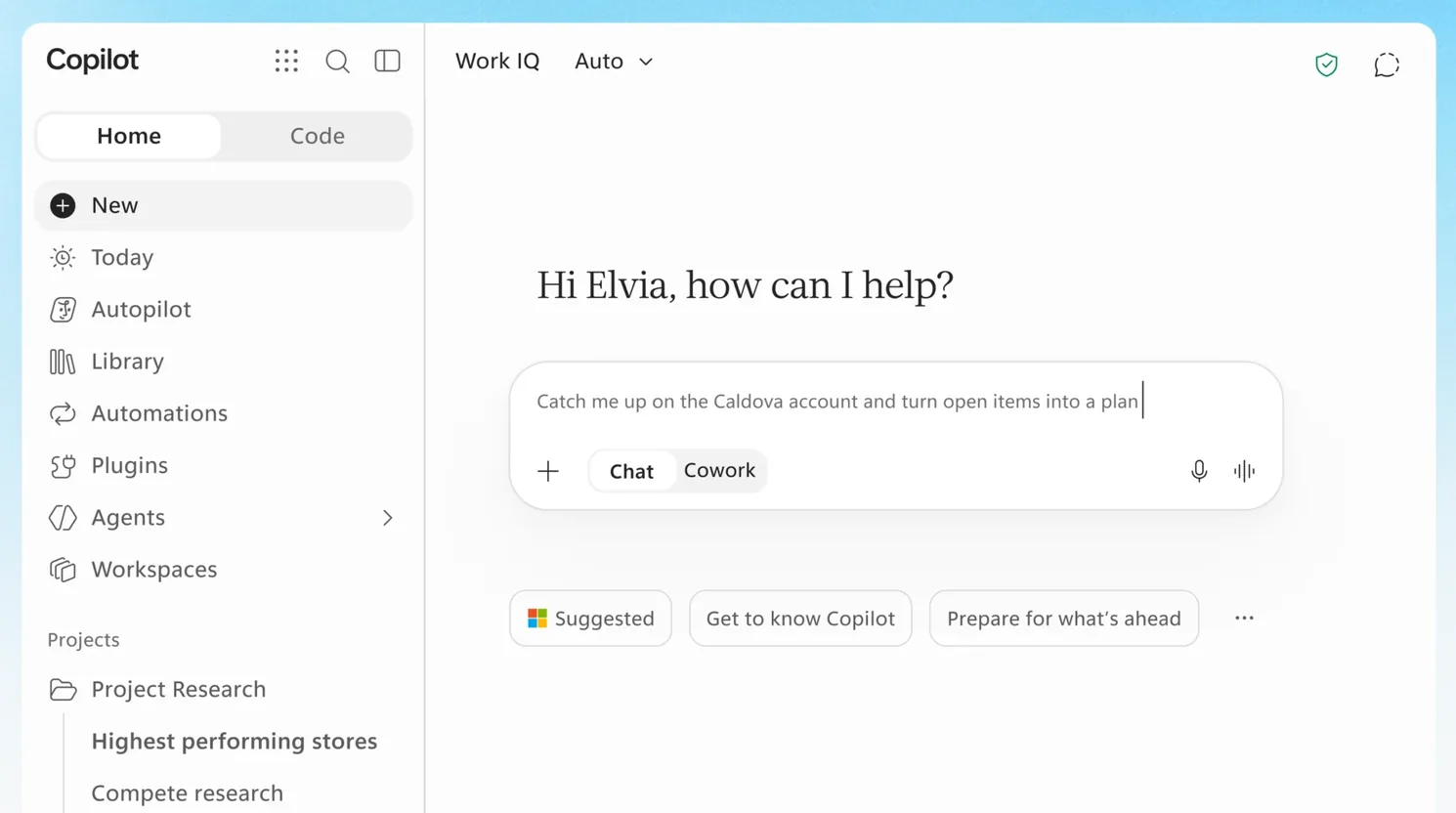
Copilot gains a new starting point called Home, which combines chat with a delegation portal named Cowork. Its core element is Auto, a composer that routes each request to the most suitable model and level of effort. For complex assignments, Auto can propose moving from Chat to Cowork and transfer the task without losing context. A second element, Today, is in private preview and scans email, calendar and Teams threads to surface daily priorities. It also drafts replies, proposes schedule changes and queues messages for review.
Office capabilities are being brought directly into the Copilot application, changing where documents are created. Users can move from notes or a whiteboard outline to a finished Word document or Excel spreadsheet inside Copilot. Files remain in Copilot, which can co-author alongside people, while Microsoft 365 security and compliance controls continue to apply. Collaboration is extended through Copilot Workspaces, a shared canvas where an agent drafts content and notifies a person to review it. People can leave comments there for other agents to address.
The background is the rapid growth of stored work data and the limits of giving agents raw access without reasoning. Microsoft positions WorkIQ as the layer that sits beneath Copilot agents and operates within existing permissions. The announcement also reflects competition to connect agents with systems of record rather than keep them as chat add-ons. That includes Dynamics 365 and, through partnership, Salesforce. The message from Ignite is that agents are moving toward multistep operational work such as supplier reviews and sales follow-up.
What autonomous Copilot changes for companies
The most operational change is Autopilot, now available to subscribers in the Frontier early-access program. Unlike prompt-driven agents, it runs continuously with its own Microsoft Entra identity, memory and productivity tools. It monitors Teams channels and email inboxes, automates recurring processes and can manage pipelines such as a multistep supplier review. For large firms this creates a way to assign ongoing processes to a named digital worker, while smaller firms gain coverage for coordination work without adding staff.
A second practical shift concerns control and measurement through Agent 365 and Copilot Managed Runtime. Agent 365 adds Business Analytics with a FinOps-style view that tracks work completed and hours taken, not only token consumption. Copilot Code, launching in a few weeks, lets staff generate dashboards, desktop widgets and lightweight apps from natural language prompts. Those apps run in Managed Runtime under IT monitoring. Buyers should verify access scopes, approval checkpoints for key actions, logging under the agent identity, and how ROI figures are calculated.
Confirmation will come from adoption of the Salesforce integration called Copilotforce, built on two-way Zero Copy links between Microsoft Fabric and Salesforce Data 360. It brings Salesforce context into Copilot, Teams and Office with 38 prebuilt skills for retrieving customer data, generating follow-ups and updating records. Dynamics 365 in Copilot adds more than 100 prebuilt skills across sales, service and finance. If those skill libraries move from announcement to daily CRM updates, autonomous Copilot will have passed its first business test.
