
John Deere announced on November 19, 2026 that it had acquired Orchard Robotics, operating as Orchard AI, a San Francisco company founded in 2022. The deal adds vehicle-mounted cameras and software that analyze hundreds of images per tree on each pass through orchards and vineyards. The stated goal is to turn tree-by-tree measurements into recommendations that guide equipment during the season, which matters because a missed spray or mistimed harvest can reduce fruit quality and seasonal profit.
How crop scans connect to Deere equipment
Orchard AI builds crop-intelligence products for growers of high-value specialty crops, including apples, wine and table grapes, blueberries, cherries, almonds, pistachios and citrus. Its cameras travel on farm vehicles and collect data on individual trees, vines and plants across the season. Deere says the system produces yield estimates, fruit counts, fruit size and color data, and canopy measurements. That plant-level data capability now enters Deere precision-agriculture portfolio under farm systems innovation led by director Tim Marquis.
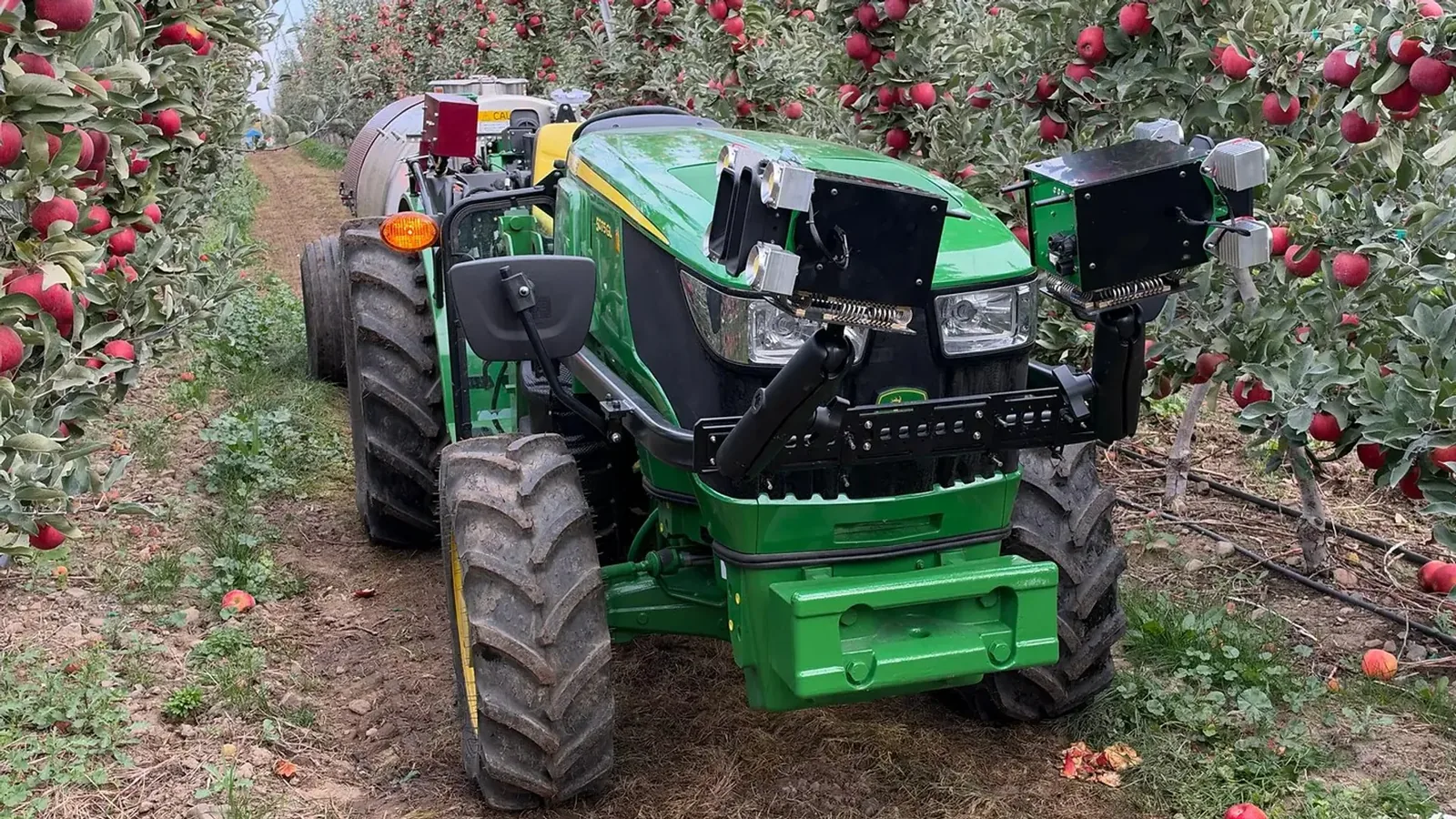
FruitScope Vision cameras mount on tractors, all-terrain vehicles and other farm vehicles already in use, operate at 1 to 12 mph, and return scan results the next morning. The hardware is designed for operations from 100 acres to more than 10,000 acres. FruitScope OS provides per-tree maps covering fruit count, size, color, disease and canopy conditions, with harvest-planning and crop-load-management tools on phones and computers. FruitScope software makes the information available for farm-management decisions.
Deere framed the acquisition around narrow decision windows created by weather, labor constraints and changing crop conditions. The workflows named for the combined technology include pruning, thinning, applying crop treatments where needed and determining which blocks are ready for harvest. One proposed workflow uses higher bloom counts to generate a prescription for where to spray. The recommendation could go to a mobile device for in-field application or to an in-cab G5 display, though Deere presented these examples as possibilities rather than committed products.
What plant-level data means for farm operations
For operating companies, the change is a shift from viewing crop maps on a screen to receiving block-specific instructions for machines and crews. A vineyard or orchard manager could prioritize harvest blocks by measured maturity or target treatments based on canopy and fruit data instead of uniform schedules. Small operations near 100 acres get the same per-tree measurement logic as estates above 10,000 acres, while large operations gain more from repeated passes that update yield and maturity estimates across many blocks.
The commercial structure also matters for budgeting and adoption. Orchard AI sells a per-acre, per-year subscription covering camera hardware, unlimited scans, FruitScope OS, Canary AI, training and support, with no separate hardware purchase. Canary AI is described as software that reasons over farm data to answer questions and recommend next actions. Buyers should verify scan turnaround in their conditions, compatibility with existing vehicles, coverage for their specific crops, and whether prescriptions flow to their displays and mobile tools without extra integration work.
The marker to watch is whether Deere converts Orchard AI maps into routine equipment workflows while keeping its pace of product updates. Justin Rose, president of Deere Worldwide Agriculture and Turf Division for Small Ag and Turf, said Deere wants to use its scale to reach more growers without losing speed of innovation and direct customer relationships. Early user Tyler Klick of Redwood Empire Vineyard Management pointed to useful vineyard insights and a responsive team under CEO Charlie Wu. Delivery of spray and harvest prescriptions to G5 displays would show the integration is moving forward.
