
Data-center electricity use doubles to 1,000 terawatt-hours by 2030 in the International Energy Agency World Energy Outlook 2026, released on November 19, 2026. The result comes from the Stated Policies Scenario, where AI-related investment drives the increase. Data-center capacity approaches three times its present size by 2035 as AI and digital services expand. For business, power-system delivery becomes a core constraint on AI infrastructure plans.
Stated Policies path to 1,000 TWh by 2030
The outlook frames the 1,000 terawatt-hour figure as a conditional pathway, not a forecast. The Stated Policies Scenario incorporates policy measures formally proposed but not yet adopted, while the Current Policies Scenario examines existing settings without further action. None of the scenarios is presented as a prediction. The distinction matters because investment decisions depend on which policies move from proposal to adoption.
Data-center electricity demand grew 17% in 2025, against 3% growth in global electricity demand, according to earlier IEA analysis cited in the report. Power consumption per AI task fell rapidly, but wider adoption and energy-intensive uses such as AI agents outweighed those gains at system level. Supply chains tightened for gas turbines, transformers, advanced chips and IT components. Planning and regulatory delays held up grid connections and other approvals.
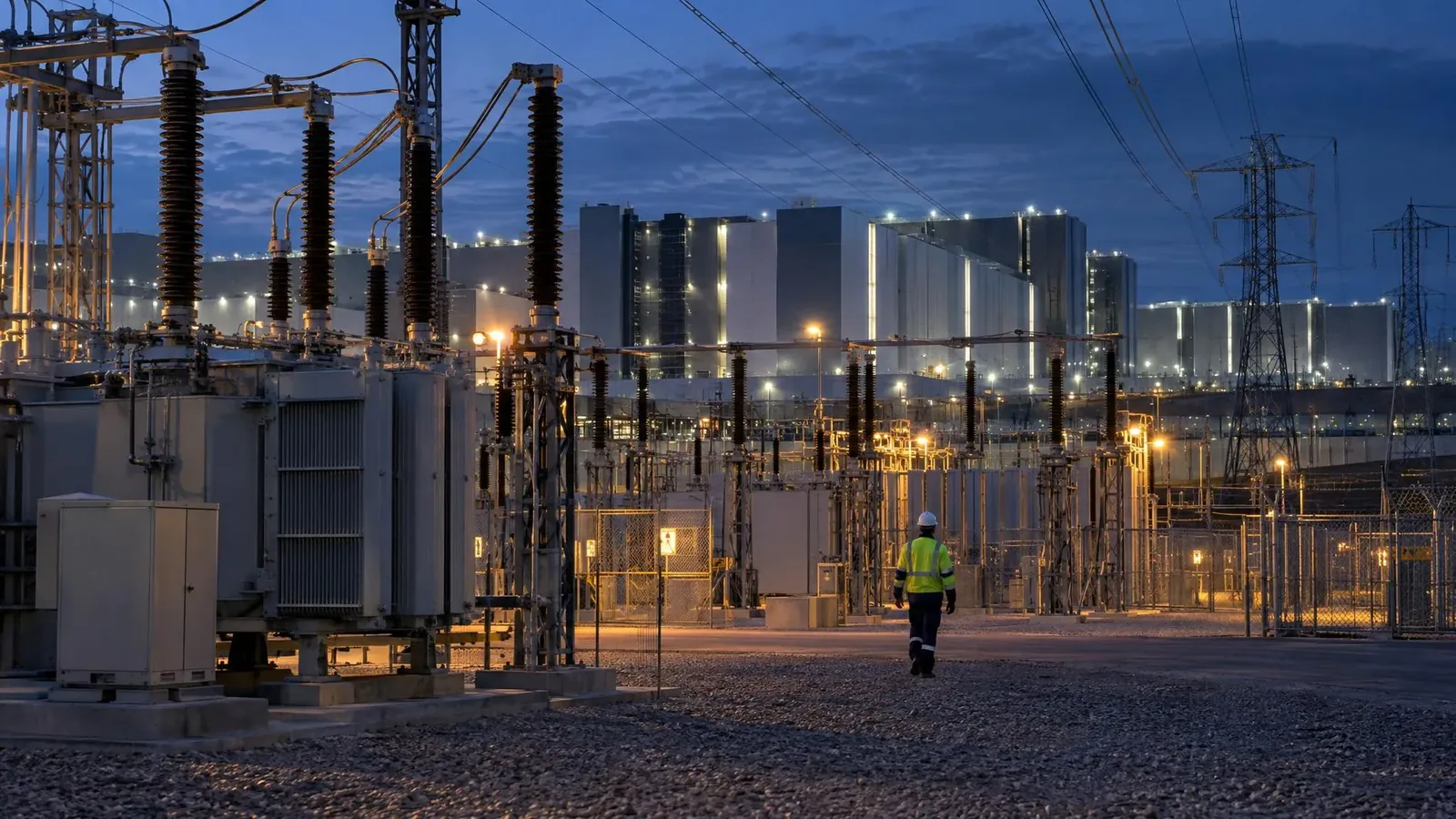
Grids, supply chains and in some cases public acceptance are emerging as constraints around the investment boom. The Stated Policies Scenario includes 26 million kilometers of new power lines by 2035, while about 16 million kilometers of existing lines need replacement or refurbishment. Renewables supply half of global generation by 2035 in the same scenario. Grid spending rises 75% over the next decade even in the Current Policies Scenario.
What power constraints mean for AI adopters
For companies deploying AI, the practical effect is longer lead times and location-dependent access to capacity. The full report projects more than 10,000 terawatt-hours of additional global electricity demand over the same period, with electric vehicles, cooling, heat pumps, industrial motors and data centers all contributing. Peak electricity demand grows 40% to 50% by 2035 across scenarios. Small firms will feel this through cloud availability and pricing, while large firms face site selection and grid-connection queues.
Workarounds exist but remain partial. Technology companies accounted for about 40% of corporate renewable power-purchase agreements signed in 2025. The pipeline of conditional agreements to buy electricity from small modular reactor projects grew from 25 gigawatts at end-2024 to 45 gigawatts. Many onsite natural-gas projects stayed at early stages, and rapid swings in AI data-center demand can stretch onsite plants, increasing the role of battery storage.
The marker to watch is whether grid connections, equipment supply and flexible operation keep pace with data-center growth through 2030. The analysis found demand growth does not necessarily raise prices when policies and infrastructure investment are in place. Smart grid integration and incentives for flexible operation are the mechanisms to follow.
