
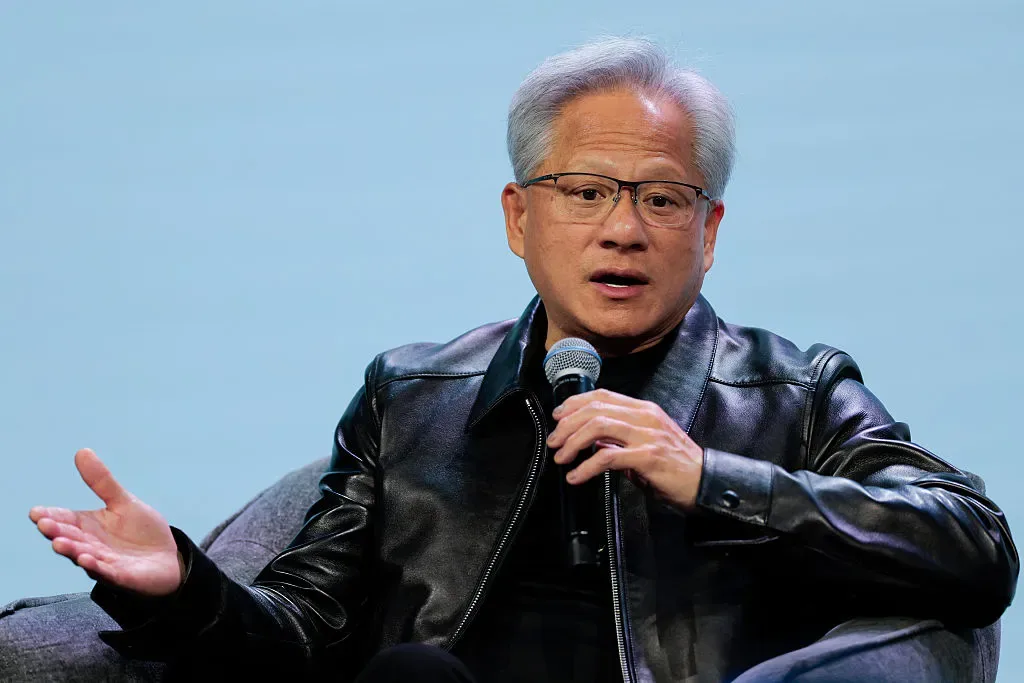
Jensen Huang stepped down after 33 years leading Nvidia, removing the decision-maker behind tens of billions in annual startup investments and 105 funding rounds this year alone, according to PitchBook. Investors describe the loss as a direct threat to dealmaking, valuations and early-stage capital availability. For companies buying AI infrastructure, the change matters because Nvidia checks often unlocked the rest of the round.
Scale of Nvidia startup bets under Huang
Nvidia frequently entered as the largest investor, including an $800 million contribution to a $2 billion Series B for Reflection AI before meaningful revenue, as reported by the Wall Street Journal. It backed CoreWeave while private and joined two Crusoe rounds, including a $1.4 billion Series E. This year it agreed to buy Hugging Face for $13 billion, with closing expected in 2027, and holds stakes in Mistral AI, Lambda and Black Forest Labs.
Most significant startup decisions came from Huang personally, according to Umesh Padval of Seligman Ventures, who knew him since the Mellanox Technologies board before its approximately $7 billion acquisition in 2020. Infrastructure founders needing $100 million to $500 million in GPUs often raised half that sum from Nvidia at valuations of $1 billion or more. That participation gave other investors confidence to accept lofty valuations and fund capital-intensive builds.
The portfolio concentrated on neoclouds, inference providers and open-weight models, segments too expensive for smaller firms to build alone. Zain Javaid, co-founder of hardware company Ghost, links the emergence of that ecosystem to Huang initiatives. Dawn Capital investor Shamillah Bankiya said Nvidia carried almost every AI-native startup from application to neocloud, with support extending to Europe and open-source projects.
What funding shift means for AI buyers
Interim CEO Colette Kress is expected to change investment policy and write smaller checks, with greater selectivity toward new companies and reduced follow-ons. One investor described her as much more conservative and unlikely to sustain early-stage funding at the same level. For startups, that points to longer fundraising, lower valuations and harder paths for pre-revenue infrastructure teams that relied on Nvidia as anchor investor.
Large buyers may see mixed effects over time. Less Nvidia capital could open room for Google, Amazon, Microsoft and AMD to back startups around their own chips and clouds, and Google announced two new chips this week. Battery Ventures partner Dharmesh Thakker expects rivals to compete on product, ecosystem and community against CUDA, Nvidia software for running AI models on its GPUs, plus financial capacity. He doubts they will match hundreds of millions for pre-revenue infrastructure.
The marker to watch is the size and frequency of Nvidia-led rounds in the next two quarters, plus whether Big Tech replaces the anchor role in neocloud and inference deals. Continued $1 billion-plus rounds without Nvidia would signal a filled gap. A sustained drop would confirm tighter capital for GPU-heavy startups and slower expansion of alternative compute suppliers.
