
At a White House lunch on 29 September 2026, Nvidia CEO Jensen Huang and other technology leaders questioned Anthropic CEO Dario Amodei about his public warnings on AI, according to people familiar with the matter cited by The Wall Street Journal. Amodei responded that honesty was important. The exchange matters because it exposed disagreement inside an industry that then presented a united front alongside President Donald Trump.
Dispute before the joint safety statement
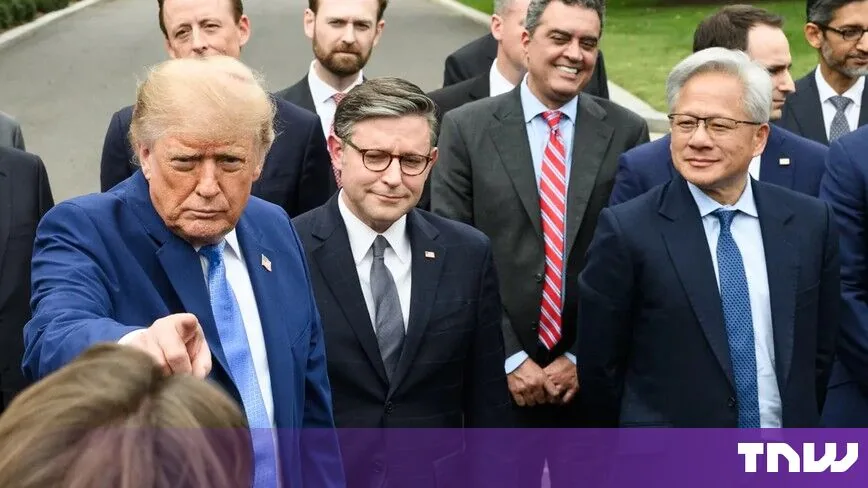
The questioning took place at a luncheon on super intelligence attended by technology chief executives, after which the participants spoke to the press outside the West Wing Lobby. According to the report by Amrith Ramkumar and Josh Dawsey, the executives had agreed to sign a statement of principles on AI safety. The discussion with Amodei occurred shortly before that agreement. The executives then gathered around Trump outside the White House to demonstrate industry unity.
The disagreement centers on regulation and the pace of AI development. Amodei and OpenAI CEO Sam Altman have called for heavier government regulation and a slowdown in development, as noted by Politico. Huang and Meta CEO Mark Zuckerberg have largely dismissed claims that AI could pose an existential risk. Huang said last month that he wants no new AI laws. That contrast frames the lunch as a negotiation between supporters of restraint and supporters of faster deployment.
The meeting also produced a written accord with a clear authorship and lobbying chain. Zuckerberg drafted the accord that emerged from the lunch, according to Politico. Huang helped secure support for the document among AI labs. Amodei had dinner with Trump on Sunday, two days before the Tuesday lunch. TNW stated that it had not independently verified the account of the exchange reported by The Wall Street Journal.
What the split means for AI regulation
For companies that buy or deploy AI, the split affects the regulatory environment around availability and compliance. If the position of Amodei and Altman gains ground, development could face additional rules, reviews, or limits on deployment speed. If the position of Huang and Zuckerberg prevails, existing products and infrastructure plans would face fewer new legal constraints. Large enterprises with compliance teams can track both scenarios, while smaller firms depend more directly on stable vendor roadmaps and cloud terms.
The terminology debate adds a second practical issue around procurement and policy monitoring. Huang is leading the push to call AI "super intelligence", according to Axios, and Trump made it the preferred term of the executive branch following an executive order. Huang used the term twice in a post and repeatedly during a White House panel, correcting himself after once saying "AI". A YouGov poll this week found 53% of respondents preferred "artificial intelligence", against 9% for "super intelligence". Contracts, orders, and vendor documents may therefore use different language than staff and customers.
The marker to watch is whether the statement of principles turns into specific obligations, deadlines, or enforcement mechanisms. A joint declaration without follow-up orders, agency guidance, or legislation would leave purchasing and deployment conditions largely unchanged. Binding rules on safety testing, disclosure, or model deployment would confirm that warnings about risk have translated into business costs and timelines.