
What Actually Happened
OpenAI published an essay called The Eternal Complement, and the idea in it is unexpected. The main value of brilliant machines may turn out to be not great discoveries, but monotonous everyday work. The text came out on October 1, 2026, written by Hemanth Asirvatham and Elliott Mokski. It's the first publication in a new author series about the next economy on the Intelligence Age platform.
The authors note right away that the essay reflects only their views, not the company's official position. A note emphasizes that Intelligence Age is a space for independent voices exploring the future with AGI. I like this format: OpenAI isn't releasing a manifesto but starting a discussion about how superintelligent AI will change work, business, and society.
Why Intelligence Age Exists
OpenAI launched the Intelligence Age platform in August 2026. The idea is a place for essays, research, and reflections on the world after artificial general intelligence arrives. The goal is to move the conversation beyond technical releases and benchmarks and talk about consequences—economic, social, philosophical.
Launching the next economy series now makes sense. Models are getting more capable, agents are taking on more tasks, and businesses are actively automating processes. The question is no longer whether AI can write code or analyze documents. The question is how the labor market will restructure, which jobs will disappear and which will appear, and who will benefit from the transition.
The choice of topic for the first essay is telling too. Instead of the usual talk about AI replacing scientists or becoming a digital Einstein, the authors look the other way. They ask: what if the real breakthrough isn't genius itself, but the ability to apply it to boring, repetitive, invisible work at massive scale?
The Core Idea: Eternal Complement, Not Replacement
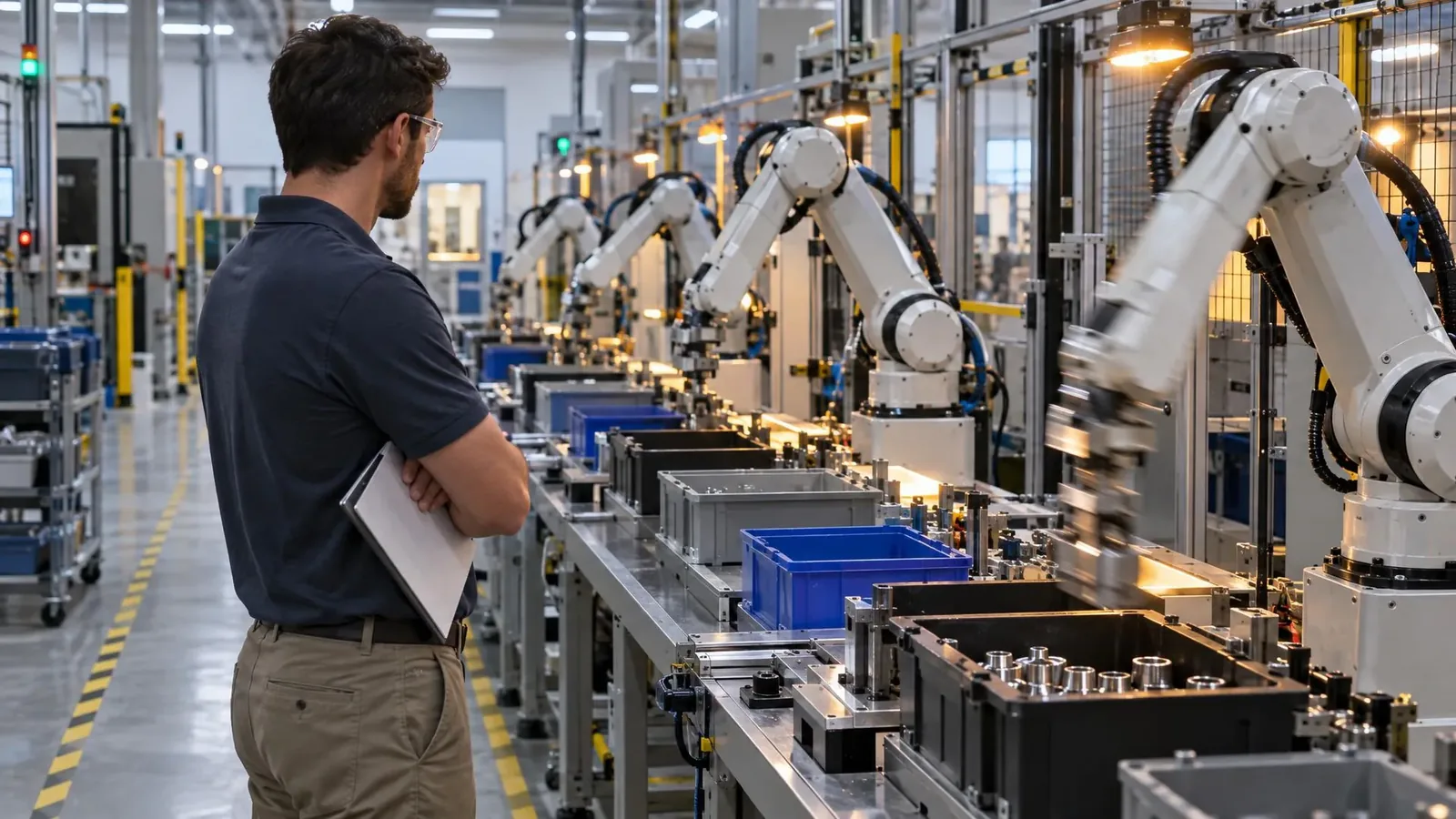
The title The Eternal Complement already carries the main thesis: machines don't have to displace humans—they can eternally complement them. And specifically complement them where people find it boring, hard, or unprofitable—in routine, checking, reconciliation, support, quality control, maintenance.
The authors' logic is simple and counterintuitive at the same time. Human genius is a rare and expensive resource that can't be scaled to every little thing. Machine genius is scalable. If an AGI-level system can work just as carefully on the millionth time as on the first, it can raise the quality of ordinary work to a level once available only in exceptional cases.
For businesses, this means a shift in perspective. Many companies today think of AI as a way to create something fundamentally new—a new product or a breakthrough feature. The essay offers a different frame: look at your most boring processes. That's exactly where employees burn out from repetition, where errors and delays pile up, and where brilliant machines can deliver maximum impact.
Why Routine Matters More Than Breakthroughs
At first glance, the idea sounds modest. Why build superintelligence just to handle repetitive tasks? But the authors hint that value in the economy isn't created only in moments of insight. A huge part of the global economy is logistics, accounting, customer support, document flow, compliance, administration. All of it depends on attentiveness and consistency.
The problem is that humans are poorly suited to endless repetition. We get tired, distracted, lose motivation. That's why routine work is often done half-heartedly, and overseeing it eats up tons of managers' time. If AI can do this work at an expert level without fatigue, it will change the very cost structure of companies.
This connects directly to the world of AI agents and automation. Modern agents can already watch email, reconcile spreadsheets, fill CRMs, prepare reports, and answer typical requests. For now these are separate scenarios, but the essay suggests seeing a broader trend behind them: an economy where high-quality execution of routine becomes free and ubiquitous.
What It Means for Business and Regular People
For entrepreneurs, the takeaway from The Eternal Complement is quite practical. Don't wait for AGI to rebuild your processes. Today, identify tasks where stability matters more than creativity, and hand them to machines. This frees people for client communication, decision-making, and growth—where the human factor truly matters.
For employees, the message is double-edged. On one hand, fears of replacement remain: if a machine does routine better, some functions will indeed go away. On the other hand, the complement concept keeps humans in a central role. The machine handles monotony, while the human sets goals, checks meaning, and takes responsibility. Whoever learns to manage these systems will become noticeably more valuable.
It also matters that OpenAI is publishing this as the start of a series, not a one-off opinion. That means more essays on the next economy are coming—likely on prices, employment, education, and new business models. For anyone following AI, Intelligence Age could become an important source of signals about how OpenAI itself sees the future and what it's preparing the market for.
Ultimately, the idea of brilliant machines doing boring work fits the main automation trend well: the winner isn't the one who just deployed a chatbot, but the one who rebuilt routine around AI and freed people to grow. And if a business needs a clear example of that transition, it's an AI agent instead of a hundred managers—an approach where a system configured once handles operations, control, and communications every day without fatigue.