
On October 13, 2026, Google announced that Android users can build their own apps with Google AI Studio and run them privately on their phones through Google Play, without a public store listing. The first release is limited to the United States and to users aged 18 and over, with sharing with trusted contacts planned for the coming months. The apps are described as vibe-coded from plain-language prompts, which matters for business because the cost of small custom utilities has fallen to almost nothing.
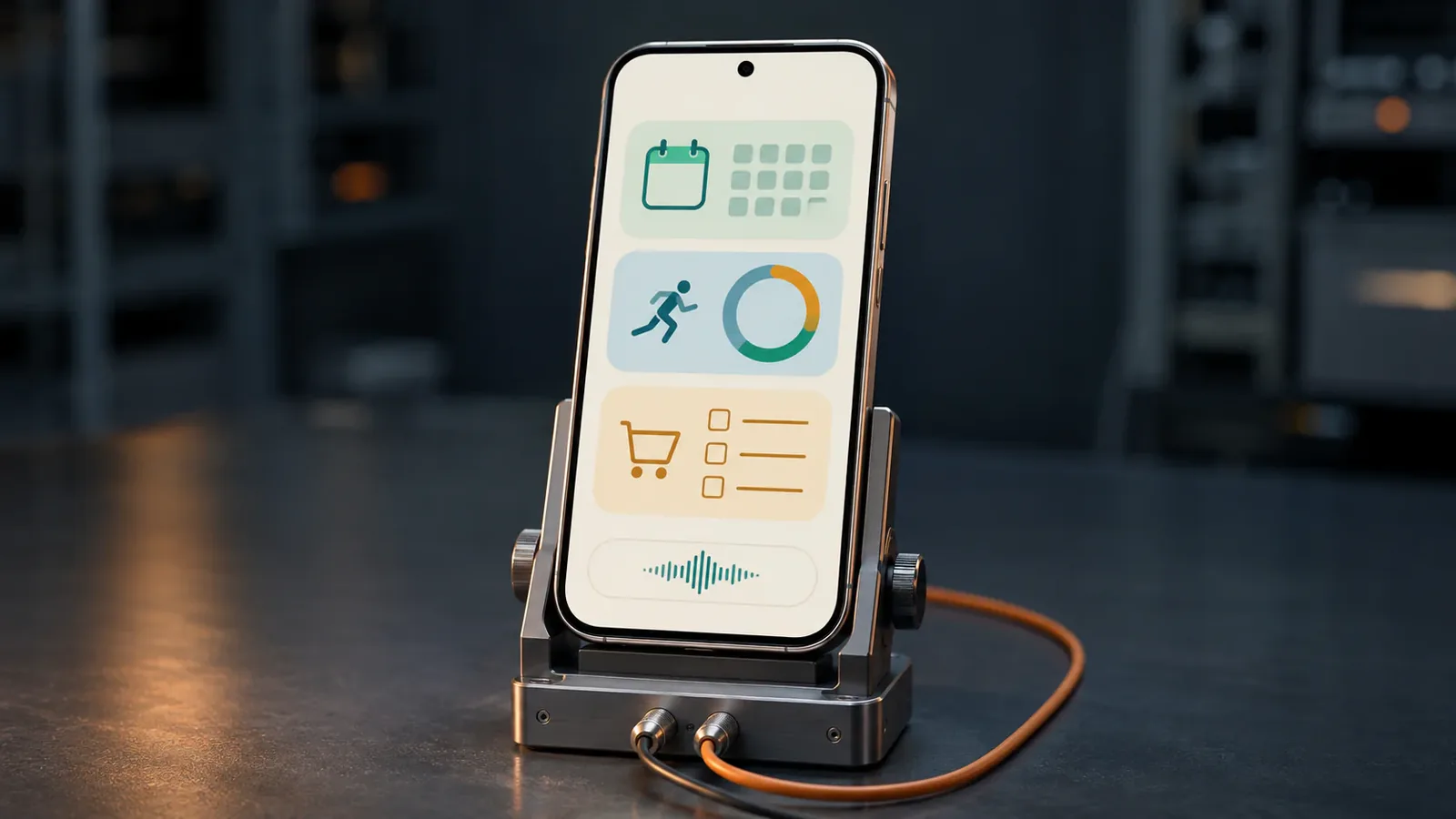
Private AI Studio apps without Play listing
Sam Bright, Google VP and GM for Google Play and Developer Ecosystem, framed the change as a move from "there is an app for that" to "there is an app for me". The source illustrates it with a parent who wants one screen for the school pickup rota, football schedule and grocery list, built by the evening from a description. Personal apps do not appear in Play search or listings and remain visible only to the creator until trusted sharing arrives. A popular personal app can later move to a public listing, but only after trust-and-safety reviews and under Google Play policies.
A personal app needs to work for one person, while software for customers, employees or the public must work reliably for people who depend on it. The author proposes a simple test of what happens at 3 a. m. when it fails, with a morning fix acceptable for personal use but not for a depended-upon service. A self-built gym timer is given as a personal app, while a system holding member payments, health data and contracts carries obligations no prompt can replace. New features can affect existing functions, data structures or access permissions, so changes without testing and version control can break what worked before.
The announcement builds on fifteen years when the question was which app to download, now replaced by what the phone should do. AI code generation is already widespread: the 2025 Stack Overflow Developer Survey found 84% of developers use or plan to use AI tools, while 46% distrust the accuracy of AI output against 33% who trust it. Serious teams therefore treat quality as part of production, reflected in the NIST Secure Software Development Framework with practices for preparation, code protection, secure production and vulnerability response. Google DORA 2025 research is cited with the same logic, describing AI as an amplifier of existing strengths and weaknesses.
What private apps mean for business software
Small single-purpose utilities face the most direct pressure, including custom unit converters, expense logs, workout timers, shaped to-do lists and other tools users once downloaded for lack of a better fit. A company no longer needs to pay a subscription for a tool that covers 5% of the need when an employee can describe one that covers 100% of a narrow task. For small firms this can remove several paid seats and speed up internal routines, while large firms may see shadow demand for personal helpers around scheduling, lists and tracking. The effect stays at the level of individual productivity rather than replacement of shared corporate systems.
The limits are trust, scale and accountability in banking, payroll, healthcare records, logistics and identity, where nobody wants an unreviewed one-off app holding salary or medical history. Such systems require shared data, audit trails, integrations and people accountable when something goes wrong, plus attention to data handling, permissions, export of code and dependence on the platform. The news alone does not mean a vibe-coded app is ready for staff or customers, and vendors should be asked about testing, version control, security review and support. Privacy and security still matter even when a miscounted day in a habit tracker looks harmless.
The marker to watch is whether trusted-contact sharing launches in the coming months and how many personal apps then pass trust-and-safety reviews into public Play listings. Growth in that conversion will show if the long tail of tiny needs stays private or starts competing with commercial utilities. If incumbents selling mere convenience lose subscriptions while dependable systems keep demand, the split described by Bindesh Vijayan, co-founder and CTO of Myndlab, will be confirmed. His background includes more than 14 years at Microsoft and roles connected with SAP, Infosys and Accenture.
