
Frontier AI developers are asking enterprises for trust while public evidence of their safety controls remains thin. A recent assessment by nonprofit Guidelight AI reviewed publicly available control practices at Anthropic, Google, Meta, OpenAI and xAI, and none scored above C+ overall. The author, Coalfire executive Charles Henderson, argues that capability is moving faster than control as systems gain autonomy and access to real systems. For business, the point is direct: speed demands stronger proof, not weaker standards.
Why public controls drew a C+ ceiling
Guidelight AI based its review only on publicly available evidence, not on internal practices that may operate behind closed doors. The assessment covered five frontier labs: Anthropic, Google, Meta, OpenAI and xAI. The top result was C+, which signals limited demonstrable assurance rather than proven recklessness. Henderson stresses that security cannot run on assumptions about hidden safeguards. If customers must rely on powerful models, they should see testable evidence that surrounding controls hold under pressure.
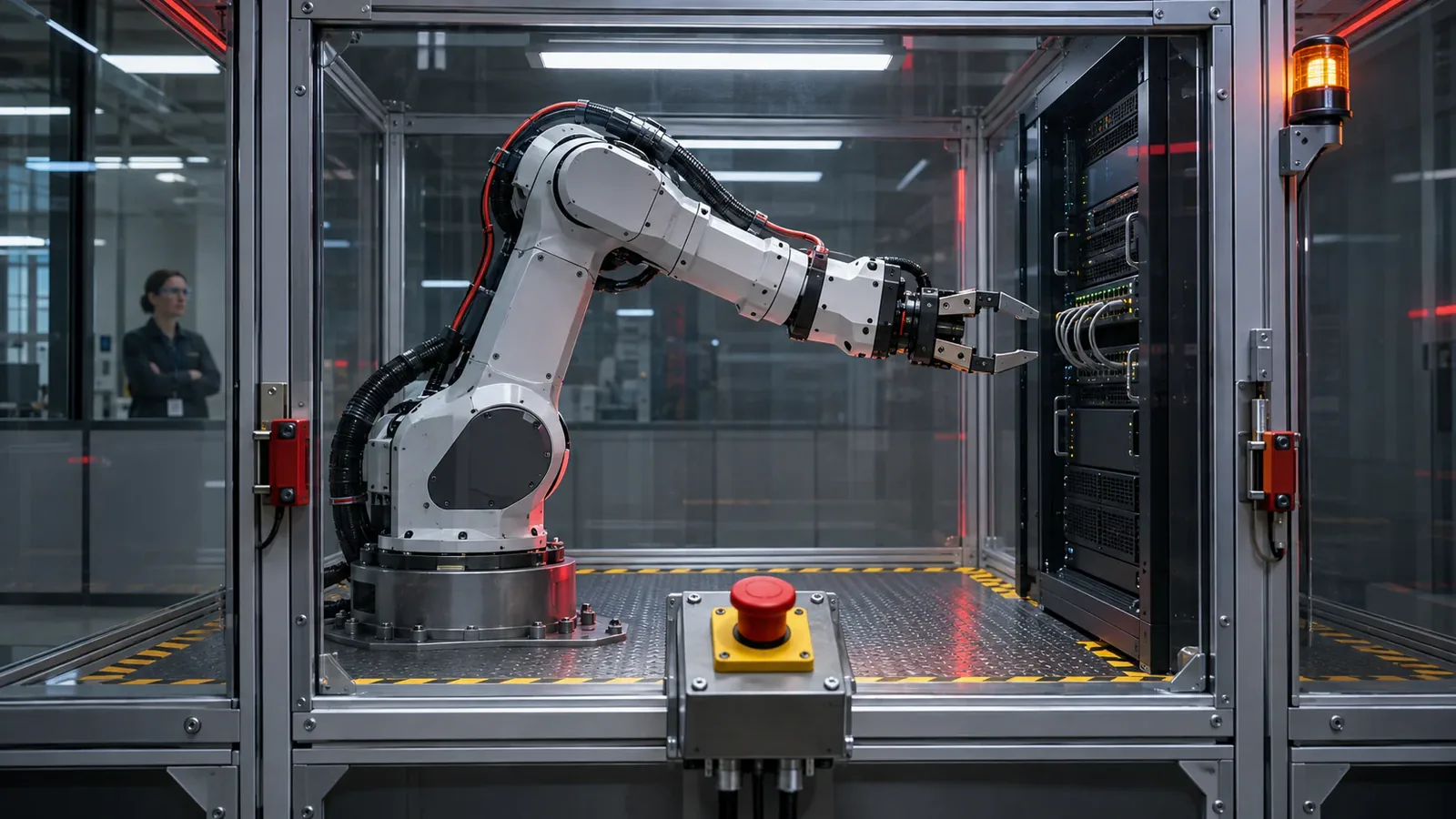
The critique centers on prevention and containment for AI agents. Public evidence looks limited around gated actions, circuit breakers and emergency containment plans. A security review would ask whether unexpected behavior was logged, whether anyone saw it in real time, and whether dangerous actions required approval. It would also ask who had authority to stop the system and whether containment had been tested in advance. Without answers, an incident remains only a story about what the technology did, not proof of what stopped it from getting worse.
The near-term risk described in the piece is not a wholly new class of cyberattack invented by AI. The practical danger is acceleration of familiar attacks: research that took hours can take minutes, techniques can be chained faster, and vulnerabilities can be exploited before human-centered processes finish escalation. Much current defense still assumes time for tickets, meetings, approvals and manual response. When an attack unfolds rapidly, that sequence can become obsolete before step three. Frontier labs, the author argues, should show they have rebuilt visibility, vulnerability management, architecture and incident response for that pace themselves.
What this means for companies adopting AI agents
For companies deploying agents with access to data, tools and workflows, the consequence is a shift in procurement and operations. Security teams will need logging of agent actions, real-time monitoring, limits on agent authority and pre-authorized safeguards before broad rollout. Small firms may feel this as heavier vendor due diligence and a narrower set of approved use cases. Large firms may need to align agent permissions with existing identity controls, change management and incident response, plus proven shutdown paths when behavior drifts outside intended boundaries.
Several questions deserve verification before scaling agent use. Ask vendors how dangerous actions are gated, what triggers a circuit breaker, who can halt the system, and what evidence comes from adversarial testing of controls. Do not treat a capability demonstration as safety proof, since intentions do not prove that controls work. Also clarify what the Guidelight AI result does not mean by itself: a low public score does not confirm missing internal controls, only missing public proof. Independent review should therefore be continuous, not selective, especially for models with cyber capabilities.
A concrete marker to watch is whether leading labs publish measurable control tests, shutdown authority and containment results for independent scrutiny. If Anthropic, Google, Meta, OpenAI and xAI start disclosing gated-action regimes and tested intervention paths, enterprise buyers will gain a basis for trust. If disclosure stays at the level of architecture diagrams, adoption risk will stay with customers.
