
DuPont announced on November 12, 2026 a research collaboration with Microsoft and NobleAI to give its scientists and engineers broader access to AI and machine-learning tools. The stated aim is to cut the time needed to deliver customer solutions by assessing options faster and guiding experiments. The setup matters for industrial R&D because it moves computer simulation earlier into candidate selection.
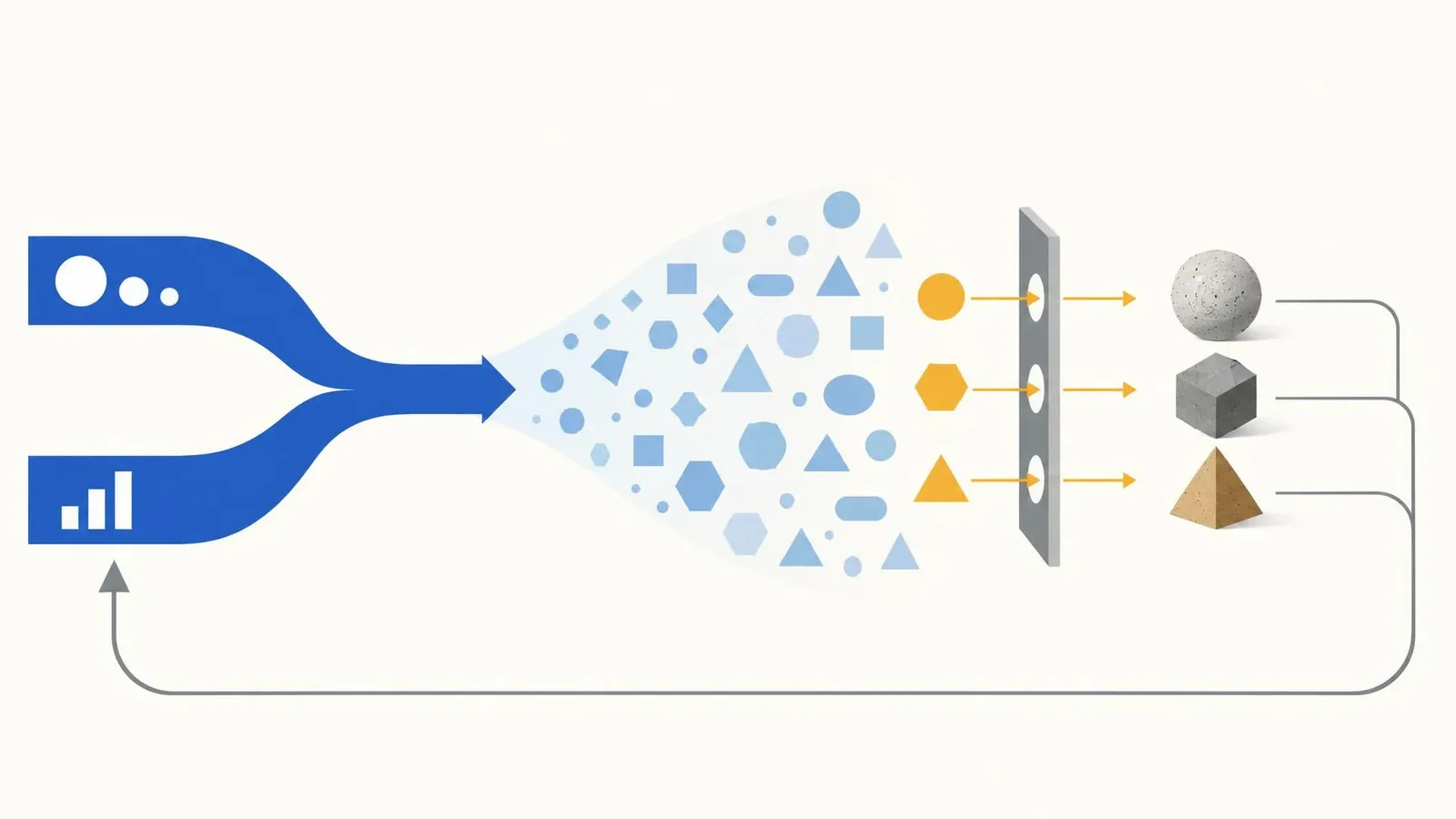
How Discovery and VIP divide research work
Each participant brings a defined part to the project. DuPont contributes expertise in advanced solutions and applications across its markets. NobleAI supplies Science-Based AI modeling through its Visualizations, Insights and Predictions Platform, known as VIP. Microsoft provides Discovery, its enterprise agentic AI platform for R&D, described as an environment that connects data, models and team know-how.
The workflow separates orchestration from prediction. Discovery handles planning and orchestration of research activity, while VIP provides predictive and optimization modeling, according to NobleAI CEO Alex Wang. Microsoft corporate vice president Aseem Datar described Discovery as an agentic environment for scientific discovery. The division keeps project management and scientific calculation in distinct software layers.
DuPont teams are expected to use existing data, expertise and processes to test more ideas in silico before physical work. In silico here means evaluation through computer simulation rather than laboratory trials. Models narrow the field to the candidates most worth pursuing, and physical testing then concentrates on that shorter list. Simulation therefore filters options instead of replacing laboratory verification.
What faster simulation means for industrial R&D
For companies that develop materials and formulations, the practical effect would show up in development queues and testing loads. More candidates could be screened computationally before samples are made, which reduces wasted laboratory runs. Small teams could review a wider option set without adding staff, while large portfolios could run parallel assessments across product lines. DuPont serves healthcare, water, construction and industrial markets, where such screening applies to many formulations.
The limits center on data quality, model reliability and transfer across sites. NobleAI positions Science-Based AI for cases where industrial data is limited, with scientific principles integrated into modeling and VIP turning sparse data into predictive models. Buyers should still ask how predictions were validated, which data the models require, and where accuracy drops. This announcement alone does not prove shorter time to market or wider portfolio impact.
The marker to watch is whether a workflow proven in one DuPont laboratory spreads to other teams under the governance model described by CIO Matt Abbott. CTO Marty DeGroot linked the tools to faster development and shorter time to market. If additional labs adopt the same Discovery plus VIP sequence, the collaboration will have moved from pilot to operating capability.
