
A coding-assistant vendor traced a breach to an access key it had issued to Fireworks AI, after an attacker used the key to copy historical coding-agent traces and reach internal tools. Cursor said in its November 13, 2026 update that the attacker then distributed malicious Claude Code extension builds, while less than 0.01% of customers had API credentials exposed. The case matters because one vendor credential opened a chain from training data storage to software distribution.
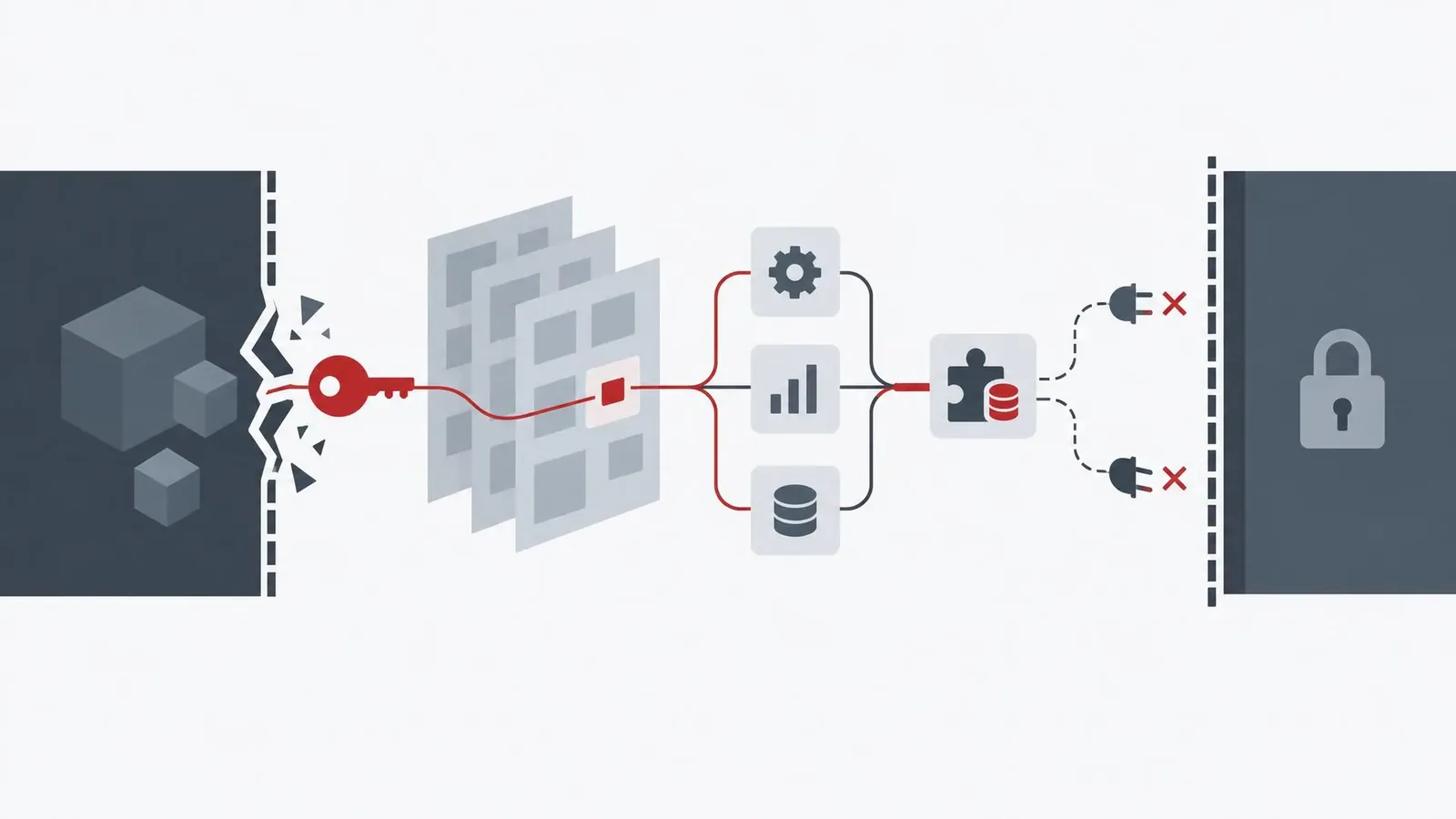
How the vendor key led to copied traces
The exposed key gave access to a read-only bucket used for data sharing with Fireworks AI, and its contents were copied by the attacker. The bucket held limited coding-agent traces, mostly from 2025, from sessions without Privacy Mode that Cursor was permitted to use for model training. A small number of traces contained unredacted credentials, which created a route into select software-as-a-service tools used by Cursor. From those tools, the attacker reached archived non-production source repositories, some with business contact information.
Other material reached through the same path included limited support data and email conversations, product-usage metrics and contact details, summaries of some coding-agent conversations, and credentials users had sent to Cursor support. Among users not using Privacy Mode, traces were exposed for fewer than 0.05%, and Cursor said each affected user was identified and notified directly. The exposed traces were confined to storage used for historical offline analysis. Current customer data and live traffic, active inference requests, and Privacy Mode prompts and code were not affected.
Cursor reported no impact to production systems and infrastructure, or to customer code repositories. Official application updates and code shipped to clients and cloud services were unaffected because release code sits in a separate hosting system the attacker never accessed. No release-signing keys were exposed, and the company validated all other extensions in its VS Code marketplace before reviewing and rebuilding that store. The company also disabled more internal and product services than evidence required, restored each after review, and said the last observed attacker activity on November 1, 2026 was blocked.
What this means for companies using AI tools
For businesses that deploy coding agents, the incident separates everyday development work from historical training storage and release infrastructure. Customer repositories and shipped releases stayed intact, while exposure centered on older traces, support correspondence, usage metrics, and credentials shared with support. Small teams gain a practical checklist: enable Privacy Mode where available, avoid sending secrets to support, and rotate keys listed by the vendor. Larger organizations face more work because support tickets, shared contacts, and SaaS integrations widen the number of records to review.
The limits of the disclosure deserve attention during procurement and incident response. Cursor estimates that at most 5,000 users who requested specific cached versions potentially received a malicious build during about 11 hours of availability starting October 29, 2026. Anthropic did not publish those builds, its product was not vulnerable, and Open VSX never carried the malware. Buyers should ask which versions were cached, whether indicators published October 30, 2026 match their logs, and which third-party services revoked exposed credentials.
The marker to watch is whether Fireworks AI changes its account after investigation. Its bulletin describes unauthorized access to development machines on October 24, 2026, following an incident at a cloud provider on October 23, with no further successful access detected since October 25. Cursor has moved inference traffic off Fireworks, deactivated the key, rotated credentials, and engaged external forensics experts. If the vendor confirms a different entry point or wider customer impact, access controls for shared datasets will need another review.
