
ByteDance, the parent company of TikTok, together with researchers from several US universities, has presented an open model that reaches competitive performance after only three training steps. The team argues that much of the multi-phase training now common for AI agents adds cost and complexity without clear benefit. For business users, the claim matters because simpler training could mean cheaper and more reproducible agent models.
Three steps instead of stacked phases
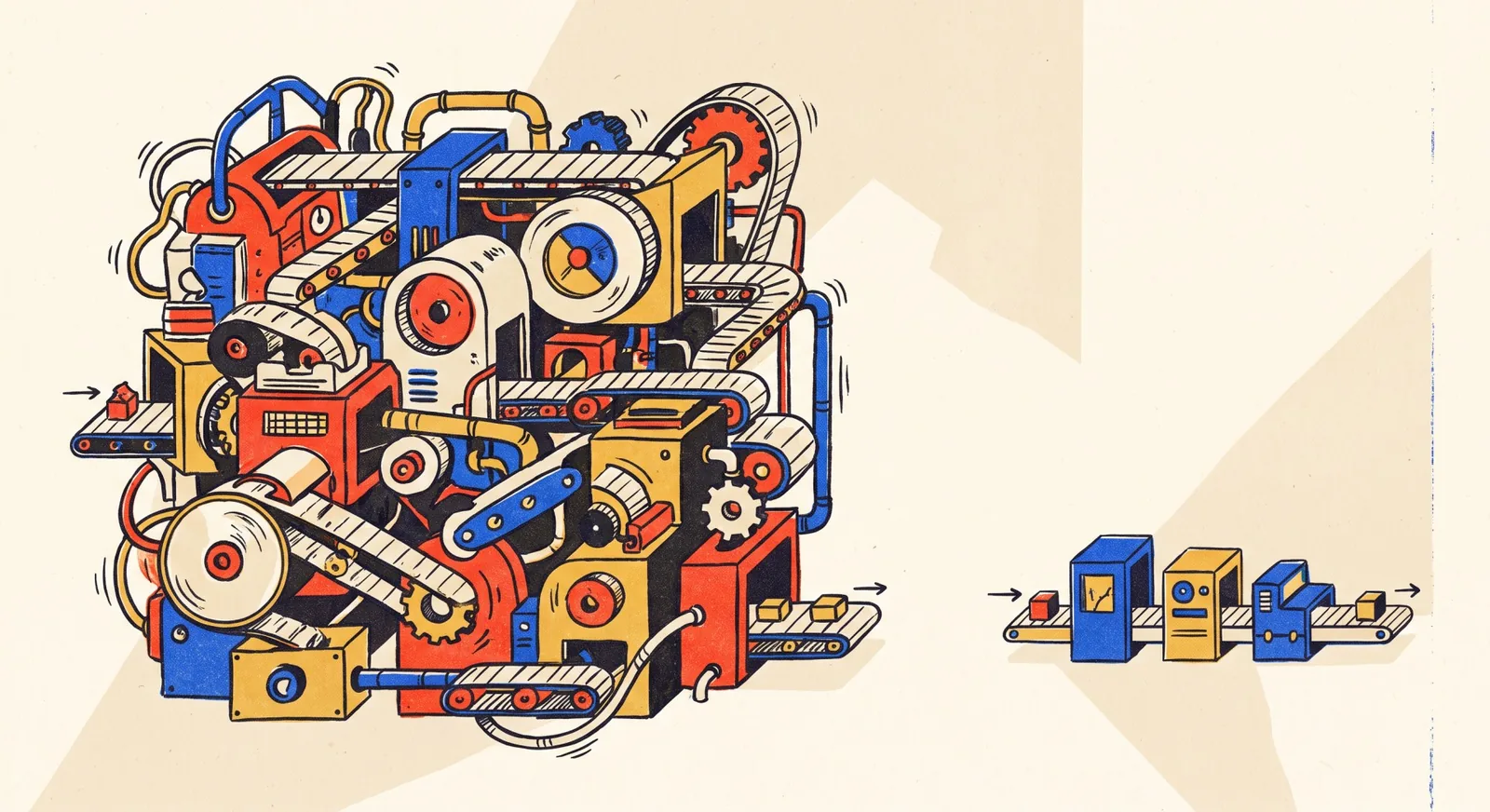
The paper starts from a practical problem: modern agent models are expected to search the web independently, run code, and solve tasks that require many sequential actions. To build these skills, developers have begun stacking training phases one after another, each aimed at a separate capability. The authors say this nesting has made it difficult to understand which phase actually improves results. Reproducing such pipelines has also become expensive for outside teams.
The proposed alternative keeps the pipeline to three steps. The source does not disclose the full technical recipe in the summary, but the logic is to cover the core agent abilities without a long chain of specialized stages. Fewer stages mean fewer intermediate checkpoints, fewer tuning decisions, and less compute spent on transitions between phases. The team supports the argument by releasing a competitive open model trained this way, so others can test the claim directly.
The context for this move is the shift from single-response chat models to agents that act over time. Web research, code execution, and multi-step problem solving require planning, tool use, and error correction. Many labs have responded by adding extra training layers for reasoning, instruction following, and tool interaction. ByteDance and its academic partners suggest that this accumulation happened incrementally, without systematic checks of what each addition contributes.
What simpler training means for business
For companies that deploy AI agents, shorter training pipelines could change the supplier landscape. Open models that are easier to reproduce are easier to audit, fine-tune on internal data, and run in controlled environments. A small company without a large research team benefits most, since it can adopt a documented three-step approach rather than replicate a proprietary chain of phases. Large enterprises gain faster evaluation cycles when comparing base models.
At the same time, simplicity does not remove the need for careful selection. The source provides no detailed benchmarks, scores, or direct comparisons with specific rival models, so buyers cannot yet judge where the three-step model performs best. Questions remain about stability on long tasks, behavior with business tools, and support for domain-specific requirements. This announcement by itself does not prove that every complex pipeline can be reduced to three steps.
The marker to watch is whether independent teams reproduce the result and report comparable quality on agent tasks involving search, code, and multi-step workflows. Publication of training details, evaluation methods, and the open model weights will allow such checks in the coming months. If reproduction succeeds, procurement teams will have reason to favor leaner, better-documented training approaches.
