
Bharat Semi, a New Delhi-based semiconductor startup, has raised $24 million in seed funding to develop AI-enabled image sensors for customers in the United States and other markets. The nearly five-year-old company remains pre-revenue but reports design wins with U. S. defense technology firm General Atomics and India-based Kaynes Semicon. Its first commercial production is targeted for 2027, which makes the round a bet on specialized vision chips for automation and aerospace.
Programmable sensors and $24M seed terms
The all-equity seed round was led by Info Edge Group, South Park Commons and Indus Bridge Ventures, with participation from Valour Capital, Micromax, Gaingels and individual investors. Bharat Semi plans to direct the capital toward expanding its engineering team, completing product development and bringing sensors to market. The company employs about 75 people across India and the U. S., including 10 to 12 staff in Santa Clara focused on engineering and business development. U. S. headcount is expected to reach around 20 by mid-2027, alongside newly started hiring of engineers in Europe.
Bharat Semi is building programmable image sensors that combine capture, processing and AI functions on a single chip, removing the need to move visual data to separate processors. A conventional setup requires an image sensor plus an image signal processor and a system-on-chip, while the startup integrates those tasks into one device. Co-founder Vrinda Kapoor said the approach could cut system costs by at least 70% compared with that three-part configuration. The stated goal is a shift from sensors to sense-making solutions that interpret scenes directly on the chip.
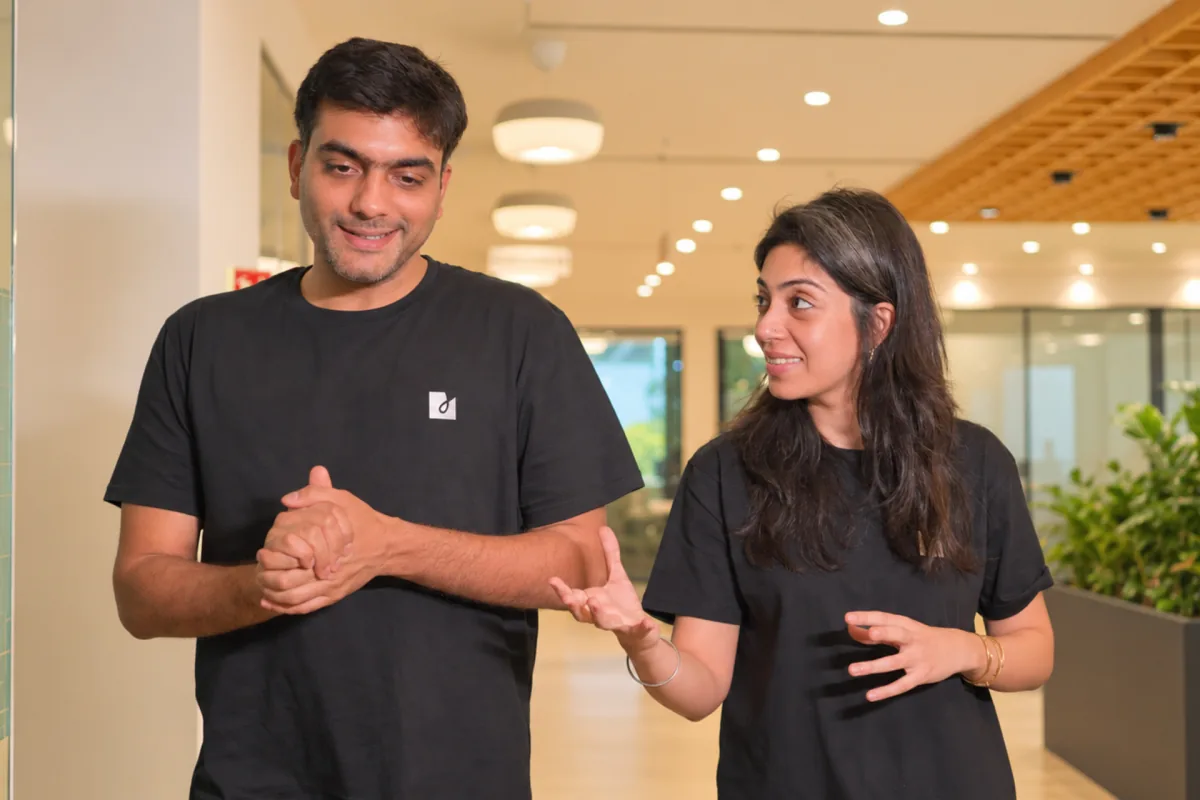
The startup was co-founded in late 2021 by Kapoor, a South Park Commons fellow with a healthcare technology background, and managing director Vinayak Dalmia, who previously worked at McKinsey and in private equity. Chief technology officer Boyd Fowler previously held the same position at image-sensor maker OmniVision. First-generation sensors are already in prototyping, while second-generation devices with more advanced AI functions should reach prototype stage by mid-2027. Those newer sensors are planned to reach customers by the end of 2027.
What AI vision on a chip means for business
Target applications include smart homes, industrial automation, surveillance and aerospace, where cameras must react without costly companion computing. The company cites air conditioners that detect an empty room and adjust operation, as well as drones that process visual information without additional expensive hardware elsewhere in the system. For operating companies, that architecture points to simpler device designs with fewer components and lower bills of materials. Small vendors could add vision features without building separate processing boards, while larger fleets could reduce per-unit hardware spending.
Several conditions still require verification before procurement decisions. The sensors remain under development, and commercial volumes are more than a year away, so buyers cannot yet test reliability, yields or supply terms. The General Atomics and Kaynes Semicon design wins signal interest but do not disclose volumes, pricing or deployment timelines. Potential customers should ask about power consumption, accuracy of on-chip models, software tooling and who will manufacture the chips at scale, since Bharat Semi plans to remain fabless and outsource production.
The marker to watch is whether second-generation prototypes appear by mid-2027 and reach customers by the end of that year. Delivery on that schedule would support the cost-reduction claim and strengthen the case for wider design wins beyond the two named partners. A separate fabrication project in India, involving a technology partnership with the U. S. Space Force, is also in development, but the company says new funding will not finance that facility. Progress on commercial sensors, rather than the fab plan, will show whether the startup can compete in the global AI sensor market.
