
Anthropic raised $81.3 billion in the largest IPO in history, reaching a fully diluted valuation of about $1.5 trillion before trading began. The listing turned controversial late-stage bets into paper returns of roughly 15 times for firms that invested at valuations once seen as extreme. For business, the case shows how enterprise adoption of Claude reshaped investor logic.
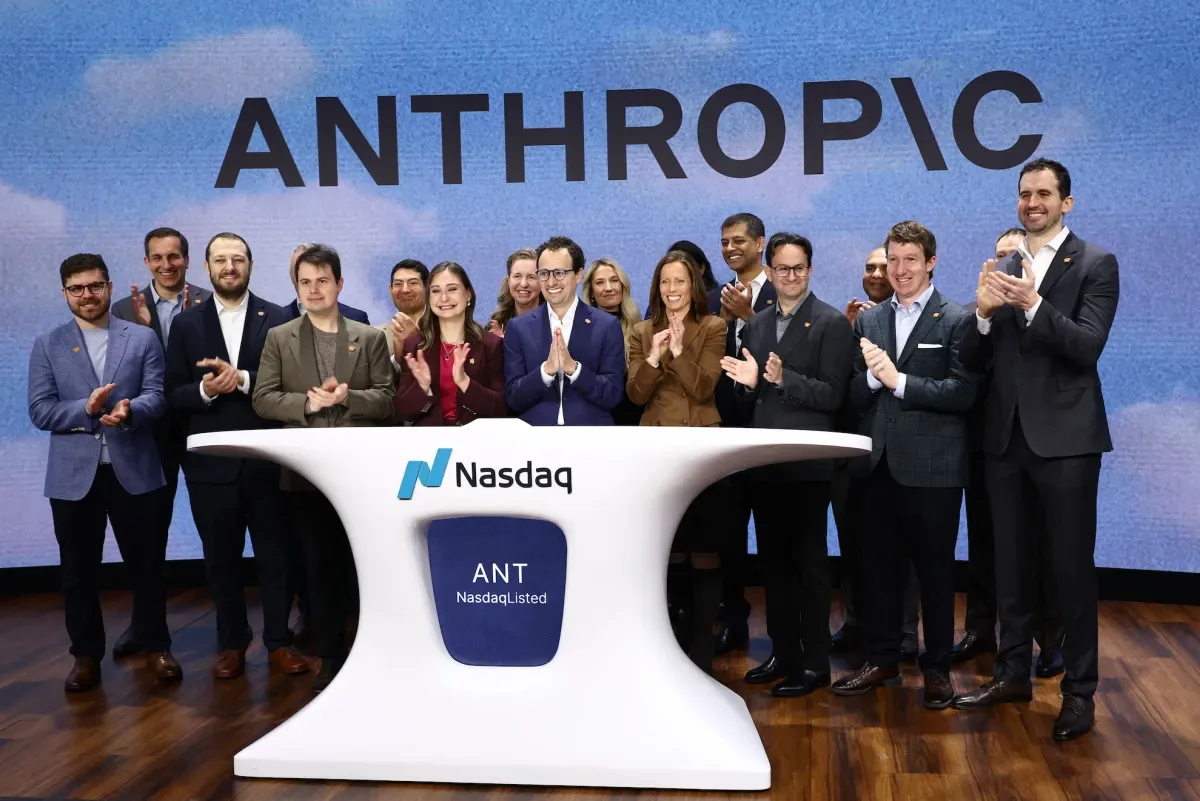
How Notable, GIC and Baillie Gifford placed bets
Notable Capital allocated roughly 10% of the U. S. portion of its fund of more than $1 billion to Anthropic Series E at a $61.5 billion valuation. The decision puzzled many limited partners because Claude still trailed OpenAI and DeepSeek had released its R1 model weeks earlier. It was also the highest valuation in the 25-year history of the predominantly early-stage firm, formerly known as GGV Capital before its 2024 split from China operations.
Managing partners Hans Tung and Glenn Solomon with principal Dan Cahana based the bet on developer behavior rather than headline market share. Their analysis found developers using Claude 70% of the time, a reversal from the previous year. Tung said developers sit at the center of AI adoption as early adopters, while experience with U. S.-China relations convinced the firm that mission-critical work would require U. S.-based closed-source models.
Singaporean sovereign wealth fund GIC researched Anthropic through 2024 and entered at Series F, announced in September 2025 at a $183 billion valuation. The first step followed a meeting in early 2025 between tech investments head Chris Emanuel and CFO Krishna Rao at Che Fico in San Francisco, where Rao linked model improvements to enterprise adoption. GIC then led Series G alongside Coatue at $380 billion and co-led the pre-IPO round at $965 billion, investing more than $4.5 billion for about 1% after the IPO.
What the Anthropic IPO means for business
Baillie Gifford studied Anthropic for nearly two years before its Series F investment under U. S. growth lead Lilian Li. The trigger was consistent execution combined with strong revenue and compelling gross margins. After entry, Anthropic expanded into legal services and life sciences plus broader uses such as Cowork and cybersecurity, a consistency Li described as unusual amid rapid change. Total Baillie Gifford investment reached $1.5 billion across three rounds.
For large companies, the episode confirms that developer preference and enterprise deployment now drive model selection more than consumer chatbot rankings. Claude Code was very early at the time of GIC entry yet already showed popularity with developers, followed by rising enterprise use. Procurement teams therefore gain a wider set of proven vendors, while small firms can build on models already tested inside legal, life sciences and cybersecurity workflows.
High valuations still demand verification because paper gains depend on post-listing trading and lock-up terms. Buyers should ask vendors about revenue durability, gross margins, enterprise retention, and differentiation against OpenAI and open-source alternatives such as DeepSeek R1. The Anthropic story alone does not prove that every late-stage AI round at $183 billion or $380 billion will produce similar multiples.
The marker to watch is whether enterprise contracts and developer usage continue to grow after the IPO at levels that support a $1.5 trillion valuation. Further disclosures on revenue, margins and adoption of Claude Code and Cowork will show if closed-source enterprise demand remains the decisive factor. Sustained growth would keep late-stage AI valuations elevated for corporate buyers and partners.
