
MSCI's broadest Asia-Pacific index outside Japan fell 3.3% on November 20, 2026, leaving the region on course for its worst week since 2020. Taiwan shares lost 6.2% on the day and 17.5% for the week, while Japan's Nikkei and South Korea's KOSPI also dropped more than 5%. The selloff matters because even a strong Nasdaq debut by Anthropic did not restore confidence in the wider AI trade.
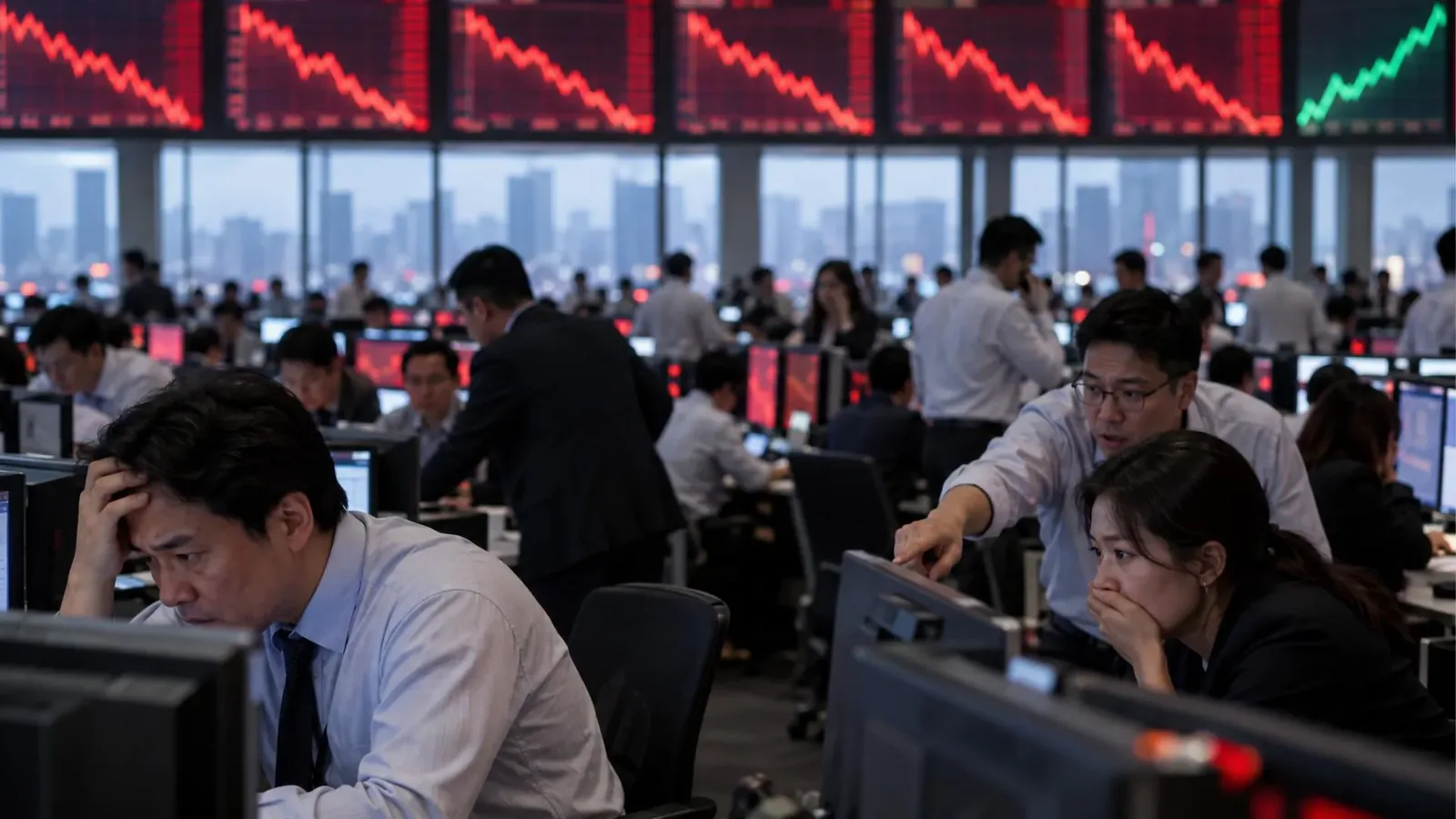
Record IPO met by broad market retreat
Reuters described Anthropic as the world's first publicly traded frontier AI company. Its Class A shares opened at $111.50, traded in a range between $92.72 and $115.10, and closed at $97.17. The listing followed a record IPO, yet both the S&P 500 and Nasdaq Composite had lost more than 2% on November 19. Weekly losses reached 8.5% for the Asia-Pacific benchmark, 7.7% for the Nikkei and 8% for the KOSPI.
Taiwan recorded the sharpest weekly decline among the markets cited, at 17.5%, its largest since 1990. The Asia-Pacific benchmark's 8.5% weekly loss was its worst since March 2020, when COVID-19 was spreading globally. Euro Stoxx 50 futures were down 1.7% at 6,017 during Asian trading, while S&P 500 futures fell 0.5% and Nasdaq futures declined 1%. The futures moves showed pressure extending beyond Asian cash markets.
Citi markets analyst Preston Pagli said risk aversion intensified as investors unwound crowded positioning and reassessed the macro backdrop after the IPO. He added that Nvidia's earnings had not provided the reset markets wanted. Goldman Sachs analysts said no single headline drove the retreat, with asset managers and hedge funds net sellers of macro products while buying selected consumer and financial stocks. Poor liquidity exacerbated the price moves, pointing to broad repositioning rather than one trigger.
What the split between IPO and sector means
For companies buying or deploying AI, the split between one successful listing and a falling sector changes procurement conditions. Vendors tied to chips, data centers and model infrastructure face tighter financing and stronger pressure to prove returns. Large enterprises may keep negotiating power on price and contract terms, while smaller buyers could see longer sales cycles as suppliers focus on cash flow and debt control.
The same conditions raise selection risks that need direct verification. Reuters cited three existing pressures: Jensen Huang's departure from Nvidia, momentum behind the anti-data-center movement after the Democrats' sweep of US midterm elections, and concerns about rising debt loads. None of these is resolved by a single IPO, and the report does not suggest that model quality or product roadmaps have changed. Buyers should ask vendors about funding, delivery timelines and dependence on data-center expansion.
A marker to watch is whether futures weakness turns into further cash-market declines in Europe and the US. The dollar index held at 103.86 toward a fourth weekly gain, while the 10-year Treasury yield fell to 5% as investors moved into bonds. If equity selling continues alongside bond buying, it will confirm that capital is leaving AI risk broadly, not rotating within the sector.
