
Ambarella and Sigma Connectivity announced a strategic collaboration on November 24, 2026 to turn computer vision and edge AI prototypes into production-ready products. Ambarella contributes low-power AI silicon and software tools, while Sigma Connectivity takes on engineering and validation for volume manufacturing. The target audience is equipment manufacturers and enterprises adding AI to connected devices, which makes the deal relevant for industrial automation suppliers.
How the companies will bring prototypes to production
Joint work covers architecture definition, prototyping, validation and manufacturing readiness for original equipment manufacturers and enterprise customers. The stated goal is lower engineering complexity, reduced development risk and faster deployment of connected devices with local AI. Customer programs will start on the Cooper Developer Platform and Ambarella Developer Zone, which combine optimized models, agentic blueprints, developer kits, documentation and technical resources. The companies also plan joint customer engagements, reference designs, proof-of-concept projects and reusable engineering frameworks.
Ambarella supplies edge AI systems-on-chip that combine camera perception, AI acceleration, CPUs and video encoding on one low-power chip. Its X7 AI accelerator brings the third-generation CVflow engine to Arm and x86 host processors, extending the architecture beyond an integrated system-on-chip. A common CVflow architecture and shared software environment cover the edge AI portfolio, so perception software and development workflows carry forward across performance tiers. That continuity reduces the need to rebuild the software foundation when a product scales up or moves to a more cost-efficient design.
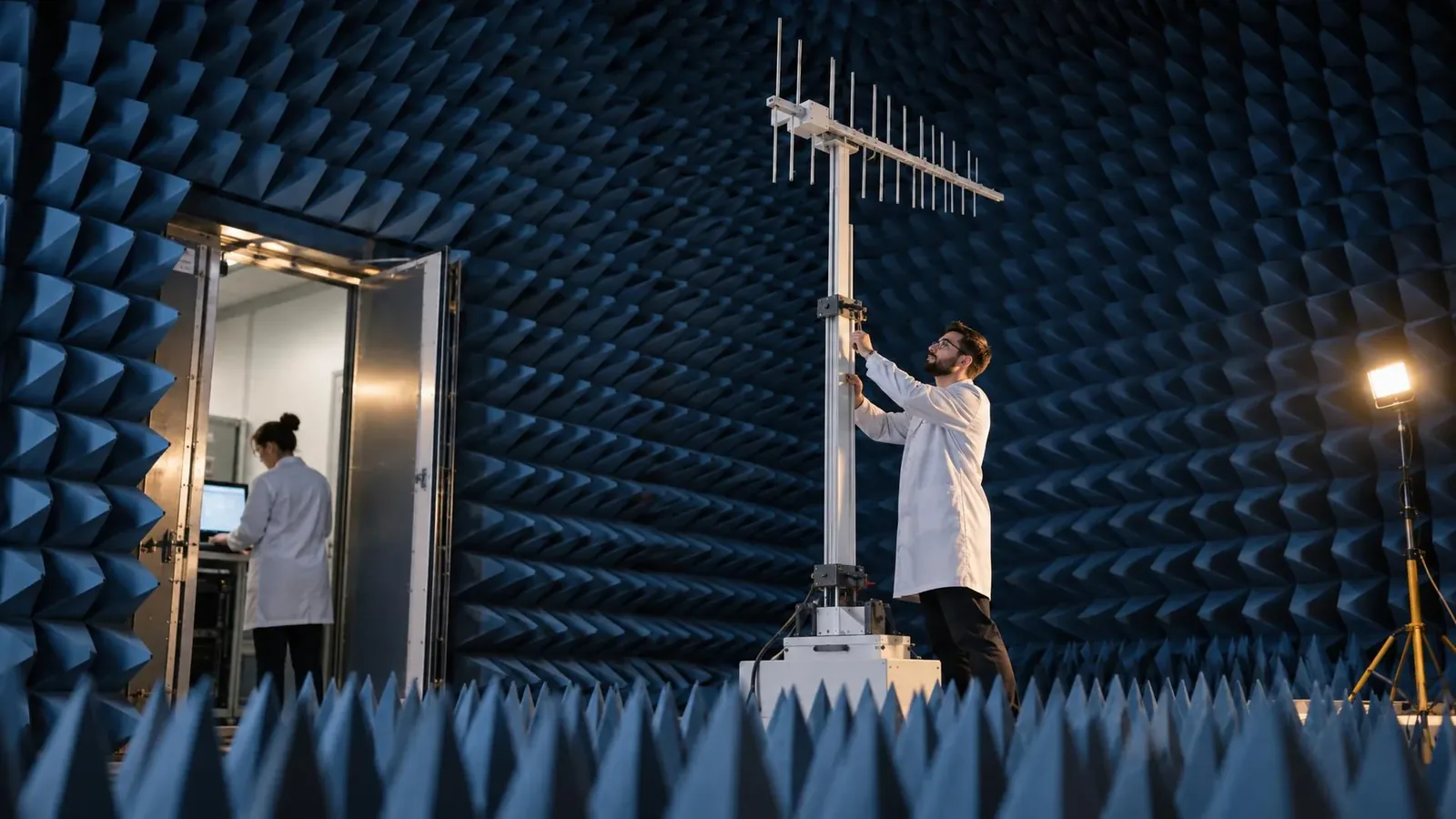
Sigma Connectivity contributes more than 700 engineers and over a decade of product work from concept and system architecture through design, verification, industrialization and volume production. Its teams cover camera and computer vision, optics, electronic and mechanical design, embedded software, connectivity, and AI and machine learning. Design, test and verification laboratories allow prototypes and complete products to be checked against performance requirements and compliance standards before mass production. Offices in Europe, the Middle East and North America are expected to support regional equipment and enterprise customers.
What this means for industrial edge AI buyers
For companies deploying warehouse robots, infrastructure-survey drones or machine-vision systems on production lines, the collaboration addresses integration rather than raw model performance. Such devices must perceive surroundings, interpret sensor data and respond within tight power and latency limits, while cameras, optics, electronics, antennas and mechanical parts work together. A shared silicon and software base plus external industrialization support can shorten the path from pilot to a deployable unit. Small vendors gain access to validation capacity they rarely keep in-house, while large manufacturers can standardize perception software across product tiers.
Several limits still need verification before procurement decisions. Ambarella cites more than 50 million edge AI systems-on-chip shipped, but the source gives no timeline, pricing, performance benchmarks or committed delivery dates for joint programs. Reference designs and reusable frameworks are still to be evaluated, so their ability to cut repeated integration work remains unproven. Buyers should ask which sensors and host processors are supported, what compliance testing is included, and how existing models transfer to CVflow without rework.
The practical marker is whether joint reference designs appear and repeat customers report shorter development cycles in 2027. Sigma Connectivity CEO Bhavin Patel points to performance-per-watt silicon and validated Cooper models, while Ambarella CEO Fermi Wang stresses that design-house execution decides commercial viability. If reusable frameworks reduce integration work across programs, the partnership will matter for physical AI products that sense and act locally.
