
Sam Altman said he does not have enough information to say whether Jensen Huang should return to Nvidia, speaking on Monday in an interview with Reed Albergotti at Semafor's Silicon Valley & The World event. The OpenAI chief called Huang a long-time hero with flaws and said he felt personal empathy after his own board ouster about three years ago. CNBC has reported that Nvidia's board is not considering Huang's return. The exchange matters because OpenAI depends on Nvidia hardware and financial backing for large data centre projects.
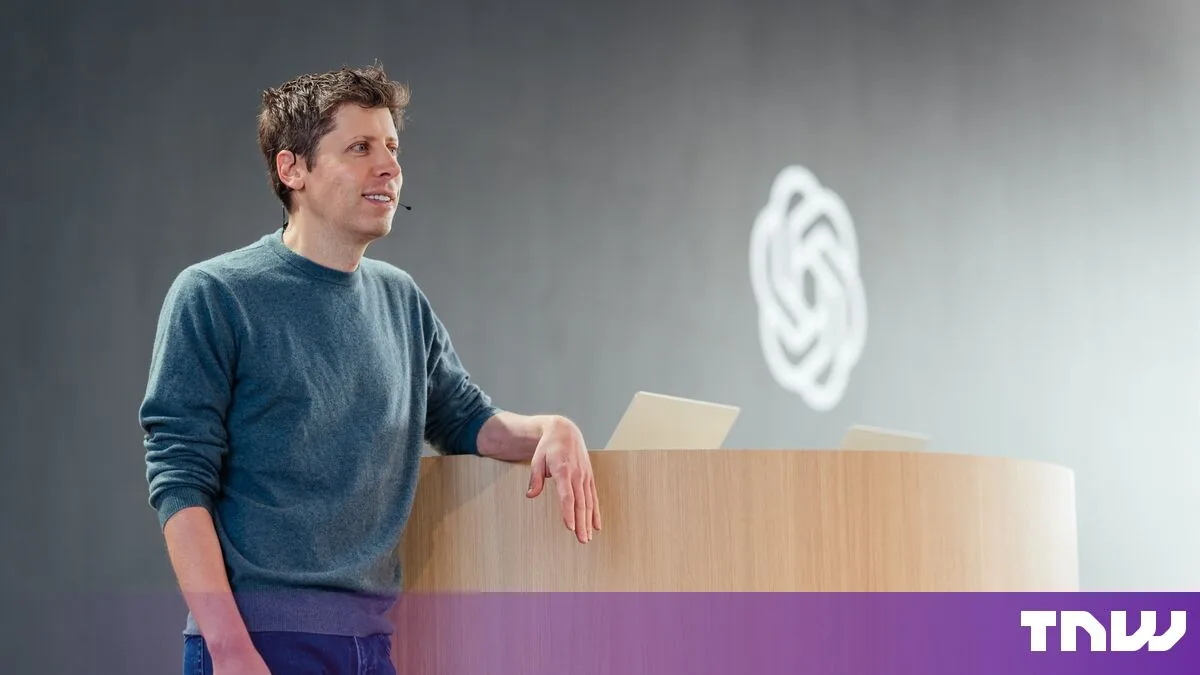
Altman on Huang, guarantees and OpenAI plans
The interview drew a direct parallel between the two leadership crises. Albergotti noted that a letter backing Huang looked copied from the one drafted by Altman's supporters during his removal. Altman said he still remembered what his own ouster was like and added that Nvidia took an early bet on OpenAI, while OpenAI took one on Huang. He described it as hard to imagine the AI revolution without Huang. No timeline or condition for a possible return was discussed in the published remarks.
Altman defended the weight of Nvidia's financial commitments despite the leadership uncertainty. Albergotti cited roughly $105bn that the chipmaker had guaranteed for OpenAI's data centre in Ohio. Altman called Nvidia a behemoth of a company and said people still trust its guarantees very much. He acknowledged that Huang and Nvidia are clearly very closely linked. Yet he argued that revenue and demand for AI are growing so strongly that the industry will be fine.
The conversation also touched on OpenAI's path to public markets and the state of chip supply. Altman said OpenAI will go public at some point, though being public has real downsides at a volatile time for the industry. Asked whether Anthropic's listing this week would leave too little investor money for OpenAI, he dismissed the concern and pointed to excess investor demand over the last year relative to supply. On chips, he explained reported remarks to Samsung executives about double counting: many vendors expect to sell most volume to OpenAI, Anthropic and a few others, but those buyers will not need all supply from every vendor.
What this means for companies buying AI
For enterprise buyers, the central signal is continuity of infrastructure buildout rather than boardroom drama. Altman said the data centre buildout itself is solid and that facilities will still get built, even if developers may need to locate them further from residential areas after problems with community engagement. A small company renting GPU capacity benefits if large guaranteed projects in places like Ohio move forward, since supply stays on track. A large company planning its own capacity can treat vendor forecasts with more caution, because overlapping sales projections do not all convert into real demand.
The limits concern hardware costs and procurement assumptions. Altman said DRAM prices have risen perhaps five to seven times, after his earlier remark on RAM in home computers was misinterpreted, and said he wants people to be able to buy ample memory for tinkering. That price move affects PC upgrades and on-premise AI workstations directly. Buyers should verify memory pricing separately from accelerator pricing, ask vendors which components are covered by guarantees such as the Ohio commitment, and avoid reading Altman's confidence as a promise that every announced chip project will ship on schedule.
The marker to watch is whether large guaranteed data centre projects advance while OpenAI moves toward a listing. If construction milestones in Ohio proceed and Anthropic's listing is followed by sustained investor demand, Altman's claim of strong revenue growth and excess capital will gain support. OpenAI's work with embedded evaluators including METR and its refusal to allow a model to design its successor without human oversight will also show whether safety review keeps pace. Failure on financing or delivery would point to tighter capacity for business users.
