
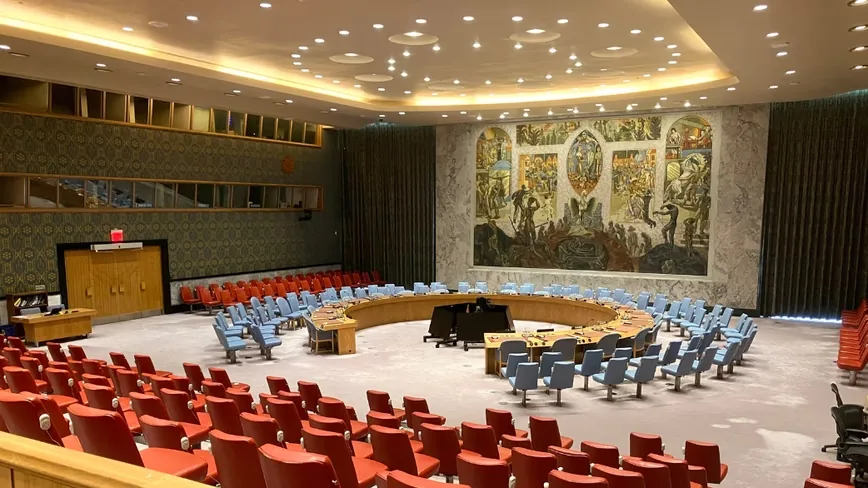
The United States told the UN Security Council in New York that it rejects any global governance of advanced AI and wants each country to regulate the technology itself. The statement was delivered by Michael Kratsios, director of the White House Office of Science and Technology Policy, after briefings from science and industry leaders. For companies, the message sets the compliance horizon: Washington is betting on national rules and technology partnerships rather than a common international regulator.
What Washington told the Security Council
Kratsios spoke after four briefers from science and industry and called advanced AI superintelligence. He cited President Trump, who told the UN General Assembly the previous day that the United States totally rejects any attempt to build a global scheme of control over superintelligence. As an alternative, Kratsios pointed to the Carolina Principles, agreed by G20 innovation ministers in Chapel Hill, North Carolina, this month. Under that approach, national governments keep control over emerging technologies, with elected representatives legislating on behalf of their own populations.
Washington pointed to two instruments in use. It has worked with frontier labs to test new models and has set up cybersecurity clearinghouses to coordinate work on vulnerabilities. Internationally, the US offer is access to its technology: through an exports program, American companies will help partner countries build secure infrastructure and develop their own AI capability. Kratsios said countries that take the risks and benefits of superintelligence seriously should first develop their ability to understand and use it. The Council should share best practice for building domestic capacity rather than design a regulatory scheme.
The position puts Washington at odds with the laboratory leaders who briefed the Council earlier in the same meeting. Sam Altman of OpenAI, Dario Amodei of Anthropic and Clement Delangue of Hugging Face each called for international standards or disclosure rules. Yoshua Bengio went further and called for frontier AI to be licensed. Kratsios said Washington remains committed to dialogue on emerging technologies at the UN and elsewhere, but argued such talks must not drift toward global governance. He closed that part of the argument with the line that a prosperous future will not be secured by a global regulator.
What this means for companies using AI
For companies adopting AI, the effect is a fragmented regulatory map rather than a single set of global requirements. A US-based vendor will test models with Washington, handle vulnerabilities through American clearinghouses and export infrastructure under US program terms, while customers in other countries will face rules written by their own legislators. That structure favors firms that can track several national regimes in parallel and document model testing and security practices for each market. Smaller companies may feel the difference most directly, since they lack compliance teams and will depend more on partners that bundle secure infrastructure with AI capability.
The statement leaves several conditions that buyers should verify before making plans. It does not define what counts as superintelligence, what testing with frontier labs covers, or how the exports program selects partners and sets security requirements. It also does not remove existing national limits or create new disclosure and licensing duties by itself, despite the calls from Altman, Amodei, Delangue and Bengio. A checklist includes asking vendors which national rules a deployment must meet, what test evidence and vulnerability data they can share, and whether infrastructure supplied under a US partnership carries additional controls on data handling and further use.
The marker to watch is how the Carolina Principles are turned into national measures after the Chapel Hill meeting. If G20 innovation ministries publish domestic rules and best-practice exchanges while the Security Council avoids drafting governance structures, the US approach will have held. If international standards or licensing proposals advance instead, vendors operating across borders will face a dual track.