
The Netherlands has fixed the location for its national AI supercomputer: the Eurofiber data center complex on the Zernike Campus in Groningen. The machine is part of a €201M public AI Factory project and is now scheduled for installation in 2027 with full operation in early 2028. The decision gives startups, researchers and public organizations a domestic address for training AI models instead of relying only on foreign capacity.
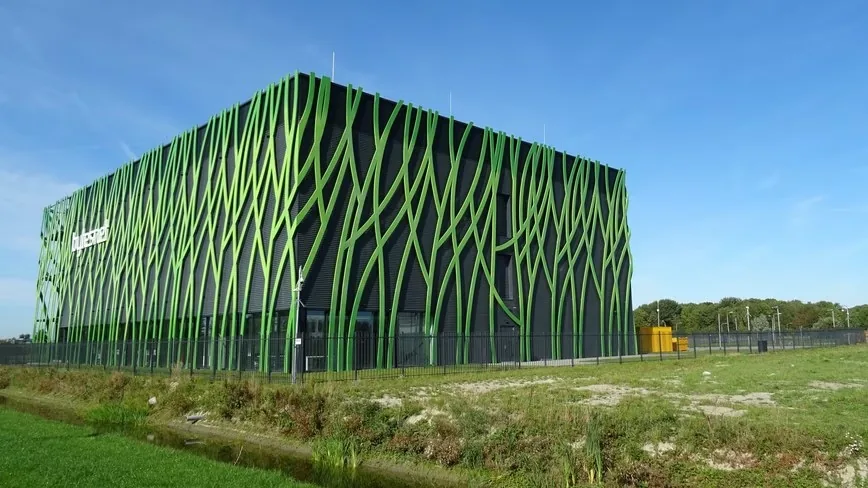
Groningen campus wins over new construction
SURF, the IT cooperative for Dutch education and research, announced the choice on behalf of the consortium during a visit by Willemijn Aerdts, state secretary for digital economy and sovereignty. Three sites competed for the contract, including an annex of the former De Halm strawboard factory in Hoogkerk, which was not selected. The winning option uses an existing campus rather than building a new one. The original cabinet plan from June 2025 called for full capacity in early 2027, so the current timetable shifts operation by about a year to early 2028.
The €201M public contribution combines €71M from EuroHPC JU, the EU supercomputing agency, €70M from the Dutch government and €60M from Nij Begun, the program for recovery in Groningen and northern Drenthe after decades of earthquakes linked to gas extraction. The European share was secured in October 2025, when EuroHPC selected six new AI Factory sites in Czechia, Lithuania, the Netherlands, Poland, Romania and Spain. The Dutch consortium includes SURF, TNO, Samenwerking Noord and the Dutch AI Coalition (AIC4NL). Its expertise center in the former Niemeyer tobacco factory is already operating, routing early projects to other European AI factories with spare capacity.
The hardware budget tells a separate story. Of the total, €64M is earmarked for the computer itself, and tender lead Axel Berg said in August that the sum buys less than planned about 18 months earlier. He linked the shift to heavy AI infrastructure buying by large technology companies, which pushed demand for processors, memory and storage beyond supply and doubled prices for some components in a short period. The consortium confirmed in an August update that hardware is scarcer and more expensive and delivery times are lengthening, affecting both scale and schedule. While the tender continues, the final GPU count for Groningen remains undisclosed.
What the Groningen machine means for business
Once online, the system is intended for startups, small and medium-sized enterprises, researchers and public organizations developing and training AI models in the Netherlands. State secretary Aerdts framed the value in terms of healthcare, education, security and the wider economy. For smaller firms without long-term cloud contracts, a national facility can lower the barrier to large-scale training and experimentation. For larger organizations, the near-term effect is different: the expertise center already provides a route to unused capacity at other European factories, which makes cross-border scheduling and project preparation the practical entry point before Groningen hardware arrives.
Several conditions still shape the business case. The site was chosen in part for sustainability and grid fit: almost all waste heat feeds WarmteStad district heating, no surface or drinking water is used for cooling, and SURF says the existing grid connection avoids added network congestion. Procurement remains the main uncertainty, with component prices, availability and delivery dates moving against the fixed €64M envelope. The announcement therefore does not by itself guarantee a specific performance level, price model or access queue. Companies considering the platform should track tender results, allocation rules and service terms rather than assume capacity.
The confirmation signal is concrete: whether installation in 2027 leads to full operation in early 2028 and what configuration the tender finally secures. A second marker is the EuroHPC gigafactory call closing November 12, where French companies have assembled a multi-billion bid that the Dutch government will not match for budget reasons. The gap between those two scales will define what one mid-size national machine can realistically cover.