
President Donald Trump announced the creation of a Super Intelligence Force to coordinate federal work on advanced AI. The group will be chaired by national intelligence director Jay Clayton and must produce a report on risks and opportunities within 120 days. The move replaces the earlier idea of an AI czar with a structure tied to the White House rebranding of AI as "super intelligence". For business, this signals where federal priorities on innovation and regulation may shift.
Leadership, mandate and 120-day report
Trump disclosed the decision in a Sunday morning post on Truth Social, saying the force will coordinate federal efforts so the United States continues to lead in Super Intelligence. He described the technology as larger than the Industrial Revolution and the Internet, and linked it to protecting interests and improving lives of Americans. According to the Wall Street Journal, Clayton will chair the body, effectively becoming the AI and SI coordinator. The announcement follows a September promise to form an AI Force and appoint an AI czar.
The reported vice chairs are Federal Trade Commission Chair Andrew Ferguson, Undersecretary of War for Research and Engineering Emil Michael, and Office of Personnel Management Director Scott Kupor. That combination brings together intelligence oversight, competition policy, military research and federal personnel management in one structure. Such a composition suggests that workforce, procurement and defense applications will sit alongside market rules. For companies, the roster indicates which agencies are likely to shape implementation first.
The task force charter reportedly directs it to develop plans for responding to SI-enabled threats to society. At the same time, the document calls for preventing overregulation and regulatory capture that would stifle innovation and competition. Clayton told the WSJ that one of the largest risks is "not being first", after earlier saying it would be irresponsible for the United States to step back while China advances. The 120-day deadline gives vendors and enterprise buyers a near-term point for assessing federal direction.
What the rebrand means for AI business
For companies deploying AI agents and automation, the central consequence is a possible tilt toward faster adoption with fewer new federal restrictions. A mandate that warns against overregulation points to procurement, pilot projects and private-sector development remaining open. Large contractors and regulated industries may see clearer paths for defense, infrastructure and public-sector deals. Smaller firms could gain from a common federal coordination point instead of fragmented agency demands.
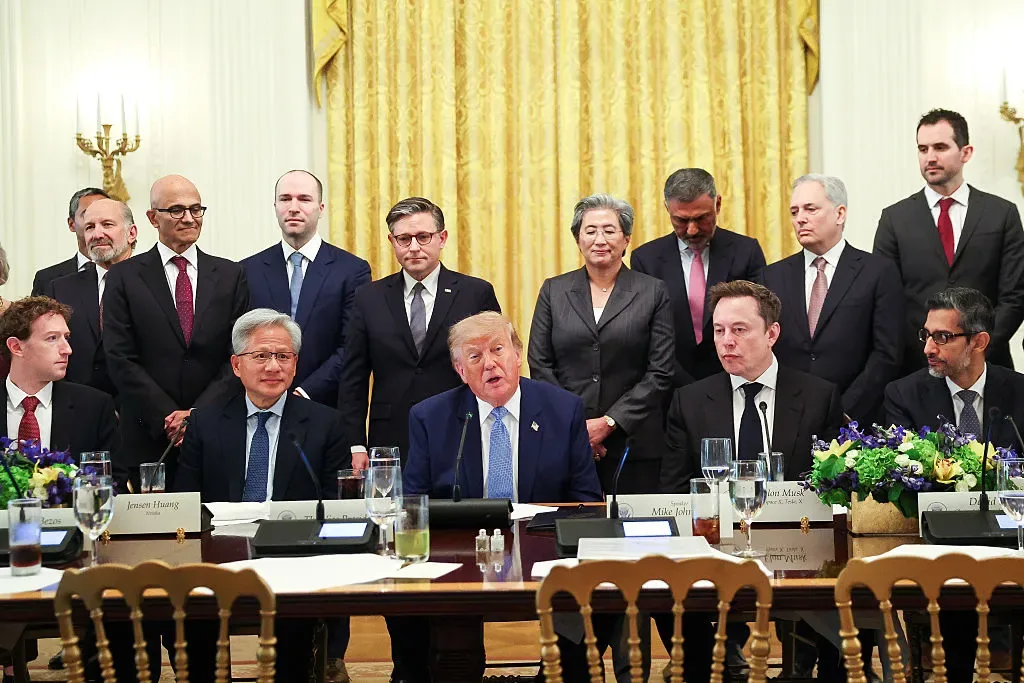
The same mandate creates uncertainty around safety, liability and compliance expectations. The charter mentions SI-enabled threats, but the source does not list specific controls, standards or enforcement tools. Trump has largely dismissed the AI safety debate as a hoax attributed to political opponents, while tech executives at the White House signed a non-binding safety pledge containing a typo. Enterprises therefore cannot treat the announcement as a settled rulebook for risk management or documentation.
The marker to watch is the report due in 120 days and the appointments or directives that follow it. Its treatment of threats, competition safeguards and agency roles will show whether coordination turns into procurement guidance, voluntary standards or legislative proposals. Personnel moves involving Clayton, Ferguson, Michael and Kupor will also indicate which track moves fastest. If the document stays general, businesses will continue operating under existing agency rules.