
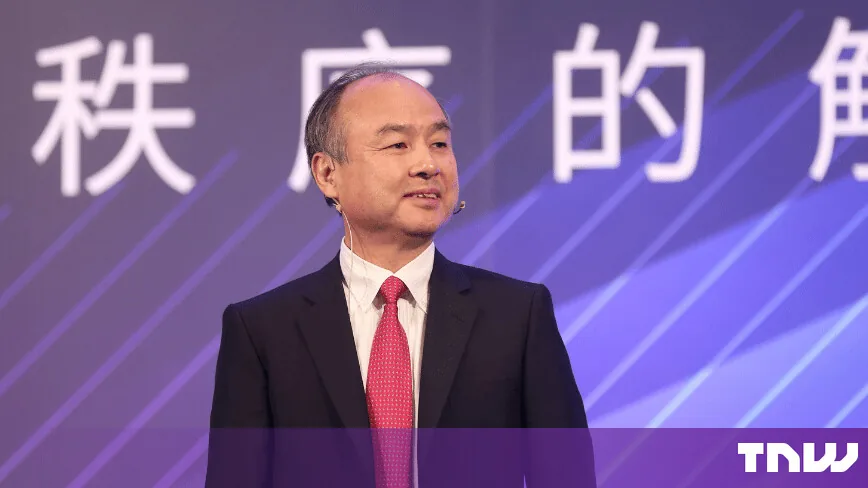
Masayoshi Son said superintelligence in the wrong hands could become "super dangerous" and called on countries to build trust to control the threat. The SoftBank founder spoke in Kyoto beside White House science chief Michael Kratsios, after completing $64.6bn of investment in OpenAI for roughly 13% of the company. The warning matters because the largest private backer of frontier models now frames safety as a matter for interstate cooperation.
Kyoto remarks, OpenAI stake and 17-country declaration
Son spoke on Sunday in Kyoto, with Bloomberg describing the safety remark as uncharacteristic and linking it to security breaches by AI models in recent months. He said there was no more luxury of human fighting against human, arguing that states must cooperate rather than compete over control of the technology. Kratsios attended for a separate agenda centered on directing the technology toward scientific research and robotic laboratories.
SoftBank finished paying a $30bn tranche this month, lifting its total OpenAI commitment to $64.6bn. The final $10bn came from the largest high-yield corporate bond sale on record, raised a fortnight ago. Son has been investing in OpenAI since 2024 while calling discussion of an AI bubble absurd and arguing the technology would repay the outlay.
Seventeen countries endorsed the Kyoto Vision for a Golden Age of Science, which envisages robotic laboratories running hundreds of experiments at once. The text uses the term super intelligence throughout, five days after a US executive order made it the American government term. Endorsers include Germany, Italy, Poland, Greece, Bulgaria, Cyprus and the United Kingdom, alongside Argentina, Chile, Indonesia, Kazakhstan and New Zealand, while China is absent.
What the Kyoto split means for AI adopters
For companies using AI, the combination of record private funding and a state science pact points to faster supply of research-grade automation. Robotic labs running parallel experiments would shorten testing cycles in materials, biology and engineering, with vendors likely to package experiment design, execution and data analysis as one service. Large firms with research budgets will connect first, while smaller firms will buy results through cloud platforms and contract labs.
The declaration itself only says countries endeavour to act, four times, without pledges or commitments, although the White House release describes ministers as having pledged and committed. Six endorsers are EU member states subject to the Artificial Intelligence Act, whose labelling rules began applying in August. Buyers should therefore check jurisdiction, labelling duties and data rules before moving pilots across borders.
The marker to watch is whether the physical-world phase Son dates to next year produces deals beyond the $200M round SoftBank led in Zurich-based Gravis Robotics in August and talks over Munich-based Agile Robots. A second marker is his forecast that AI will account for a fifth of global output by 2040, now put at $46tn. Signed research programs and robot deployments will show if capital and declarations turn into capacity.