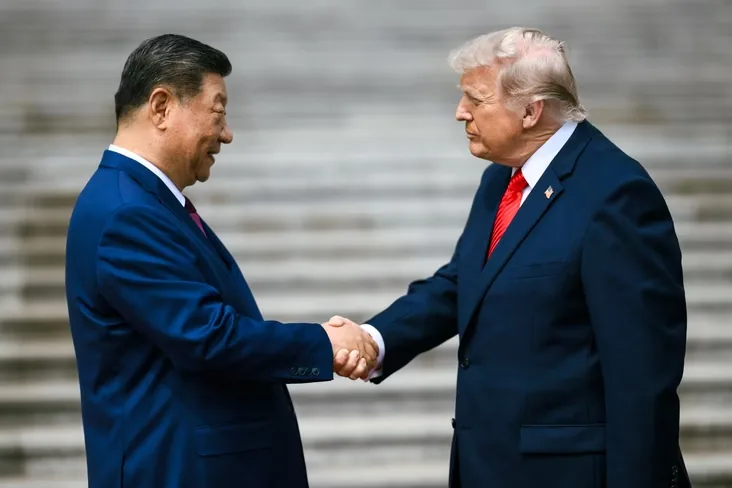
Sam Altman, Jensen Huang and Tim Cook are expected at the state dinner Donald Trump is hosting for Xi Jinping on 24 September, according to Semafor, Reuters and Bloomberg. The same executives travelled to Beijing in May, when AI safety was discussed, nothing was signed, and the US trade representative said chip export controls never came up. The guest list matters because the three run the companies with the most at stake in access to the Chinese market.
Who is coming to the dinner
Ashley Gold reported for Semafor that OpenAI's Sam Altman will attend. Nvidia's Jensen Huang and Apple's Tim Cook are also expected, per Reuters and Bloomberg. Separate discussions are under way about a White House meeting with AI chief executives, which House Speaker Mike Johnson has referred to; his office declined to give details. In May, Huang joined the Beijing delegation late and Cook was on the trip as well.
The three attendees represent three different exposures. Huang runs the company whose share of China accelerator sales has gone from almost everything to almost nothing; he has said he supports export controls while being accused in the Senate of lobbying to loosen them. Cook runs the firm with the deepest manufacturing exposure in China of any American company. Altman runs the one whose models are banned there. Safety is the stated theme of the visit; market access is what the attendees are there about.
Washington cleared roughly ten Chinese companies to buy Nvidia's H200, including Alibaba, Tencent, ByteDance and JD. com, with each approved buyer permitted up to 75,000 units. By July a US trade official put actual shipments at very few, covering China and Hong Kong together. Chinese customs has blocked deliveries, and suppliers of H200 components paused production as a result. The deadlock is mutual: American licences carry security and diversion conditions Beijing will not accept, and Beijing is steering its buyers towards Huawei and domestic alternatives regardless.
What this means for business
For companies that buy AI infrastructure, the practical consequence is that a licensed product is not the same as an available one. A US export licence tells a buyer that Washington permits the sale; it does not tell them Chinese customs will let the hardware in, or that component suppliers will keep producing. Planning cycles that assume H200 capacity in China should carry a fallback, and the fallback is increasingly a domestic accelerator rather than a Western one. The gap between the two is where procurement risk now sits.
Scale changes the calculation. A large buyer with existing Nvidia deployments and a compliance team can pursue licences and wait; a smaller firm cannot absorb a stalled order and will price Huawei and other domestic options into its roadmap earlier. What the news does not mean is that controls have been lifted or that a deal is close. Before committing, buyers should ask the vendor which licence covers the order, whether components are in production, and what happens to delivery if customs holds the shipment.
The marker to watch is whether any chips actually move after the visit. A communique about safety costs nothing; a customs clearance is evidence. A second signal is whether the separate CEO meeting takes place and who attends: a room with Huang and Cook in it is about supply chains, while a room with safety researchers would point elsewhere. Until a shipment clears, the May record — discussion, no agreement, no chips — remains the operating assumption.