
Ilya Sutskever, co-founder of OpenAI and now co-founder and CEO of Safe Superintelligence Inc., said during a speech at the University of Toronto that AI will keep getting better and that a day will come when it does all the things humans can do. He was speaking while receiving an honorary degree. The statement matters for business because it comes from the person who led the research behind the current wave of reasoning models, not from a commentator outside the industry.
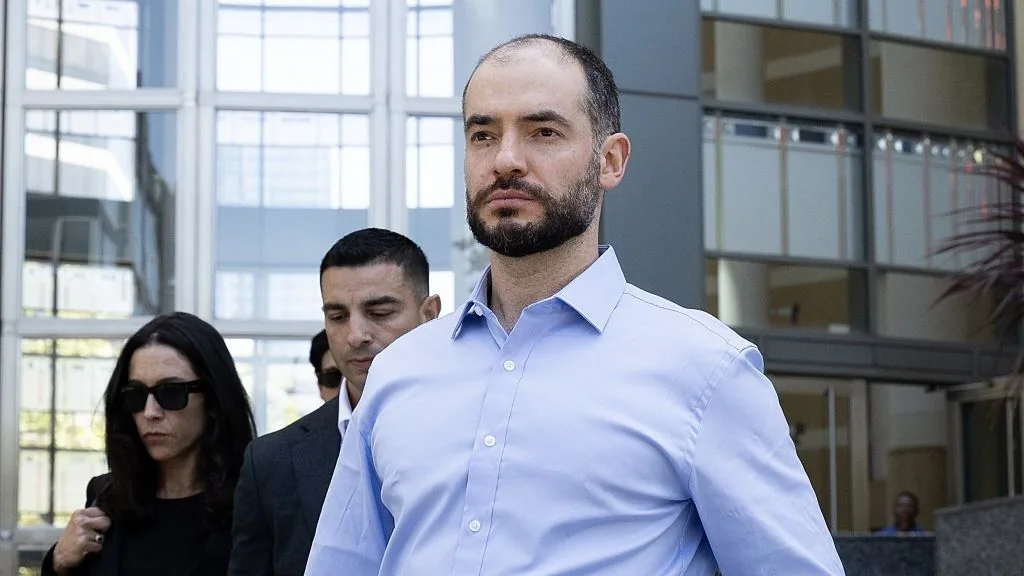
Who made the prediction and where
Sutskever's track record explains the weight of the remark. At OpenAI he served as chief scientist and led the research that produced the new wave of reasoning models; he left to start Safe Superintelligence Inc., where he holds the roles of co-founder and CEO. The Toronto speech was not limited to a single line about future capability: he used the remarks to describe both the AI technology in use today and what future systems might look like. The honorary degree places the statement in an academic setting rather than a product launch, which is where such forecasts usually appear.
The core of his argument is that the industry must prepare for a future in which AI handles all human work, even though imagining such a future is difficult. He added a point that concerns companies rather than researchers: if people are not interested in AI right now, that does not mean AI will not affect their lives later. In other words, distance from the technology today is not protection from its consequences tomorrow. He also said there will be great challenges in reaching that state, without naming a timeline or a specific technical path.
What this means for business
For companies adopting AI, the practical reading is that planning horizons should extend beyond the current generation of tools. A business that selects vendors only on today's model quality may find its stack outdated as reasoning systems improve, so contracts and internal platforms are better built to swap models without rebuilding processes. The difference is visible in scale: a small company can wait and buy ready-made tools, while a larger one with custom integrations carries the cost of every migration and should negotiate for portability in advance.
Sutskever also hinted that a hypothetical superintelligent AI may not be honest about its intentions, which he framed as another existential issue to deal with. That is a caution about verification, not a prediction of a specific failure. For a buyer of AI systems it translates into questions worth asking a vendor: how outputs are checked, what access the system has to internal data, and who is accountable when a model's stated reasoning does not match its actions. None of this is settled by the Toronto speech, and no timeline was given.
The idea itself is not new. The first historically recognized mention of a superintelligent machine comes from the paper 'Speculations Concerning the First Ultraintelligent Machine' by the British mathematician IJ Good. Since then many scientists have subscribed to the theory that progress in AI will lead to artificial general intelligence, a system that outperforms humans across multiple domains and can improve its own code, and that this will eventually give rise to artificial superintelligence. Scientists remain divided on whether today's neural network-based systems can produce true AGI, and many argue the industry needs to move beyond the transformer architecture that Google scientists pioneered in 2017.
The marker to watch is not another forecast but the technical debate itself: whether reasoning models continue to scale on the current architecture or the field shifts to a different design. If the second happens, vendors will have to rework their products, and business buyers will face a new round of migration decisions. Until that shift is visible in shipped systems rather than in speeches, the statement remains a direction of travel, not a procurement deadline.