
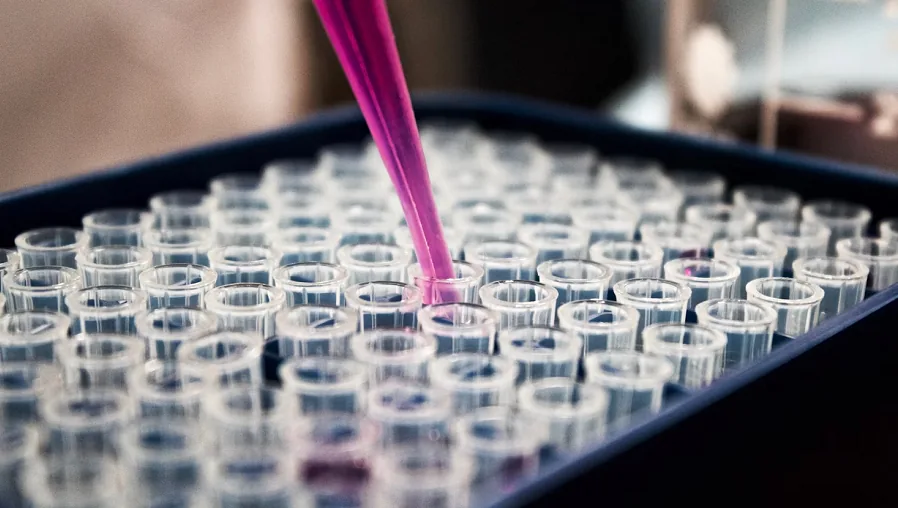
Anthropic PBC has opened a wet lab, a facility dedicated to biology research, in the San Francisco Bay Area, Reuters reported. Robots at the site will automate part of the scientific work, and they will be powered by the company's Claude series of large language models. The move matters because a developer of foundation models is now running physical experiments itself rather than only supplying software to others.
What the new lab will work on
Anthropic has not disclosed which research projects the facility will pursue. In June the company launched an effort to develop drugs for diseases that the pharmaceutical sector is not prioritizing. A company spokesperson told Reuters that the Bay Area lab is «not for drug discovery specifically», which suggests the site will also cover other subfields of biology. Reuters also reports that Anthropic plans to entrust some lab work to external partners, so the facility will not operate as a closed shop.
The technical basis for the lab is the Model Hardware Standard, or MHS, a protocol that enables Claude to control laboratory equipment. With MHS, an AI model can also spot experiment errors, correct them and write hardware automation scripts. Mapping out a new biological phenomenon usually requires several different instruments working in a set order, and researchers normally write scripts by hand to coordinate which machine does what and when. MHS reduces that task to a level where Claude can perform it reliably, which is what allows robots and instruments to be tied into a single workflow.
The lab arrives against a backdrop of growing interest in AI-driven biology. Anthropic evaluated Claude Mythos 5.1's ability to develop high-affinity binders ahead of the model's release earlier this month. High-affinity binders are molecules that attach medicine to a harmful protein, the step that precedes disabling it. In that test the model generated 12 candidate molecules, and Anthropic says their hit rate, a measure of therapeutic potential, was 50%. Protein design projects usually achieve a hit rate of 10% to 15%. The company developed MHS in partnership with HHMI, a Virginia-based medical research center, and in August stated that the institute is one of several organizations testing ways of using MHS-powered Claude workflows to control lab equipment.
What this means for business
For companies that already use AI in research and development, the practical change is the cost and speed of early-stage experiments. A wet lab staffed by robots and coordinated by a model shifts part of the workload from specialists who write instrument scripts by hand to engineers who configure the workflow once and then reuse it. A small biotech team without its own automation staff can rent time at such a facility or connect to partners instead of building the infrastructure. A large pharmaceutical company faces a different question: whether to integrate an external protocol such as MHS into its existing laboratory systems or keep development in house.
Several points remain open. Anthropic told Reuters it is not «competing with pharma and biotech companies», which suggests the company may license Claude's discoveries to pharmaceutical firms rather than bring them to market on its own. Developing a new drug takes billions of dollars and more than a decade of work, and offloading part of that work to external partners could simplify Anthropic's life sciences push. The 50% hit rate comes from a single internal test on 12 candidate molecules, not from independent clinical validation, so it should be treated as an early signal. Companies evaluating such tools should ask the vendor how results are verified, who owns the resulting intellectual property, and how the protocol interacts with equipment already installed in their labs.
The marker to watch is the first named research program or partner announcement from the Bay Area lab. If Anthropic discloses specific disease targets or a licensing deal with a pharmaceutical company, the model of an AI developer running wet-lab work for hire becomes a confirmed line of business rather than an experiment. For corporate buyers of research services, that would mean a new type of vendor appears on the market alongside contract research organizations.
