
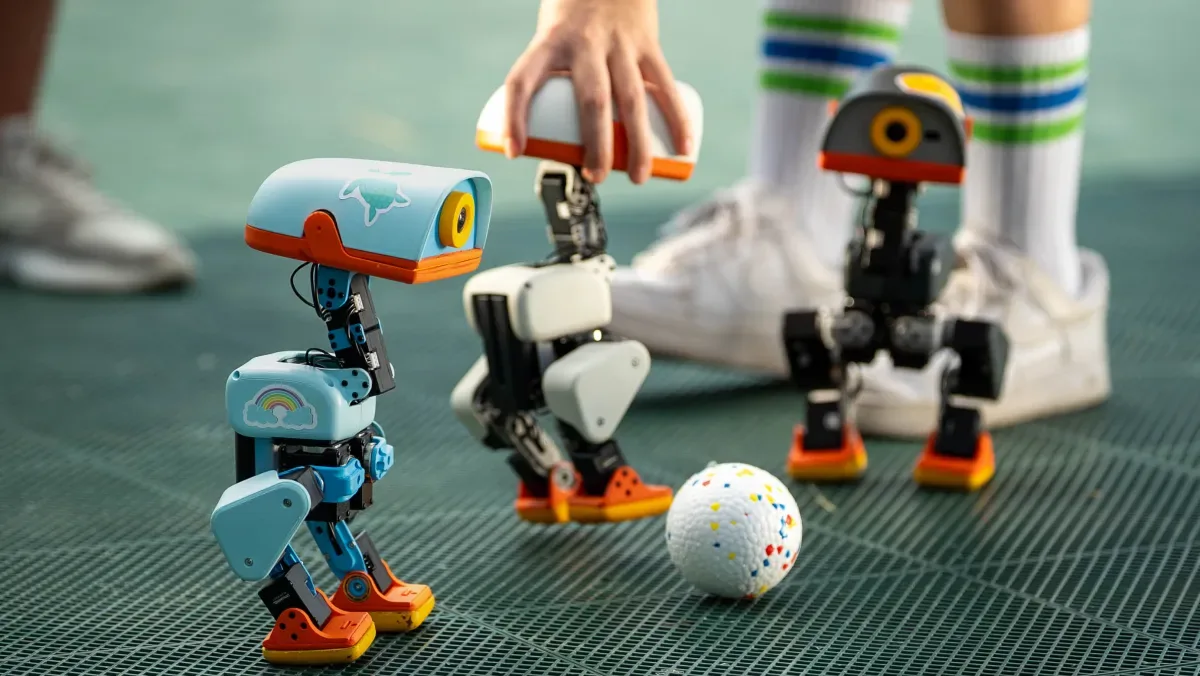
Nvidia CEO Jensen Huang controlled a group of Microduck robots by voice during a keynote at GTC Berlin, and preorders passed 20,000 units by the next day. The machines walked, sat, played dead and performed somersaults on command, while making sounds compared to R2-D2. Delivery is expected in time for Christmas, which makes the business case about open source consumer robotics rather than a stage demonstration.
How the Microduck demo turned into preorders
The video from the keynote spread widely earlier this week and showed Huang interacting with several waddling robots at once. Hugging Face executive Clem Delangue reported the preorder figure in a post, linking demand directly to the demonstration. He also suggested that Microduck could become the best-selling robot of the year. Promotional material positions the product for adults as well as children.
Microduck is an open source device developed by Pollen Robotics, a company acquired by Hugging Face in 2025. Hugging Face itself was acquired by Nvidia in September, placing the robot project inside Nvidia. This is the second Hugging Face robot after Reachy Mini, so the company already has a consumer-facing robotics line. The ownership chain explains why Nvidia hardware and software are central to the project.
Basic behaviors such as walk, sit and stand were developed through simulation using Nvidia technology, then transferred to physical robots. The shipped units arrive with those tricks already installed, reducing setup work for buyers. Owners can train additional behaviors themselves and share them with other users. Nvidia RTX Spark also described AI agents as the bridge that moved Microduck from simulation to the real world.
What the Microduck sales mean for business
For companies working with consumer products, the case shows how a live executive demonstration can convert directly into paid demand. A single keynote produced more than 20,000 preorders, with a clear delivery date before the holiday season. Smaller firms can use the same pattern on a reduced scale through video demonstrations and preorder pages. Larger firms gain an additional lesson in coordinating hardware supply with a fixed seasonal deadline.
The open source model changes the usual calculation for buyers and developers. Customers receive a programmable device rather than a closed toy with fixed functions, while community-shared behaviors can extend useful life. That also creates selection criteria around documentation, training tools and update procedures. Buyers should check what skills are included at shipment, what computing resources training requires and how user-created behaviors are reviewed.
The marker to watch is whether deliveries arrive before Christmas and whether preorder volume converts into active community contributions. Published shipment numbers, delivery dates and the library of user-trained tricks will show if demand was seasonal or durable. If both hold, open source desktop robots will have moved from developer kits to a repeatable consumer category.
