
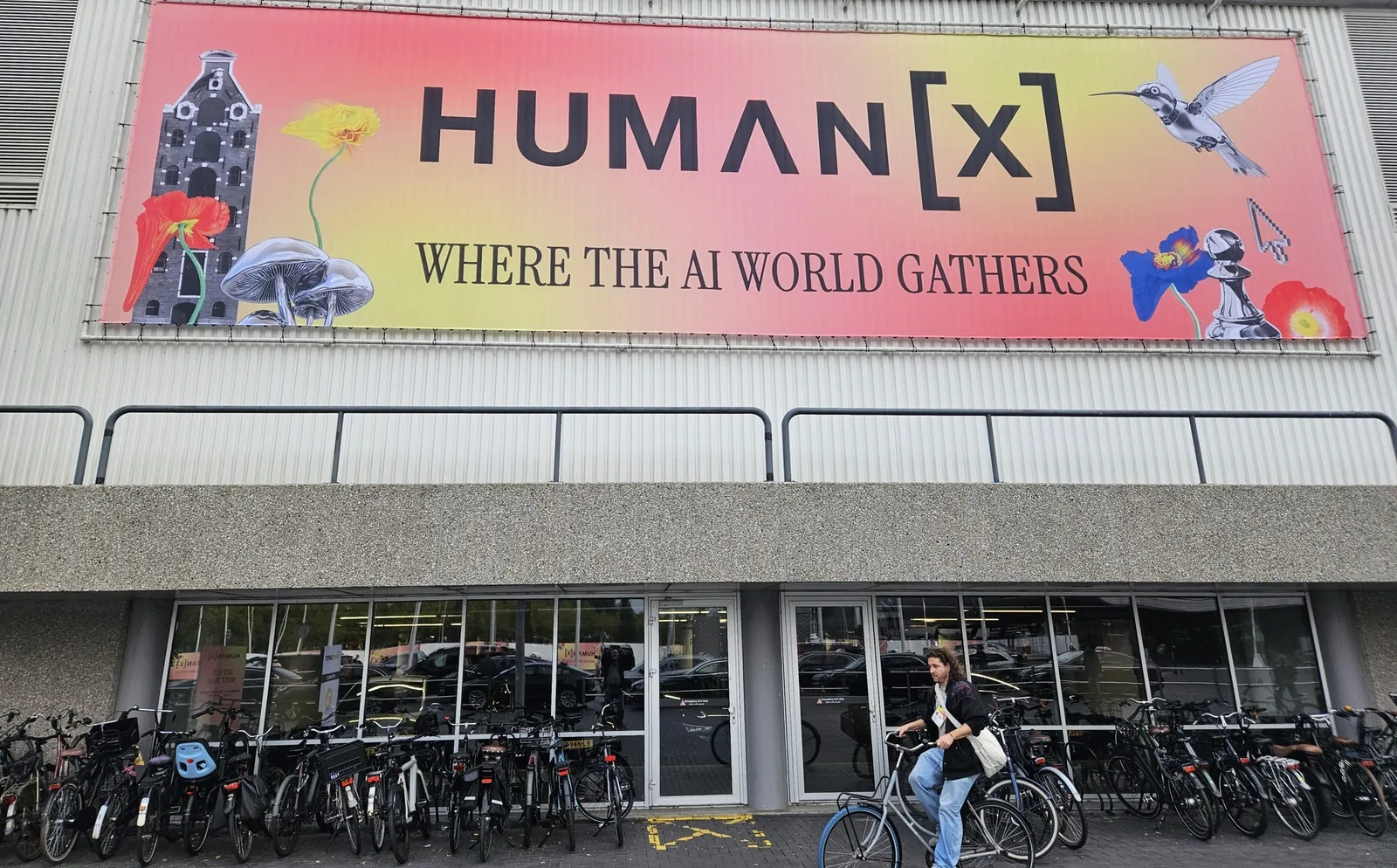
Ten European startups focused on production deployment stood out at HumanX Amsterdam 2026, the first European edition of the AI conference held in Amsterdam after AGNTCon + MCPCon Europe. The selection was made for differentiated business value rather than geography, yet all ten vendors turned out to be European. The unifying idea was closing the gap between appetite for AI and the capacity to run working systems in production and connect AI activity to business outcomes.
Tools that move pilots into production
8wave Oy positions its platform as ERP for AI operations by tracking the lineage of data feeding AI applications and linking it to KPIs. The company describes the approach as AI lineage, an update of data lineage tied to core business drivers. Bosun B. V. automates maintenance across legacy codebases, covering security fixes, dependency updates and selected migration tasks. It records the behavior of each legacy asset in a parity file based on inputs and outputs in human-readable form, which allows teams to compare original and updated applications.
Clarifeye SAS offers an AI consultant that interviews experts to collect tribal knowledge locked in their heads and combines it with documents, databases and applications. The output includes process maps, business rules and playbooks that reflect how the business actually operates. Distil labs GmbH simplifies creation of small language models through automated iterative fine-tuning with corporate and synthetic data. The goal is lower token costs compared with large language models, with customized models built for any use case rather than fixed prebuilt models.
The European profile of the list was not planned, but the author links it to sovereignty requirements, regulation and a view of the United States as a less safe place to do business. That backdrop contrasts with the public debate centered on competition between the U. S. and China over frontier models. The HumanX selection shifts attention from model scale to deployment infrastructure, maintenance, knowledge capture and evaluation. In this framing, Europe gains from practical innovation while attention elsewhere stays fixed on large models.
What this means for companies using AI
For companies, the practical effect is a wider set of options for getting AI systems into operation without rebuilding core platforms. Reasoning Engines, operating as LangWatch, tests AI agents with simulated users that interact with an application and iteratively improve the tests for use as evaluations. Orq. ai Holding offers a development and deployment platform that pairs a centralized center of excellence with policies, guardrails and audit trails with decentralized delivery by domain teams using their preferred agent technologies.
Safe Intelligence tests agentic applications through many cases to find failures, diagnose causes and recommend fixes for each iteration, covering models, governance guardrails, business logic and vibe coding issues. Softr Platforms provides a no-code environment with back-end deployment, security, access control and policy enforcement, now often used with an external coding agent to bring vibe coded apps into production. Tekst. ai analyzes customer-facing mailboxes alongside databases and API calls for process mining, while Unfold AI Products, operating as UnfoldAI, extracts data from closed systems for use via MCP.
The marker to watch is whether European buyers expand these tools from pilots to audited production use under internal governance rules. Follow procurement by regulated firms, renewal of small-model and evaluation contracts, and adoption of centralized agent platforms with audit trails. If those deployments persist through 2026, the HumanX list will have captured a durable shift from experimentation to operating discipline.