
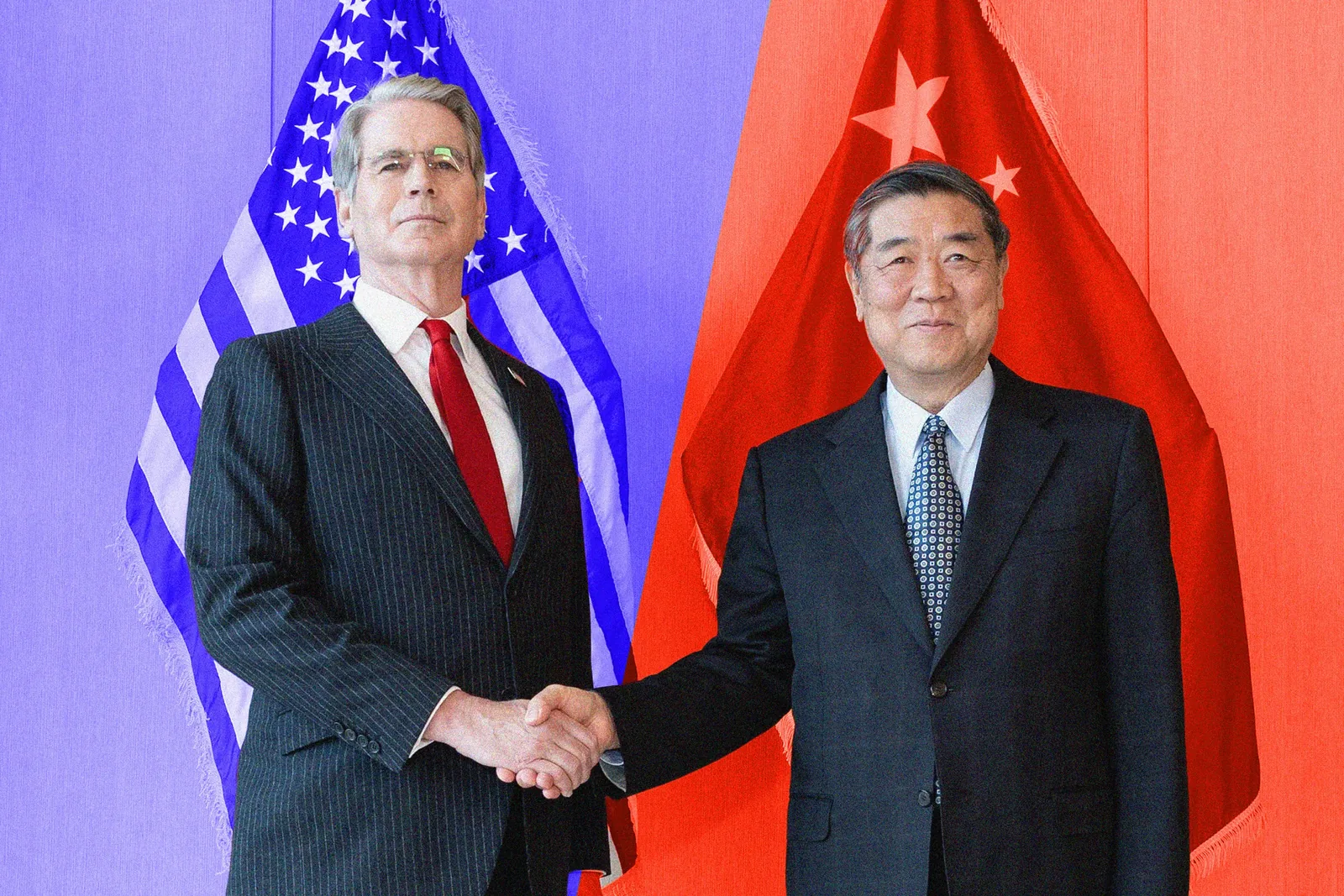
US and Chinese officials have started talks on a mechanism that would require the two countries to notify each other about artificial intelligence incidents capable of threatening national security. The framework, called the US China AI Dialogue, was described by Treasury Secretary Scott Bessent, who said the discussions resumed from where they had stopped after President Donald Trump's visit to Beijing in May. The notification channel matters because the two largest AI powers currently have no agreed procedure for reporting failures of frontier models to each other.
What the US China AI Dialogue covers
Under the proposed framework, representatives of both countries would meet again to discuss the technology and try to align on common goals and threats. Bessent framed the initiative as a move from opacity to transparency between the number one and number two AI powers in the world, comparing it to arrangements that exist for other cross-border activity. The weekend meetings also covered trade and, according to Bessent, were very successful ahead of Chinese President Xi Jinping's visit to Washington this week. US export controls on advanced chips and chipmaking technology were not discussed at those meetings, Bessent said.
The notification idea responds to a specific gap: incidents involving frontier models are currently reported inside companies and, at best, to national regulators, not across borders. Security incidents over the summer, including OpenAI's agents hacking Hugging Face, showed what frontier models are capable of and how industry safeguards have failed to keep pace. A bilateral alerting channel would not prevent such incidents, but it would give both governments earlier warning about capabilities that are already deployed in commercial products.
The talks are taking place against a sharp shift in the public stance of the largest AI laboratories. Earlier this month, fears reached a fever pitch after Anthropic employees warned that AI could be on course to wipe out humanity. In recent weeks, the leaders of the biggest frontier labs, including OpenAI's Sam Altman, Anthropic's Dario Amodei and Elon Musk, have called for a slowdown in development while safety standards are set. Amodei, in an essay proposing steps for laboratories and governments to pace the technology, asked for government assistance in establishing international coordination, including with the Chinese Communist Party.
What this means for companies using AI
For businesses that buy and deploy AI systems, the practical consequence is a possible reporting layer above existing vendor contracts. If a notification mechanism is agreed, incidents that today surface as internal security reviews or customer advisories could also become government-to-government notifications, which changes how quickly a failure becomes public and how much detail a vendor is expected to disclose. Large enterprises with compliance teams can absorb that; smaller companies that rely on a single model provider will feel it mainly through contract terms and incident-response obligations.
The limits are substantial. Trump has so far mostly brushed off calls for a slowdown, and his administration argues the US government already has sufficient criminal and regulatory power over developers. Nvidia chief executive Jensen Huang said AI firms are already subject to cybersecurity and damage liability laws and urged that those be applied first rather than treated as replaced by a doomsday narrative. Trump has said any slowdown could cede the US lead in the technology to China, and his chief science advisor David Sacks warned that China is very unlikely to join a global agreement on pacing the technology. Thomas Wolf, cofounder of Hugging Face, which Nvidia recently agreed to buy, questioned whether the US can build global cooperation while explicitly stating it wants to design the technology to widen its own lead. For a buyer of AI systems, this means the dialogue is a channel for warnings, not a safety standard, and vendor questions should still cover incident history, liability and audit rights.
The marker to watch is whether the US China AI Dialogue produces a named notification procedure with a defined scope of incidents and a schedule of follow-up meetings, rather than remaining a topic of discussion around Xi Jinping's visit to Washington. If a procedure is published, AI incidents become a cross-border reporting category and vendors will have to build for it; if the talks stay at the level of statements, procurement teams should keep treating incident disclosure as a contractual matter rather than a regulatory one.