
Runware plans to assemble modular AI data centers on a production line, with output of 30 megawatts of capacity per day by 2028, or nearly 1 gigawatt per month. That annual pace would roughly match the 10 gigawatts of data center power expected to be added in the U. S. this year. For businesses, the pitch is factory-built capacity that goes live in months instead of years.
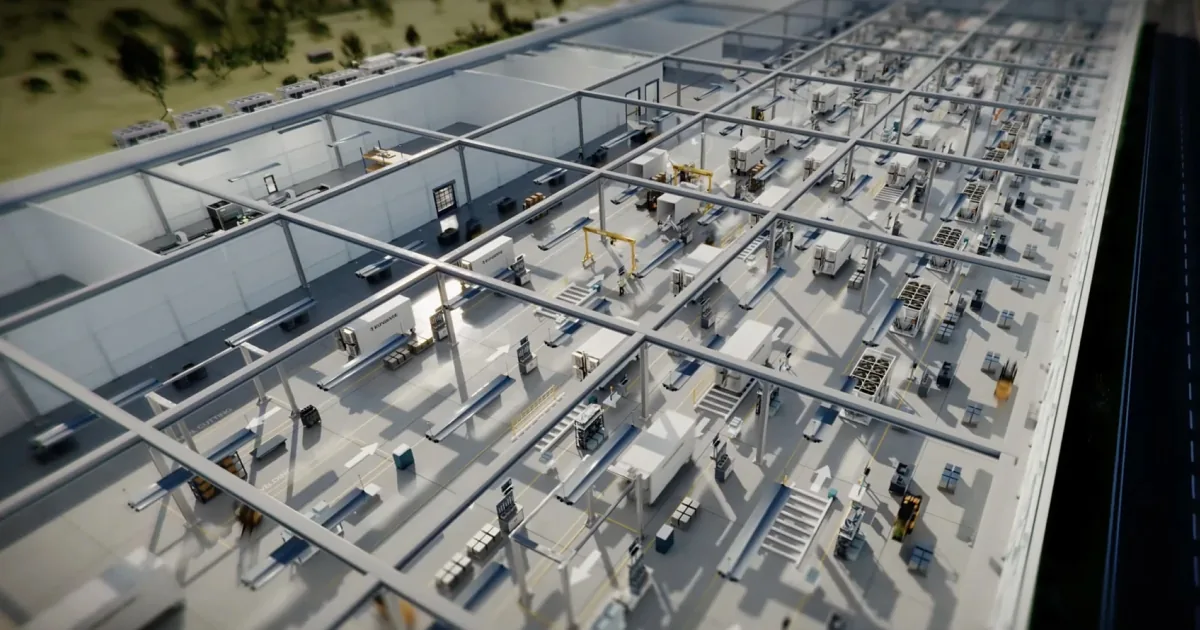
Factory line for Sonic Inference Pods
Runware told TechCrunch it will scale production at its Romania-based factory, building on the Sonic Inference Pod unveiled months ago as a modular data center shipped ready to install. The company already operates one factory used for several years to build pods, and a second started earlier this year should be finished within months and go online early next year. Production will ramp gradually from next year toward the 2028 target. The approach competes with prefabricated pods from Crusoe and Schneider Electric, though Runware claims faster shipment.
The manufacturing model follows automotive assembly: pods move along a line, with build time falling from three weeks to one day as output ramps. Customers supply their own site or ask Runware to find one, and installation plus setup is targeted at 48 hours, separate from factory build time. Buyers can rent compute from Runware or bring their own GPUs and pay a monthly fee for pods and operations, while power and internet are billed separately. Runware also provides spare parts if components fail.
The timing reflects pressure across the industry to deploy AI capacity faster and more efficiently. Nvidia introduced the Vera Rubin AI factories and DSX POD earlier this year to simplify construction of company-owned AI data centers. Runware argues the difference is that it has built a factory, not only designed reference infrastructure for others. The cautionary example is EV startup Arrival, once valued at over $13 billion, which struggled to mass-produce vehicles cost-effectively against traditional plants. Runware has raised more than $60 million, including a $50 million Series A last December, and plans a Series B.
What factory-built capacity means for buyers
For companies needing AI compute, shorter infrastructure lead times could remove one bottleneck from GPU projects. Runware says pod delivery times are shorter than current GPU lead times, leaving room to adapt infrastructure to ordered hardware, with an in-house team designing and testing components for new GPU generations. Small firms could obtain hyperscale-style capacity without a multi-year build, while large firms could plan sites around factory pods from the start. The company reports $1 billion in committed interest since offering Sonic pods externally a month ago, representing over 20 megawatts now being delivered.
The offer still leaves key commercial and technical checks for buyers. Pods use a standard design configurable to customer requirements, but Runware designs and builds its own cooling and pod systems from standard parts while sourcing pumps and fans from Germany and depending on Nvidia for networking. Co-founder and CEO Flaviu Fadulescu says widely available affordable parts and automotive manufacturing hires should control costs, with factory staff cost-effective relative to AI compute value. Contracts need clarity on service levels for the 48-hour setup, parts replacement, monthly operations scope, and separate power and connectivity charges.
The marker to watch is whether the second Romania factory goes online early next year and starts the ramp toward daily output, followed by expansion to the U. S. and other regions. Runware cites a site pipeline with power providers covering 397 megawatts, with potential to expand to 1.2 gigawatts on smaller sites than hyperscalers such as Amazon, Microsoft and Google use. Its pods use closed-loop liquid cooling with air-cooled radiators, run silent up to 86 degrees Fahrenheit, and target renewables as the main source. Delivery against the 20-megawatt backlog will show if line production holds.
