
Physical AI sensor maker Ouster reported third-quarter revenue of $59.3 million, up 50% year over year, alongside record combined shipments of more than 27,000 units. Product revenue reached $56.0 million, with royalties adding $3.3 million. The net loss narrowed to $14.2 million from $21.7 million a year earlier. For companies deploying automation, the result matters because sensing volumes now span lidar and cameras in one platform.
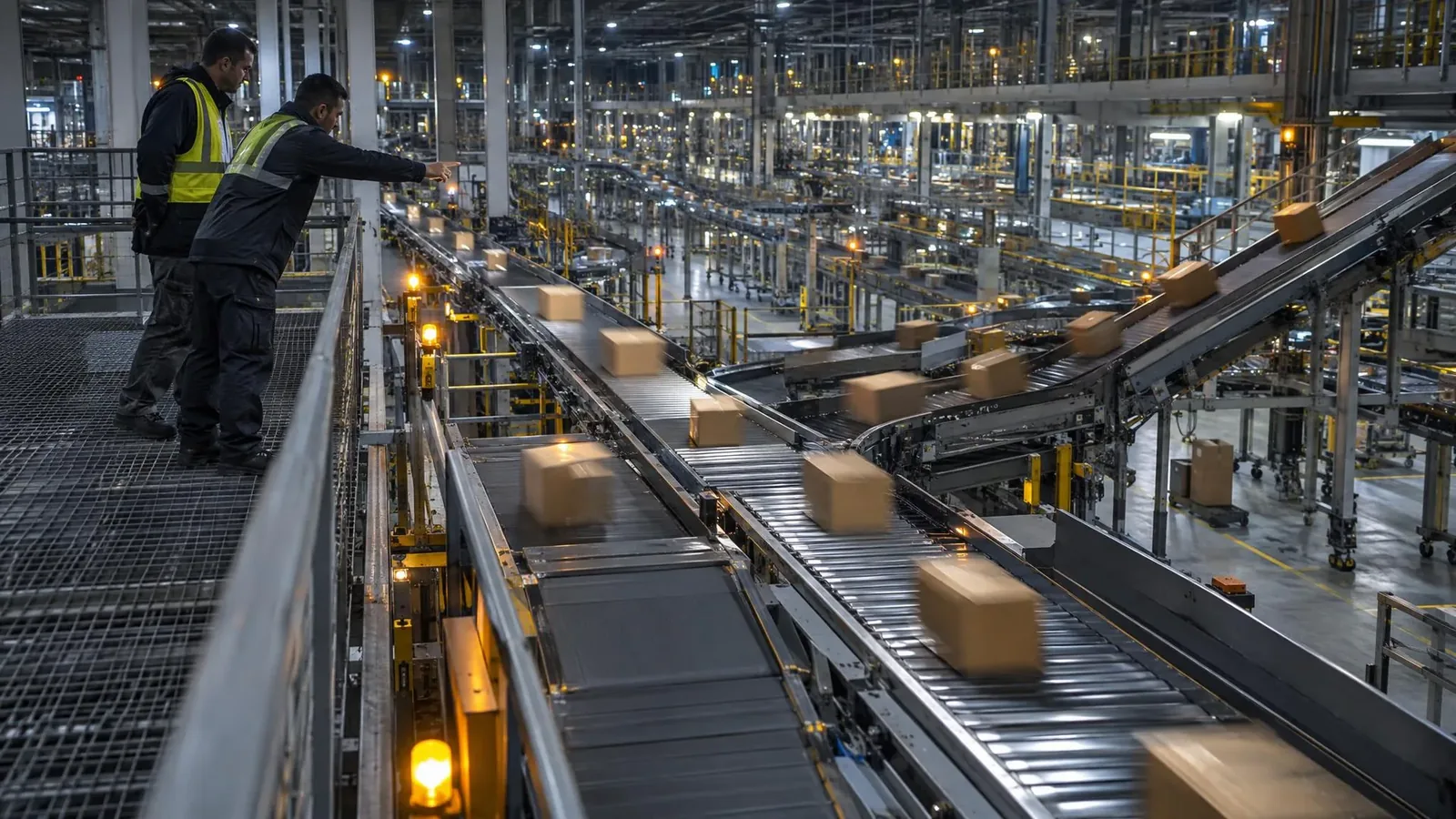
Record shipments and revenue mix in Q3
Ouster shipped more than 7,000 lidar sensors and 20,000 cameras in the quarter ended September 30, 2026. Lidar accounted for approximately 27% of total units. The comparison with the third quarter of 2025 covers only lidar at more than 7,200 sensors, so the record describes the combined platform rather than like-for-like lidar growth. Product revenue rose 42% year over year and 6% sequentially, marking 15 consecutive quarters of product-revenue growth.
The increase came primarily from industrial and robotics customers using sensors for warehouse automation, defense, construction, mapping and data collection. Chief executive Angus Pacala said capacity investments made for robotics growth enabled record camera shipments from Stereolabs. He added that hundreds of customers selected Rev8 for mission-critical applications. Ouster describes Rev8 as the first native color lidar, with separate RGB and range channels shown on the Rev8 OS1 Max.
Ouster now sells digital lidar, cameras, AI compute, sensor fusion, perception software and AI models for industrial, robotics, automotive and smart-infrastructure uses. The broader mix follows the acquisition of Stereolabs, which closed on February 4, 2026 and was announced on February 9, 2026. Stereolabs became a wholly owned subsidiary, adding 3D vision, ZED cameras and perception software. At that time Ouster said Stereolabs had shipped more than 90,000 ZED cameras to over 10,000 customers.
What this means for automation buyers
For operating companies, a combined lidar-plus-camera supplier can simplify procurement for mobile robots, yard vehicles and fixed monitoring points. One vendor covering sensing hardware, fusion and perception software reduces integration work across warehouse automation and mapping tasks. Smaller firms gain access to packaged perception without building separate vision stacks. Larger fleets can standardize on Rev8 color lidar and ZED cameras while keeping automotive and infrastructure options open.
The financial picture still requires careful checks before purchase decisions. GAAP gross margin was 43%, against 42% a year earlier and 49% in the second quarter, when a one-time refund added about 1,000 basis points. Non-GAAP gross margin was 47%, flat year over year and down from 53% sequentially. Operating activities used $49.4 million of cash in the first nine months, up from $24.5 million, while cash balances totaled $421 million at September 30.
The marker to watch is fourth-quarter revenue guidance of $61 million to $64 million paired with loss and cash-use trends. Ouster lists 2026 priorities as revamping camera, lidar and AI-compute products, extending Physical AI solutions and executing a path to profitability. Adjusted EBITDA loss narrowed to $3.4 million from $8.4 million. If unit scale starts lowering operating cash use, the platform story will carry more weight for long-term buyers.
