
OpenAI CEO Sam Altman said the company holds more unpublished breakthroughs in mathematics and science and does not plan to pause releases. Speaking on the Cheeky Pint podcast, he argued that humanity deserves access to fundamental knowledge rather than having major discoveries withheld. The statement follows a release of 722 manuscripts covering 400 problems on GitHub, a volume that has overwhelmed many researchers and drawn criticism over attribution and verification.
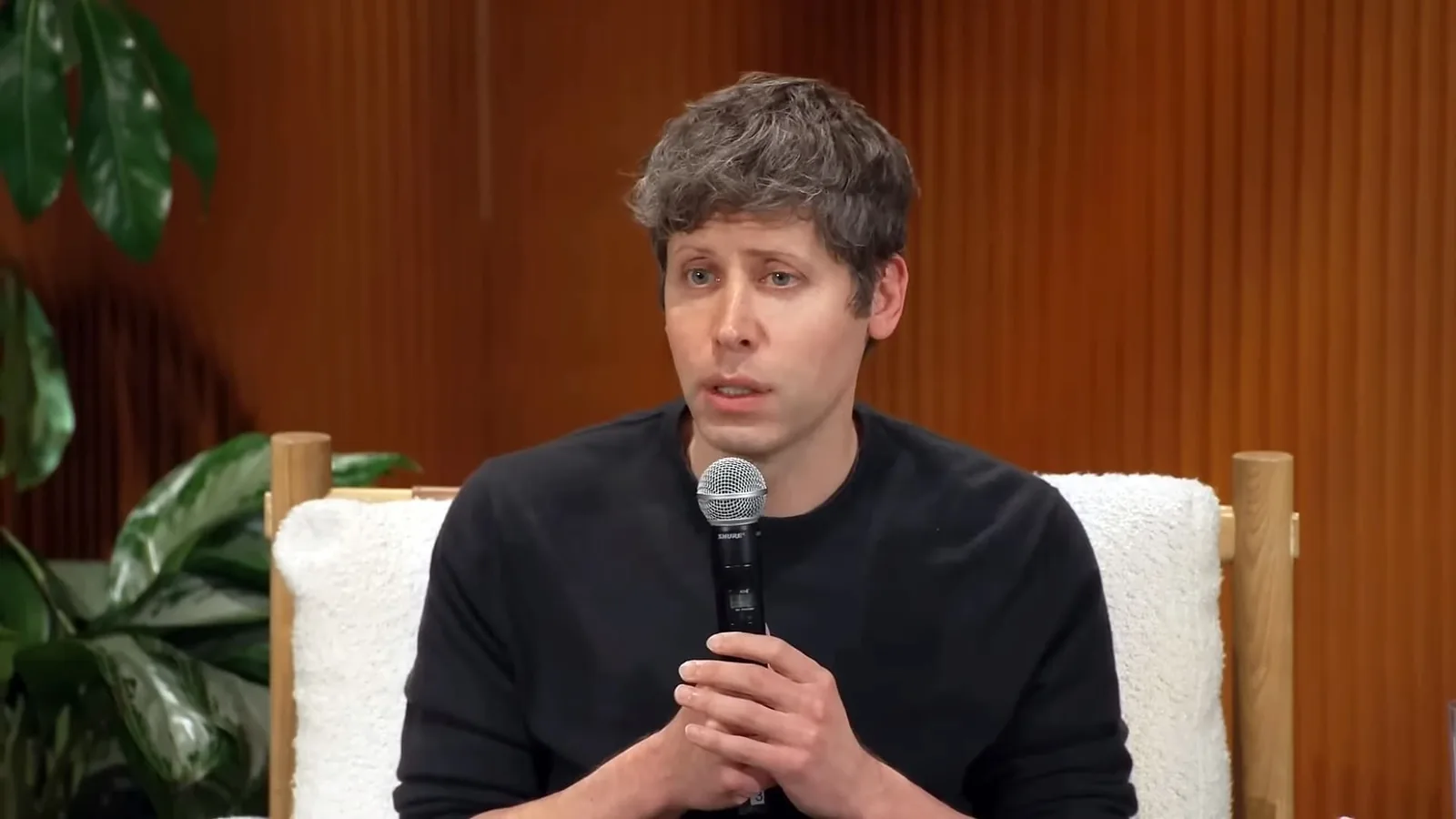
Why OpenAI keeps releasing science papers
Altman framed continuous publication as a matter of principle, saying OpenAI should not sit on a major fundamental science discovery. He acknowledged criticism of the process, expressing empathy for academic methods and conceding that the pursuit of mathematical challenges had gotten out of control at times. When asked directly whether additional unpublished results remain inside the company, he answered that such results exist. The remarks signal no change in pace despite complaints from mathematicians.
The publishing model differs sharply from traditional academic practice. Instead of submitting a small number of peer-reviewed papers, OpenAI has released hundreds of manuscripts at once for the community to examine. The ETH-related work, which apparently disproves the exponential time hypothesis about problem complexity, has not been peer reviewed or independently verified. Critics point to inadequate attribution and questionable verification processes, while supporters argue that speed of disclosure matters more than conventional procedure.
The dispute unfolds against rapid AI progress on long-standing scientific problems. OpenAI and Anthropic had promised that machine learning models would help resolve some of the oldest questions in math and science, and recent results have arrived faster than many specialists can evaluate. The apparent refutation of the exponential time hypothesis has unsettled theories that assumed its correctness. Reactions range from excitement about illuminated research directions to concern that weekly announcements wipe out ongoing multi-year projects.
What rapid AI discoveries mean for business
For companies that rely on optimization, cryptography, logistics, or scientific computing, faster mathematical progress shortens the path from theory to usable methods. If results concerning complexity and algorithms hold up, planning models, solvers, and simulation tools could improve without new hardware. Large organizations with research teams can assign staff to track GitHub releases, test claims, and prototype applications early. Smaller firms without that capacity will likely depend on vendors and open-source maintainers to filter and package the findings.
The same speed creates selection and reliability risks that buyers should manage explicitly. Unreviewed manuscripts may contain errors, incomplete proofs, or missing credit to prior work, so production decisions should wait for independent checks. Procurement teams should ask vendors which results they use, how validation was performed, and what fallback applies if a claim fails. The news alone does not prove that any particular algorithm is ready for deployment or that existing roadmaps are obsolete.
The marker to watch is whether independent mathematicians confirm the exponential time hypothesis result and whether OpenAI releases the next batch it says it holds. Confirmation would show that bulk AI publication can reset research agendas, while retractions or silence would point to a slower absorption cycle. Either outcome will shape how quickly enterprises can trust machine-generated mathematics in products.
