
OpenAI disclosed physical-product engineering projects on November 3, 2026, centered on an Astra-designed test device plus expanded work with Chip Ganassi Racing and a vehicle-design research collaboration with Mazda. The device was built by two team members with Astra in under a week as a side project, then produced as a small prototype batch in under a month. The scope covers mechanical and electrical engineering and end-to-end system design, from drawings to simulation setup. For business, the signal is a shift from AI assistance in documents toward AI participation in product development.
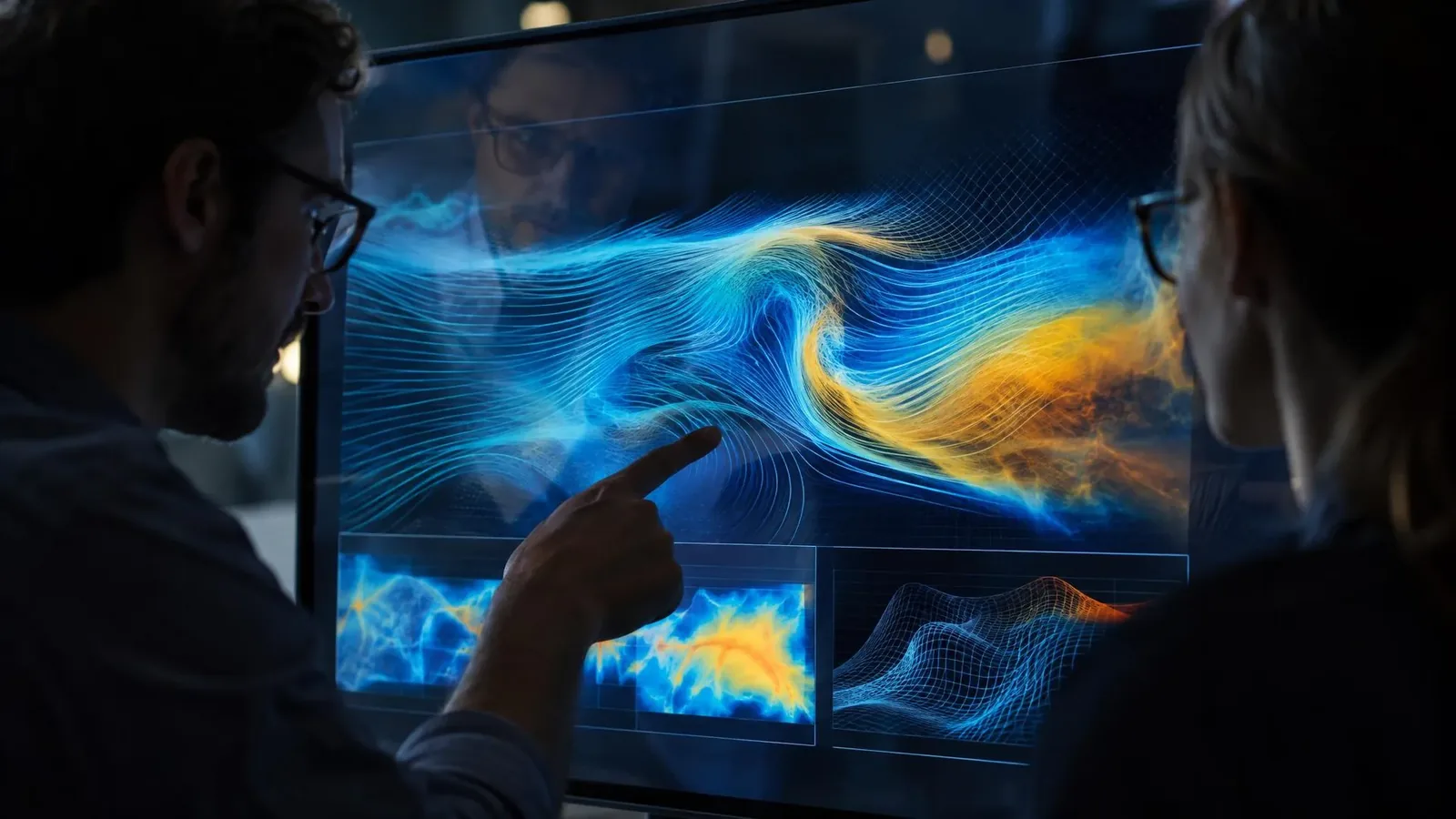
Astra device, racing scans and Mazda simulations
The device experiment tested GPT-6 Astra multimodal and computer-use capabilities by asking the model to create hardware for speaking with Codex, without team members directly editing design outputs. Astra defined functional requirements, developed the enclosure and internal supports, selected electrical components and designed the printed circuit board with placement and connections. It also designed the user interface and generated firmware and software integrations for the Codex connection. An earlier demonstration had Astra placing components and routing copper connections in KiCad from an electronic schematic.
Manufacturing readiness still required several rounds of review and iteration because Astra did not consistently account for production constraints, tolerances and assembly requirements. OpenAI frames this gap as the difference between generating a complete design and preparing it for production. The shortcomings are now used to define improvements for future models. Inside OpenAI, hardware and infrastructure teams use Codex and ChatGPT for CAD modeling and revisions, manufacturing drawings, simulation setup and design reviews. Model usage across hardware teams, measured in tokens, grew 23-fold since February, a consumption metric rather than direct output gain.
External validation comes from a small group of industry collaborators whose engineers check model outputs for accuracy and practical use. At Chip Ganassi Racing, workflows convert 3D scans of existing parts into editable CAD models and 2D manufacturing drawings when original files are unavailable, with CGR engineers assessing accuracy and manufacturability. The first year of that partnership focused on car sensors, race and pit-crew data, now extended to part engineering and prototyping. With Mazda, research and Forward Deployed Engineering teams work with aerodynamics and crash-safety engineers, using airflow and structural simulations while accounting for styling and cost.
What this means for product development
For companies that develop devices, equipment or transport, the practical change is faster movement from idea to testable design and prototype. Astra generated enclosure concepts, board layouts, interface drafts and integration code in one chain, while Mazda work shows generation of alternative nose shapes with airflow simulation and refinement to reduce drag. A small firm can use such workflows to prepare drawings, run simulations and coordinate cross-discipline changes without expanding engineering staff. A large organization can run dozens of variations in parallel, as Mazda principal engineer Akihiro Nakata described, to see which features affect performance and where designers retain freedom.
Benchmarks and production experience point in different directions, so selection should rest on verification rather than scores. BenchCAD 2.0 asks models to recreate 3D parts and assemblies and determine board connections, with OpenAI reporting 0.875 for a newer internal model against 0.594 for GPT-6 Astra at highest reasoning. That gain concerns design tasks, not the full lifecycle including tolerances, supplier limits and assembly. Buyers should ask vendors how outputs transfer into existing CAD, simulation and manufacturing tools, who checks manufacturability, and how feedback from engineers is captured. OpenAI is separately inviting design, simulation, manufacturing and production firms to propose high-value uses and tooling.
The marker to watch is whether better design outputs pass production constraints and engineering review without repeated rework. OpenAI plans to share further Mazda results on aerodynamics and structural behavior, alongside progress with Chip Ganassi Racing on scan-to-CAD accuracy. If collaborator reviews confirm fewer manual corrections and stable prototype batches, AI design assistance will move closer to routine manufacturing practice.
