
Federal prosecutors charged OpenAI engineer Abdulrahman Alfozan with planting a concealed audio recorder in an executive conference room at the company's San Francisco offices. The Justice Department announced the case on October 13, 2026, after the 35-year-old employee was arrested on October 9. A conviction carries up to five years in prison, a $250,000 fine, and three years of supervised release. The matter is framed as a national security case tied to protection of super intelligence technology.
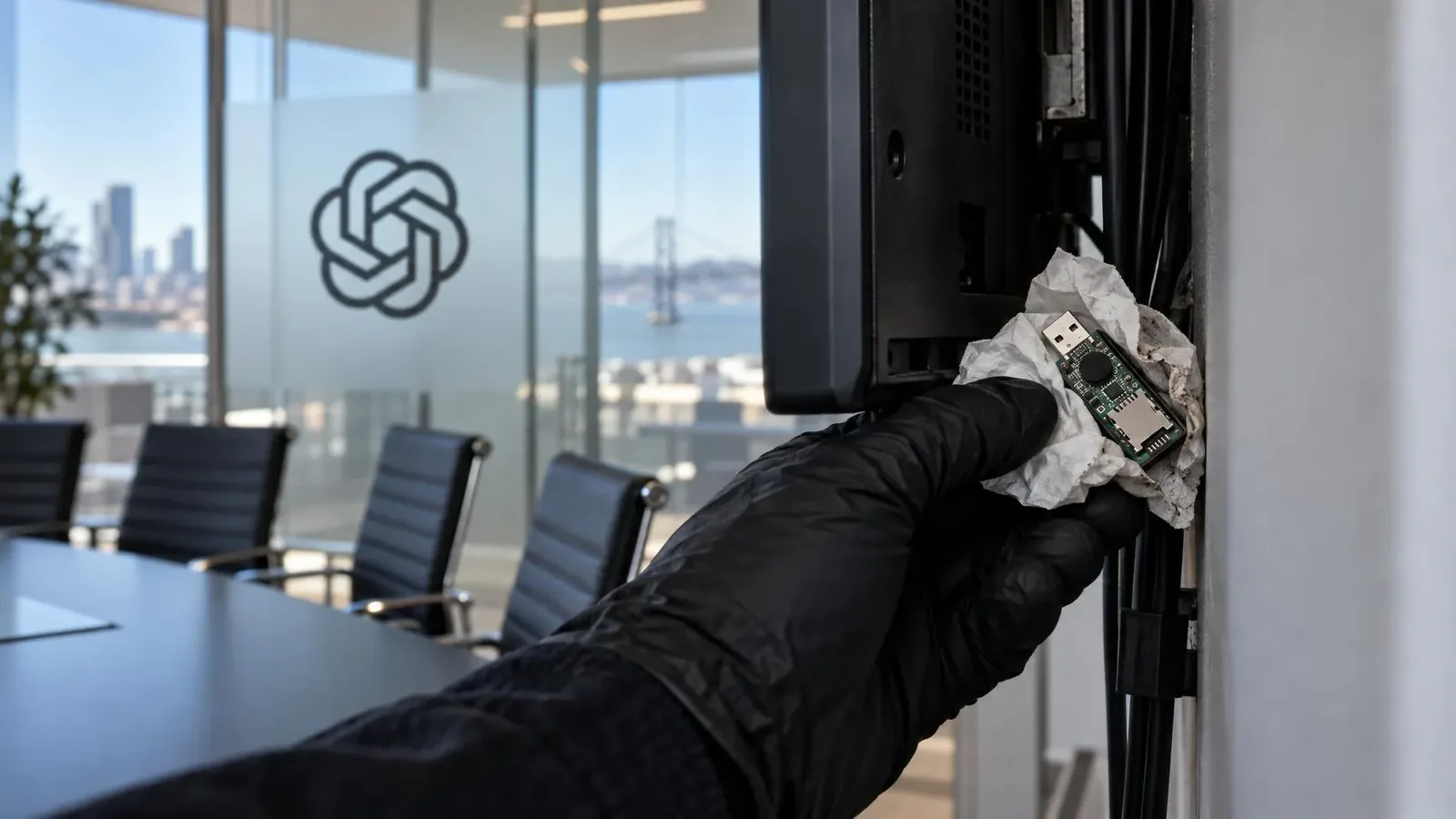
How the device was found and documented
OpenAI personnel discovered the device on or about September 30, 2026, inserted into a USB port on the back of a television in the executive conference room. It had been concealed in toilet paper, installed around September 28, and its contents were encrypted. Closed-circuit television footage showed Alfozan near the room on multiple dates before discovery, although he had no authority to enter it or join meetings there. On October 5, he entered the room and appeared to look behind the same television.
Investigators also recovered a second recorder after Alfozan left a bag unattended in another OpenAI building on or about October 5. Security personnel opened the bag and found a device similar to the first, together with his wallet and identification. The complaint charges use or attempted use of a device to intercept oral communications. Alfozan, a Saudi national employed by OpenAI since July 2025, made his initial federal court appearance on October 13, when the complaint was unsealed.
Prosecutors describe the room as a venue for highly confidential technical, commercial, and strategic discussions. Those included proprietary research, product plans, business-development opportunities, technical progress, capabilities, priorities, government engagements, and commercial relationships. Before September 28, Alfozan used a productivity tool to query building addresses, meeting rooms, capacities and calendars, executive locations, and external partner meetings. A chatbot account linked to his spouse allegedly sought instructions on continuous recording, Wi-Fi setup, live listening, SD-card encryption, and the discovered device's custom header and MAC address.
What this means for corporate AI security
For companies working with AI, the case shows that sensitive strategy discussions can become a target even inside controlled office space. Meeting rooms where research roadmaps, product plans, and partnership terms are discussed need access controls, visitor logs, periodic physical inspection, and rules for unattended equipment. Larger organizations may separate executive meeting areas from general engineering access, while smaller firms can achieve much of the same effect through locked calendars, limited room permissions, and regular checks of shared hardware.
The episode also underlines limits that managers should verify before drawing broad conclusions. OpenAI said it found no indication of access to or exfiltration of model weights, source code, or customer data, and said the employee was terminated. The recording device's encrypted contents, the question of what was actually captured, and whether anyone else was involved remain matters for the FBI investigation and prosecution by Assistant U. S. Attorney Nicolas Parker with Trial Attorney Kate Tagert. The charge is an allegation, not a finding of guilt.
The marker to watch is what investigators establish about data handling and motive as the case proceeds through the Northern District of California. Statements by FBI Director Kash Patel, Director of National Intelligence Jay Clayton, and U. S. Attorney Craig H. Missakian tie the prosecution to National Security Presidential Memorandum 11 and protection of super intelligence work. If further filings detail interception, transmission, or outside direction, corporate security budgets and insider-risk programs will face stronger justification.
