
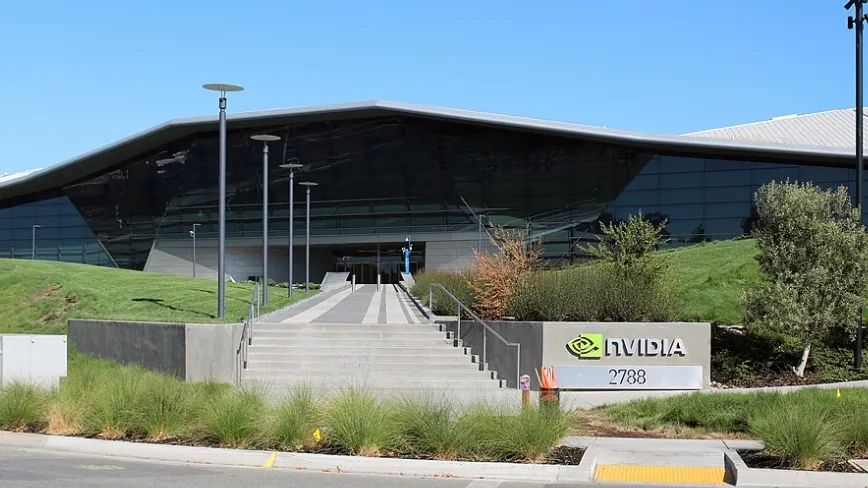
Nvidia is in talks to invest as much as $10bn in Anthropic's initial public offering as an anchor investor, Reuters reported. The AI company is seeking to raise up to $100bn at a valuation of around $2trn, which would make it the largest listing in history. For business, the size of the cheque matters less than the fact that a chip supplier is again financing its own customer.
What is known about the listing
SpaceX raised $75bn in June and listed at $1.77trn, so Anthropic's target is roughly a third larger than the previous record. TNW reported last month that a raise on this scale would be ten times Europe's largest listing in decades, Porsche's EUR 9.4bn in 2022. The prospectus is expected this month, with the listing days before the midterms. European institutions will be offered a piece of it, priced in part by an American supplier that already owns a slice of the alternative.
Nvidia is also Anthropic's supplier and has already committed up to $10bn to the company separately, so the IPO cheque would sit on top of an existing relationship rather than open a new one. Anthropic's quarterly revenue passed $11.5bn in August, fourteen times a year earlier. Neither company has commented on the report, which means the figure of $10bn is a negotiating position, not a signed commitment.
Three days before the report appeared, Nvidia was doing something similar in Europe. It returned as an investor in Mistral's EUR 3bn round, which closed on 8 September at a valuation above EUR 21bn and was the largest equity round a European technology company has ever raised. The cheque Nvidia is weighing for Anthropic is bigger than all of it, and close to half of what Mistral is worth in total. The same player is therefore setting the price of two different bets on the same market within one week.
What this means for business
The pattern has a name in the United States now: Nvidia invests in companies that buy its chips, then supplies them, and in some cases leases the hardware back. The Bank for International Settlements has warned that the terms of these arrangements are poorly disclosed. For a company choosing an AI vendor, this is a warning about dependency rather than about technology: the supplier, the investor and the landlord can be the same legal entity, and the commercial terms of that triangle are not visible from the outside.
Europe runs a smaller version of the same circuit. ASML led Mistral's previous round, and Mistral borrowed $830m from seven banks to buy 13,800 Nvidia chips for a data centre south of Paris. What the money is for differs: Mistral's round funds compute inside Europe, a gigawatt of it by 2030, and a business built on selling sovereignty to governments and regulated industries. Emmanuel Macron called that a third way in AI, while Anthropic's proposition is that there is one way, and it is selling it. A buyer in a regulated sector thus faces a real choice between a European stack with its own financing ties and an American one priced by its own supplier.
What remains unclear is how much of the $10bn is a firm commitment, what share of the listing it would buy, and on what terms the supply agreement is written. The questions to put to any vendor in this position are the same: who owns the infrastructure, who can change the price, and what happens to the contract if the investor's stake changes. The prospectus expected this month is the marker to watch — if it discloses the supply and investment terms in detail, the circuit becomes readable for buyers; if it does not, the BIS warning applies to the largest listing in history.