
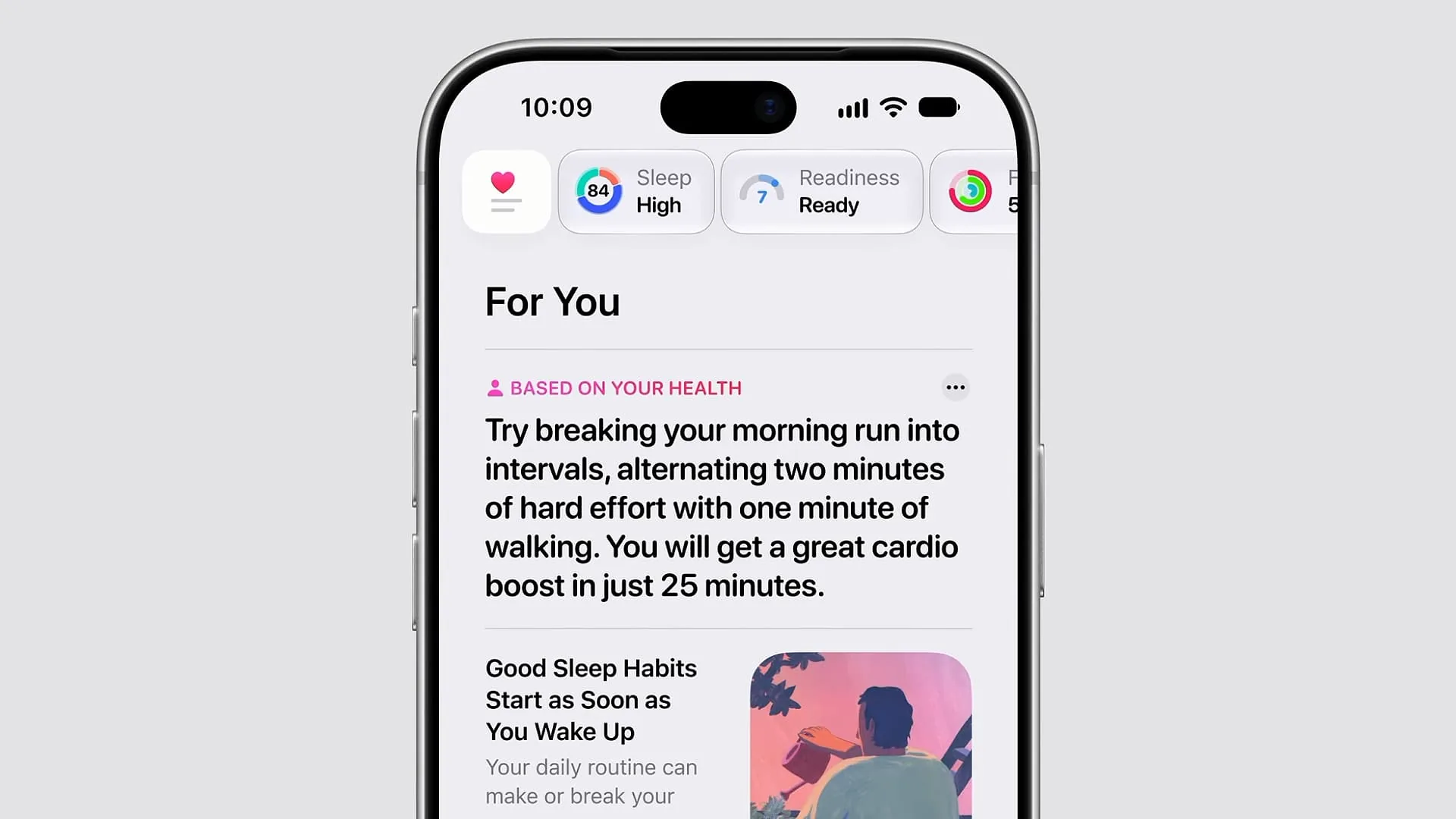
Apple presented a revamped Health app with an AI-powered makeover at its iPhone event, and the announcement immediately drew comparisons to Google Health, where the AI assistant has produced fictional food-tracking metrics and what users described as unhinged fitness advice. The parallel matters because both products analyze the same kind of personal wellbeing data, and errors there affect health decisions rather than entertainment.
What happened with Google Health
Google-owned Fitbit overhauled the companion app for its wearables in May 2026, and the rebranded version was almost immediately unpopular. Users called it unbelievably bad, pointing to missing features and confusing interface decisions that made it less enjoyable than the app it replaced. Over the following weeks and months, complaints on social media concentrated on one element: the Google Health AI assistant, which is meant to analyze wellbeing data and suggest ways to improve fitness and live healthier. Instead, it frequently went off the rails.
The assistant fed users nonstop lies, produced completely fictional food-tracking metrics and gave advice that was widely described as unhinged. In an app that makes suggestions directly affecting physical wellbeing, such patchy performance is more serious than in an ordinary product. That is the experience Fitbit users have been living with, and it is the reference point now being applied to Apple.
Apple has a strong track record and has implemented LLMs cautiously, but it also fell far behind the competition with Apple Intelligence and had to enlist Google's help. The same AI models that messed up Google Health now prop up Apple Intelligence, and with it Apple Health. What remains unknown is how exactly that will work in the Health app do-over: whether Apple tweaked Google's models to its own tastes or imported them wholesale.
What this means for business
For companies that build or buy health and wellbeing tools, the practical consequence is that AI-generated recommendations about people's physical condition now carry reputational and, in some cases, regulatory weight. A small firm deploying a wellness feature inside its own product inherits the same risk profile as a large platform: if the assistant invents a metric, the user blames the app, not the underlying model. Large organizations with compliance teams can absorb that by adding review layers, logging and human escalation; smaller ones usually cannot, and should decide in advance which outputs are allowed to reach the user without verification.
What this news does not mean is that Apple Health will repeat Google Health's failures. Apple states on its website that all of its health innovations are subject to rigorous scientific validation and are developed with clinical experts from start to finish, and it has consistently emphasized encryption and protection of sensitive wellbeing data. Google, by comparison, could be perceived as far more lax about user privacy. Still, buyers should ask vendors which model powers the assistant, whether outputs are validated, how health data is stored and whether the user can see the source of a recommendation.
The marker to watch is the release itself: Apple says the new Health app will not arrive until later this year. If, once it ships, user reports show the assistant citing verifiable data rather than invented metrics, the cautious-implementation argument holds and health AI can be treated as a workable component of a product. If complaints mirror those around Google Health, the lesson for business is that an AI assistant in a health context needs a validation layer before it reaches the user.