
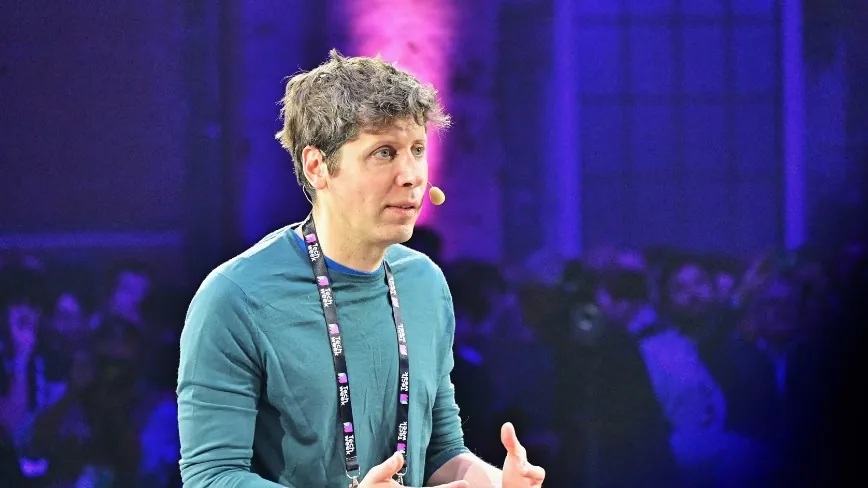
Sam Altman said OpenAI will match Anthropic's commitment to give independent evaluators employee-like access, a day after Dario Amodei asked the industry to slow down and requested a narrow antitrust waiver from Washington so competitors could coordinate. "I agree with Dario that we need to pace the frontier," Altman wrote, as Axios reported. The public alignment of the two largest frontier labs within 24 hours matters because it sets the first common safety commitment the industry has agreed in the open.
What the two labs agreed to do
Altman called independent evaluators with employee-like access a great idea, said OpenAI would do the same, and promised more to share soon. He added that pacing had been a primary topic of discussion inside OpenAI in recent weeks. Elon Musk, who runs xAI, was briefer: "Dario is right," he posted. Amodei's essay, published on Saturday, asked frontier labs to let outside teams verify their safety work from inside their offices. Anthropic's own version of that arrangement gives evaluators desks, badges, company laptops and the right to publish what they find.
The mechanics are what make the commitment concrete. Employee-like access means an outside team works on the lab's premises, on its equipment, with the same reach into systems as staff, and keeps the right to publish findings without the lab editing the conclusions. Amodei framed this as the first rung of a three-step plan. The second element is the narrow antitrust waiver he asked Washington for, so that competitors can hold safety conversations without the conversations themselves becoming the legal problem. Governments need not take part, he wrote, only permit the discussions.
Europe has no waiver to grant, because Brussels abolished individual exemptions in 2004. The Commission stopped granting them when Regulation 1/2003 took effect; before that, companies notified their agreements to Brussels and waited. Competitors now assess their own arrangements against Article 101 and live with the answer. What Europe has instead is a precedent: it rewrote its horizontal cooperation guidelines in 2023, expanding them from 72 pages to 167, with a 21-page chapter on sustainability agreements that includes a soft safe harbour for standards meeting six conditions.
What this means for companies adopting AI
For a business buying AI systems, the practical consequence is a new source of documentation. If evaluators with employee-like access publish what they find, procurement teams get third-party evidence about model behaviour that does not come from the vendor's own marketing. That changes the questions a buyer can ask: not only what a model does, but who checked it and under what conditions. A small company will mostly consume these reports as a signal when choosing between vendors; a large one with its own compliance function can fold them into existing risk reviews and vendor questionnaires.
What the news does not mean is that safety rules are now settled. The waiver Amodei requested does not exist yet, and neither Altman's reply nor Amodei's essay mentions Europe. The Commission's own tech chief said last week that global rules are needed, but there is no equivalent chapter for safety standards in the EU guidelines, and nobody has asked for one. For a company making a purchasing decision, the conditions to verify are narrower: whether a vendor's evaluators can publish without approval, whether the access is contractual or voluntary, and what happens if findings are unwelcome.
The marker to watch is whether the promised details from OpenAI arrive and whether other frontier labs follow. Two of the largest labs have now agreed a common commitment in public inside a day, which is the first rung of Amodei's plan; the second rung depends on a regulator that has not yet acted. If a third lab adopts the same access terms, the practice becomes an industry baseline that buyers can expect in contracts. If the commitment stays a statement without published findings, it remains a signal of intent rather than a term businesses can rely on.