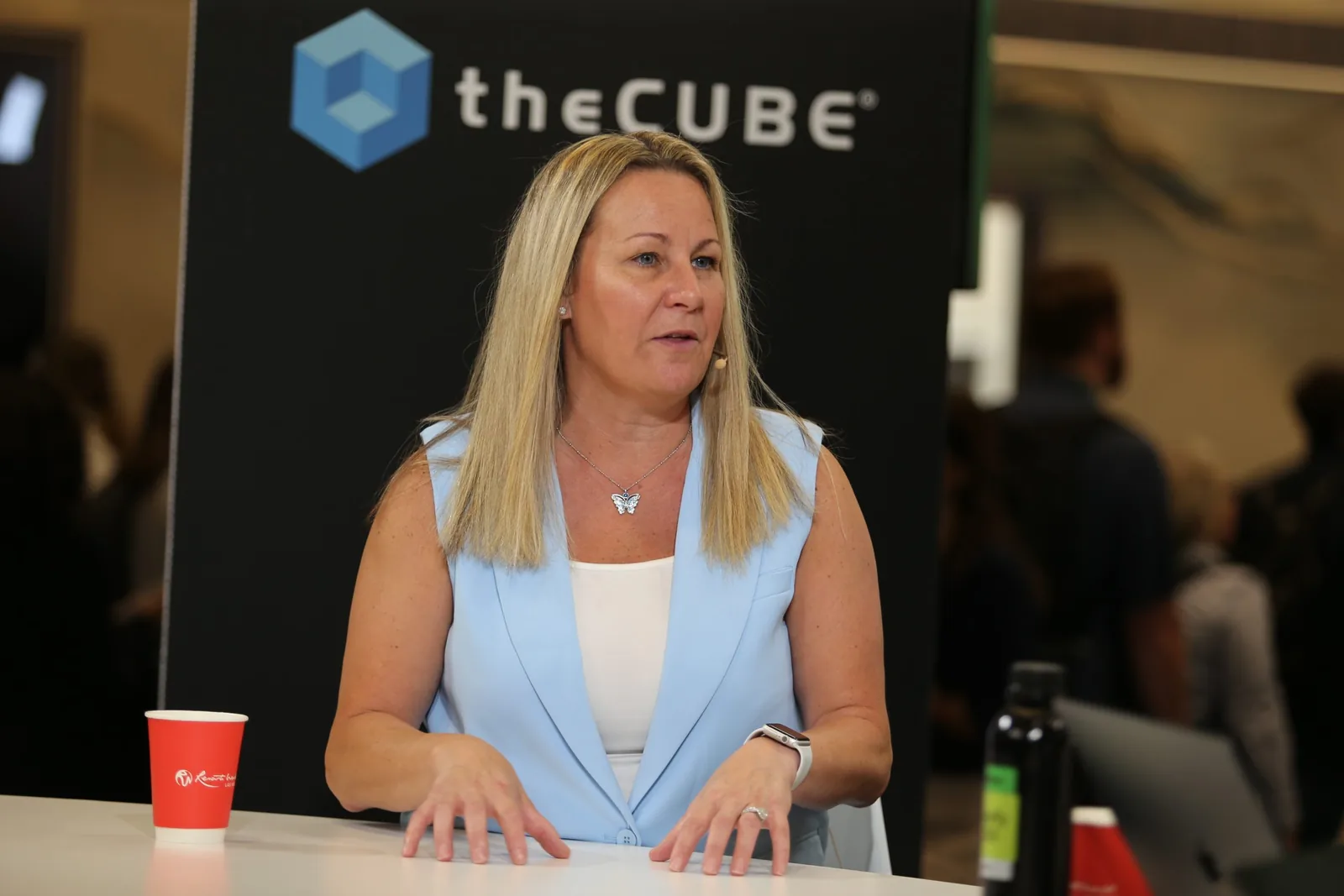
Newell Brands has placed internal audit at the center of its AI adoption, giving auditors a seat at the table for every major implementation. Keri Tracy, vice president and chief audit executive, said the arrangement is unusual: at other companies where she worked, audit struggled to get into the room at all. The practical effect is that controls are considered while automation is still being designed, not after it goes live.
How audit shares governance with process work
Tracy described the model at Workiva's Amplify event in an interview with theCUBE Research's Krista Case and co-host Alison Kosik, broadcast on SiliconANGLE Media's livestreaming studio. At Newell, auditors carry governance responsibilities alongside process optimization, so the business weighs control requirements as adoption advances. Tracy said audit is present for any major AI implementation, which she called probably unique to the company. In her previous employers, she added, that was not the case, and getting audit a seat at the table was very challenging.
The company varies deployment speed by the risk attached to each use case. Customer order-status agents can move ahead faster, while fixed-asset-accounting agents require closer attention to financial controls. Tracy summarized the sequencing rule as lean before AI: Newell applies lean and Six Sigma techniques to a process first, then layers AI on top of the reworked workflow. That order matters because automation built over an unreformed process tends to preserve its inefficiencies and hide them inside the model.
Internal audit also acts as a bridge between business teams and technology specialists. The employees who do the work are expected to help shape changes and to have room to question proposed approaches. Tracy said many companies underestimate change management: without bringing people along, even the best plan and the best technology will not work, and many transformations fail for that reason. Her argument is that adoption speed is limited less by tooling than by whether the affected teams accept the new division of labor.
What this means for companies rolling out AI agents
For businesses adopting AI agents, the Newell case suggests audit and control functions belong in the design phase rather than in post-launch review. That changes working routines: risk and finance teams need to sign off on data sources, approval steps and escalation paths before an agent touches customer or accounting records. A small company can borrow the logic without a large audit department by assigning one owner per agent and defining which decisions the agent may take alone. A large company with several business units faces a harder task, because the same agent type can carry different risk in different units and needs separate control thresholds.
The limits are equally concrete. The source gives no figures on how many processes Newell has automated, no cost savings and no timeline, so the model cannot be copied as a ready-made playbook. What remains to be verified is whether slower deployment for finance-related agents actually reduces errors, and whether audit involvement shortens or lengthens project timelines. Before choosing a vendor, companies should ask who owns control design, how the agent's decisions are logged, and what happens when an agent and a controller disagree. Audit presence by itself does not make an AI program safe; it only makes the control questions visible earlier.
The trend will be confirmed if more companies start naming audit or risk owners in AI project announcements, rather than mentioning them only after an incident. A second marker is whether vendors begin shipping control and logging features as standard parts of agent platforms instead of paid add-ons. Until that happens, the Newell arrangement reads as a single company's practice, not an industry standard.