
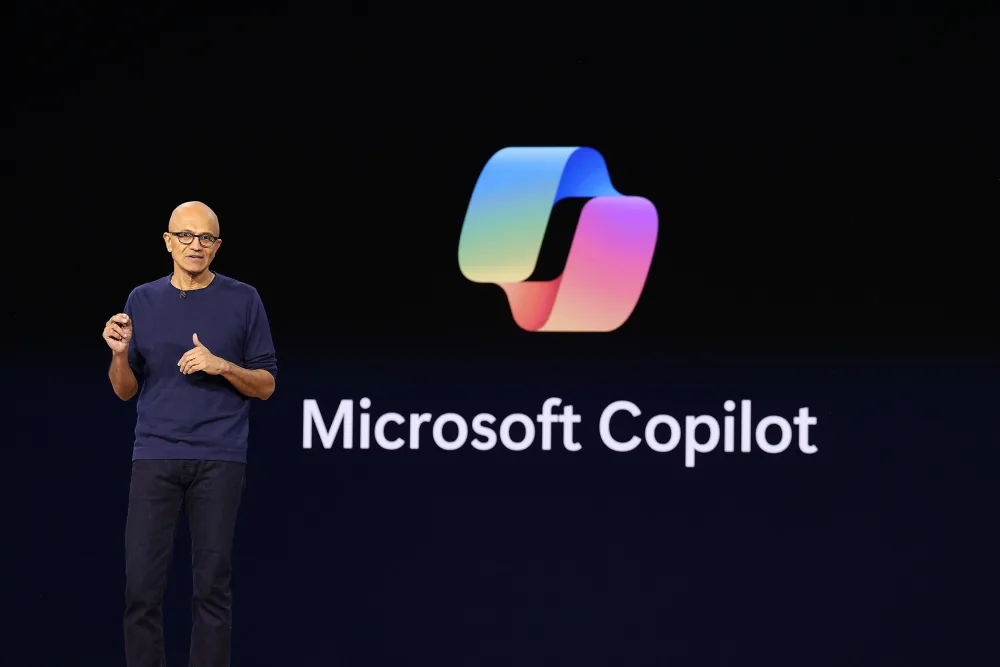
Microsoft CEO Satya Nadella said AI systems need an "emergency brake" that lets an authorized person pause or shut down a model in the middle of a task. In a Saturday morning post on X, he called for a reassessment of the trust architecture around AI, arguing that companies cannot treat Super Intelligence as nested black boxes whose answers are simply accepted or rejected. The proposal matters for business because it points to audit trails and human stop controls becoming a standard part of enterprise AI deployments.
What Nadella proposed for trust architecture
Nadella framed the issue as separation between the model itself and the harness that orchestrates its work. The harness covers the surrounding software that assigns tasks, calls tools, manages steps, and delivers results, while the model generates recommendations, answers, and actions. By keeping those layers distinct, controls and safeguards can sit outside the model rather than depend on its own behavior. That distinction would make oversight independent from the system being overseen.
The mechanics of his plan rest on two operational requirements. First, every meaningful model action should be documented with tamper-proof human readable evidence, creating a record that people can inspect without relying on the model to explain itself. Second, an authorized person must retain the ability to intervene mid-task, not only before launch or after completion. Nadella summarized the posture as assuming a model is compromised and containing it from the start, with the stop function working like an emergency brake.
The statement arrives alongside wider unease about control over frontier systems. Leading AI companies have acknowledged a growing number of incidents in which they appeared to lose control of their models, shifting safety debate from theory to operations. Anthropic CEO Dario Amodei recently published a plan for more cautious AI development, adding another executive-level proposal to the same discussion. Nadella also used the term Super Intelligence, described as the Trump administration preferred term for AI, which places his remarks inside an ongoing policy conversation.
What stop controls mean for enterprise AI
For companies using AI agents, the practical consequence would be a thicker control layer around automation. Procurement checklists could start asking how tasks are logged, who can halt a running workflow, and how quickly a stop takes effect across connected tools. Small firms running a few assistants would feel this mainly as extra configuration and access rules, while large organizations with many agents touching sales, support, and internal systems would need defined roles, permissions, and review of evidence trails.
The second consequence concerns limits and vendor selection. A stop button alone does not define which actions count as meaningful, how evidence is stored, who qualifies as authorized, or how containment works when a model uses external services. Buyers should therefore ask vendors where controls live, whether safeguards operate outside the model, and what happens to partial work after a shutdown. This news by itself does not establish a technical standard or a delivery date, so current products should be judged on documented behavior rather than stated intent.
The marker to watch is whether Microsoft turns these principles into product requirements and procurement language. Concrete signals would include separate orchestration controls, standardized action logs, and named stop authority in enterprise AI offerings. If those elements appear in shipped features rather than posts, external containment will move from an executive proposal to a baseline expectation for business AI.