
MIT has launched MIT for America, an Institute-wide initiative to strengthen STEM education across the United States from kindergarten through community college. The program focuses on mathematical thinking, hands-on design and fabrication, and constructive work with artificial intelligence. President Sally Kornbluth announced the effort in a letter to the Institute community, calling it a natural extension of MIT's record of national service. For business, the signal is direct: the AI talent pipeline is becoming a matter of institutional strategy.
How MIT structures the three education tracks
MIT for America combines new programs with expansion of existing projects that can be scaled nationally while keeping direct contact with learners and educators. Faculty co-directors Eric Klopfer and Cynthia Breazeal describe the guiding principle as scalable and high-touch formats that use MIT strengths and can be distributed across the country. Partners include the MIT Media Lab, MIT RAISE, the MIT pK-12 Initiative, the Office of the Vice President for Resource Development, and the Office of Innovation and Strategy. Alumni engagement is expected to play a central role after the program outline was presented at the Alumni Leadership Conference in September.
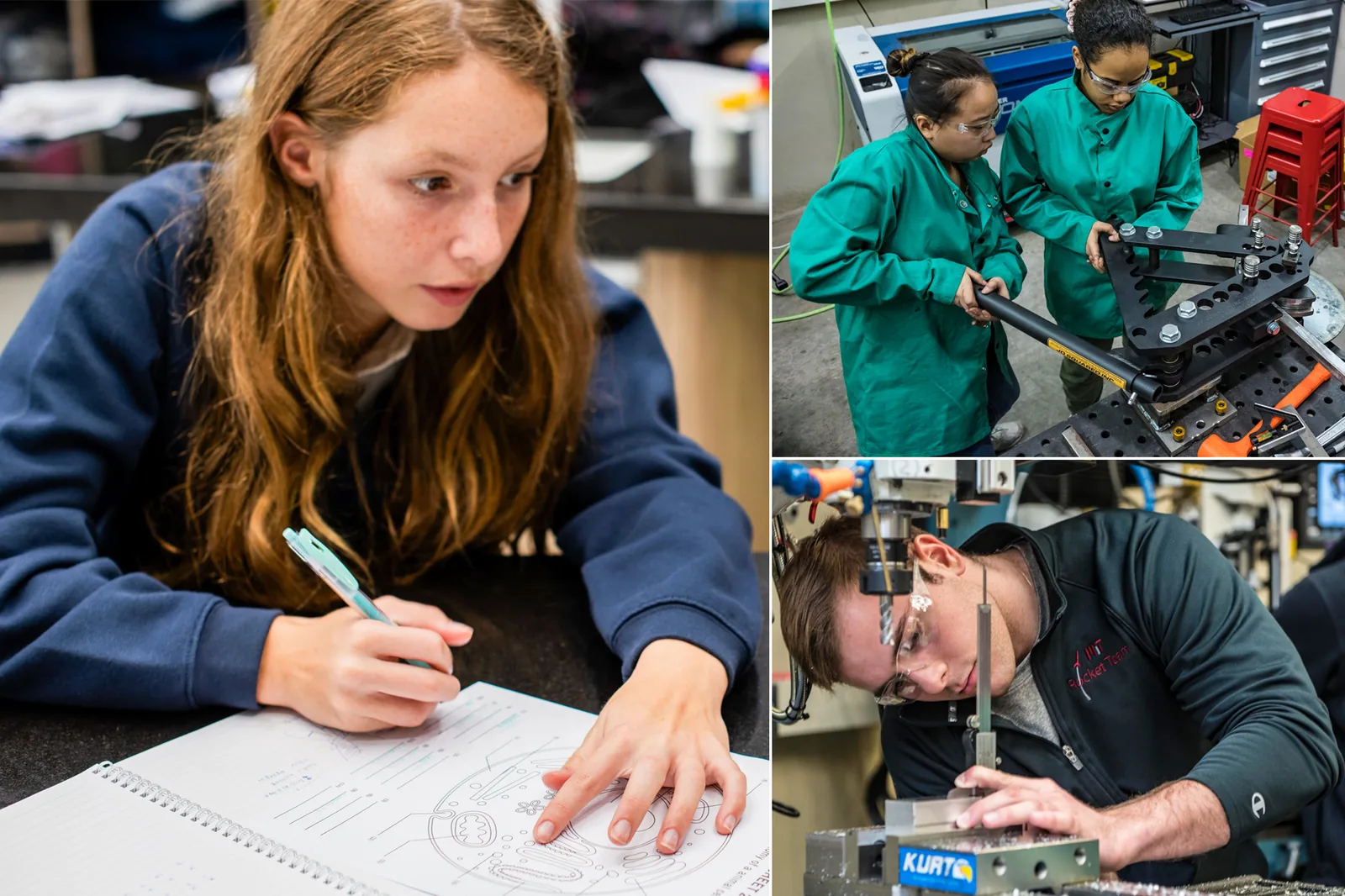
The first track centers on mathematical thinking and problem solving and builds on the MIT for America Calculus Project launched a year ago. In that model, MIT students and alumni volunteer as calculus tutors for school districts across the country, where about half of districts offer calculus but many remain under-resourced. The second track covers living, learning and working with AI, including teacher training on productive classroom use of AI and stronger AI and STEM instruction in technical-vocational schools and community colleges. The third track supports designing, making and innovating through fab labs, makerspaces, experiential learning and national design challenges.
The context is a measurable gap between course availability and student participation in technical subjects. Only 29 percent of U. S. students in grades 9-12 build circuits, and only 6 percent enroll in computer science classes, even though about 60 percent of high schools offer such courses. MIT leaders frame the response as building local capacity rather than one-time outreach, with community engagement and mentoring at the center. Claudia Urrea, head of MIT for America and the MIT pK-12 Initiative, said the aim is to unlock opportunities where students are and reach those who have not yet discovered their talent.
What wider AI training means for employers
For companies hiring technical staff, the AI education track carries the most practical consequence through MIT RAISE and the new PATH program. RAISE, or Responsible AI for Social Empowerment and Education, supplies materials and training that help teachers run active classroom work on how AI functions and which values schools apply. About 1 million students took part in RAISE's Day of AI earlier this year, indicating a format already tested at scale. On Oct. 1, MIT added Pathways for AI Training and Hiring, starting with Georgia State University, to bring workplace-relevant AI skills to two-year and four-year colleges.
The limitation for employers is that broader access does not automatically translate into job-ready skills or uniform curricula. RAISE emphasizes active student involvement and local discussion of values, which means results will vary by school, teacher preparation and available equipment. Hands-on formats such as the Regenerative Futures Challenge and the Fab Foundation network, with tools and curricula in 300 fab labs across the U. S., also depend on mentors and facilities. Companies should therefore ask which competencies a program certifies, how teacher training is assessed, and what workplace tasks graduates can actually perform.
The marker to watch is growth of the Calculus Project model and PATH beyond the first college partnership. Expansion to additional districts, colleges and employer-aligned roles, plus repeated participation figures comparable to the Day of AI, would show that scalable yet personal instruction works outside MIT. If that happens, businesses will gain a broader base for internships, technician roles and AI-supported work. If growth stalls, the shortage of applied STEM preparation will remain a constraint on hiring.