
Utah has authorized startup Nolla Health to let an AI system issue initial prescriptions for acne treatment, the first approval of its kind in the US. Through the Nolla Derm app on iOS, patients describe symptoms, upload a facial scan, and receive a prescription for pickup or home delivery. The pilot matters for business because it tests a model where software makes the prescribing decision, with physicians moving to retrospective review.
How the Utah pilot is structured
Nolla Health received permission from the Utah Office of Artificial Intelligence Policy, the Utah Division of Professional Licensing, the Utah Medical Association and the American Academy of Dermatology. The authorization covers only creams for topical acne, while isotretinoin and oral medications are explicitly barred. Requests outside strict limits are forwarded to a licensed human physician. Founder Luis Wenus said that until now a licensed clinician signed every prescription, while the AI can now make that decision itself.
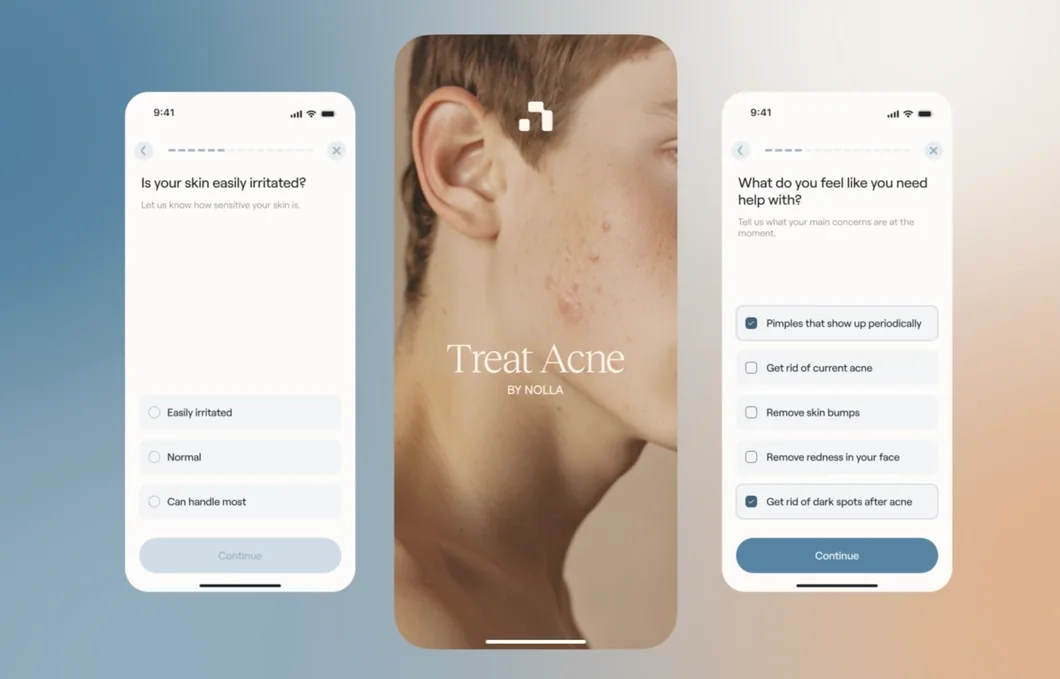
Users begin with an intake process before they can consult the AI doctor inside the app. They report their acne condition and submit a facial scan showing severity, after which the model selects a medicine from a shortlist of physician-approved topical treatments. The app then tracks progress through a daily skin scan and updates the treatment plan monthly based on response. Prescriptions can be collected at a local pharmacy or sent to the home. This design keeps assessment, prescribing and follow-up inside one software loop.
The pilot runs under Utah AI Learning Lab sandbox program, which gives AI firms relief from state laws to test products under supervision. The state cautions that participation in the sandbox does not mean it has approved, endorsed, certified or vouched for the product. In stage one, two physicians will approve every AI-generated prescription before dispatch. After at least 100 patients without serious problems, the project moves to stage two for 500 patients, where AI issues prescriptions directly and physicians review them afterward.
What automated prescribing means for business
For clinics, pharmacies and digital health operators, the model points to lower cost per routine case and faster throughput for well-defined conditions. A small dermatology practice could extend coverage without adding shifts, while a large provider or retailer could standardize intake, photo assessment and monthly plan updates across locations. The third stage, where physicians review at least 10% of automated prescriptions each month, shows how labor shifts from signing each order to sampling and quality control. That changes staffing ratios and unit economics for telehealth.
The limits define where such automation can be copied. Nolla system works from a closed list of topical treatments, excludes higher-risk drugs, and routes edge cases to doctors. Chief Medical Adviser Zaid Fadul said future candidates could include flu and uncomplicated urinary tract infections because testing adds objective data to symptoms and history. He ruled out autonomous prescribing of stimulants, opioids and benzodiazepines, citing manipulation risk and the need for stronger evidence and safeguards. Buyers should therefore verify drug scope, escalation rules and audit trails before assuming the approach transfers.
The marker to watch is completion of the first two stages without serious problems: 100 supervised cases, then 500 cases with retrospective review. If Utah allows the move to monthly sampling of 10% of prescriptions, other states and payers will have a template for conditional approval. Failure or added restrictions would signal that end-to-end AI prescribing stays confined to narrow, low-risk niches. Either outcome will shape investment in AI agents for routine diagnostics, refills and testing.